AD (728x90)

  • 2793 Pine St

    2793 Pine St

    Nulla facilisi. Cras blandit elit sit amet eros sodales, non accumsan neque mollis. Nullam tempor sapien tellus, sit amet posuere ante porta quis. Nunc semper leo diam, vitae imperdiet mauris suscipit et. Maecenas ut neque lectus. Duis et ipsum nec felis elementum pulvi...

  • 1100 Broderick St

    1100 Broderick St

    Nulla facilisi. Phasellus ac enim elit. Cras at lobortis dui. Nunc consequat erat lacus, a volutpat nisi sodales vitae. Phasellus pharetra at nulla in egestas. Vestibulum sit amet tortor sit amet diam placerat tincidunt sit amet eget lorem. Phasellus ...

  • 868 Turk St

    868 Turk St

    Nulla facilisi. Phasellus ac enim elit. Cras at lobortis dui. Nunc consequat erat lacus, a volutpat nisi sodales vitae. Phasellus pharetra at nulla in egestas. Vestibulum sit amet tortor sit amet diam placerat tincidunt sit amet eget lorem. Phasellus posuere posuere fel...

  • 420 Fell St

    420 Fell St

    Sed at vehicula magna, sed vulputate ipsum. Maecenas fringilla, leo et auctor consequat, lacus nulla iaculis eros, at ultrices erat libero quis ante. Praesent in neque est. Cras quis ultricies nisi, vitae laoreet nisi. Nunc a orci at velit sodales mollis ac ac ipsum. Na...

Showing posts with label English. Show all posts

Sunday, July 17, 2011

Machu Picchu Centennial Celebrations ends.

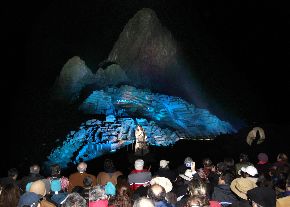
After kicking off the evening with a video showing the key elements of Peru's chief tourist attraction, groups of artists dramatized an offering made by the Incas to gain permission to begin construction of the sanctuary.

They made their offering to the surrounding mountains, believed to be gods in the Andean culture.

Appearing onstage were delegations from the four territories that made up the Tahuantinsuyo, or Inca Empire, bearing torches that lit up the streets and plazas of Machu Picchu.

Projections on the ancient walls then showed the building of the citadel, after which an actor playing the Inca emperor appeared to thank the gods for their wisdom and support.

The show went on to portray the arrival of the Spanish conquistadors, and how it forced the citadel's inhabitants to flee to safer ground.

At this point the evening's most spectacular moment began, a great fireworks display that illuminated the citadel and Huayna Picchu, the mountain that with Machu Picchu forms the background of the most famous photos of the sanctuary.

The show also in included music of the popular "El Condor Pasa," played by the Andean Orchestra and the Cuzco Symphony Orchestra, and sung by Tania Libertad.

The number was followed by other songs including "La Mano Desasida" (The Hand Set Free, from a poem by Martin Adam) and the traditional Cuzco tune "Valicha."

Topping off the show was a man hang-gliding over the citadel imitating the flight of the condor, the region's iconic bird.

The commission responsible for the festivities had been mulling the possibility of staging a large concert at Machu Picchu for months, with Paul McCartney and Peruvian tenor Juan Diego Flores named as possible headliners.

But the government subsequently opted for a less ambitious event with fewer guests after UNESCO, which supervises World Heritage Sites such as Machu Picchu, expressed concerns about possible damage to the famed ruins.

With the change, the guest list for Thursday's night main extravaganza was restricted to government officials and members of state-run media outlets, which afterwards distributed photographs and video footage of the event to the rest of the journalists.

The show was directed by peruvian filmmaker Luis Llosa.

Though Bingham's arrival was really on July 24, 1911, Peruvian authorities celebrated on Thursday the centennial of the discovery of Machu Picchu, celebrations that began in the morning at the sanctuary and also included the city of Cuzco, where the day was declared a holiday.

Wednesday, April 27, 2011

A future in Machu Picchu's past.

It's 10 minutes before dawn and my wife and I are waiting for sunrise in one of the most beautiful places on earth: Peru's Machu Picchu, the mountaintop religious retreat and citadel probably built by the Inca emperor Pachacutec in the 15th century.
The ruins are stunning: temples, altars and palaces of white stone, surmounted by a near 360-degree view of the Andes mountains around us. The only problem? In the midst of all this beauty, we're quarrelling. And, naturally, it's all my fault.
In writing Cradle of Gold, a book about how American explorer Hiram Bingham rediscovered Machu Picchu in 1911 and then fought with Peru over its artefacts, I'd visited the site many times, interviewed its archaeologists, and just sat, enjoying its quiet repose. But because it's my wife's first visit, I wanted it to be special.
I thought we'd get up at 4.45am, have a breakfast of bananas and coca-leaf tea, and then hike the two vertical miles up from Aguascalientes, the town on the river below, in time to see the sun set the Andes aflame. This was what Hiram Bingham did whenever he visited, and we would do the same.
What sounded good over pisco sours the previous evening melted in the daytime. Waking up for breakfast was fine, but about half an hour into the hike I realise the toll that writing my book had left upon my body. Too much coffee, not enough of the trekking I did while living in Peru.
Early bird buses whizz past us on the road. I envy their passengers but proudly refuse to slow down. This irritates my wife, who barely has the time to enjoy the view of the river below and the lush vegetation above.
It takes us nearly two hours of hard climbing to make it – Hiram's best was 40 minutes – and we arrive all but spent. I further fan the flames by hustling her through the ruins to a nice quiet terrace from which we'll watch the sunrise.
As we frostily split an orange, I realise why I've been behaving badly: I want her to love Machu Picchu like I do, but I'm afraid that she won't.
I needn't have worried. She spots it first. Off to the south, the first rays hit the Inca Sun Gate, the final marker of the Inca Trail. The line of sunlight marches along the ridge, illuminating the terraces, and then the golden wave of fire is upon us.
Like the plume of a volcano, the sun flares from between two peaks to our east, sweeping away the clouds, warming our faces, and the old, cold stones beneath us, placed here perhaps 600 years ago, by Pachacutec's workers.
My wife takes my hand. "It's wonderful," she says, glowing.
I add: "But next time, we can take the bus."
When I return to Machu Picchu to escort a tour for tour company Bailey Robinson, I'll be keeping that relaxed resolution intact. July 24, 2011 marks the 100th anniversary of Hiram Bingham's first visit to the ruins, and in the century since it's become easy to explore Peru with less effort than Bingham, and more style than Pachacutec.
Lima – the country's capital and most travellers' introduction to the country – has undergone a renaissance just in the time I've been travelling there. Once the administrative centre of Spain's colonial South American holdings, the city has exploded as a new artistic and culinary capital of the Americas, suffused with its coastal, foggy mix of Andean, Pacific, Asian, African and Spanish culture.
In galleries and cafés, I wait with bohemian film-makers and cognoscenti businessmen for sprawling gourmet lunches of ceviche: seafood "cooked" in lime juice and a Technicolor variety of spicy sauces, served with sweet potato and roasted corn.
Afternoon tours of Lima's colonial cathedral slip smoothly into restaurants like Astrid y Gastón. I still dream about a trio of scallops I ate there on my birthday six years ago – soft and swimming in a perfumed sea of yellow Andean peppers, so fresh that it would have satisfied even Naymlap – a seagoing founder of one of the northern pre-Columbian cultures.
By contrast, Cuzco, the Incas' former capital, is famous for its indigenous heritage. Police halt traffic for the near daily parades of Inca heirs and dancers.
I've spent happy hours haggling with shrewd market women over explosively colourful fruits grown by family members in the countryside. I've spent even more time wandering through Inca temples and palaces that are literally the foundations of the city's most prominent colonial and mansions. As Luis Valcárcel – who challenged Bingham's export of artefacts to Yale University – once said, Cuzco is "the only city of America where all time periods and civilisations exist".
Yet one of those time periods is decidedly modern. International jet-setters wander from their hotels to some of Peru's most interesting Andean restaurants. Stomachs full of peppered alpaca and guinea pig-topped causa – a multicoloured tower of spiced, mashed potato – they then explore rich museums of pre-Columbian archaeology and art, glowing in the high-altitude night.
Those museums are about to get even more interesting. Peru and Yale recently announced that by July the university will be returning to Cuzco a first batch of skulls, bones, ceramics and silver that Bingham excavated and exported from Machu Picchu in 1912.
Finally, there's the main event: Machu Picchu itself and the Sacred Valley leading up to it. Two hours from Cuzco, the stunning vistas of the Sacred Valley – waving corn fields beneath soaring Andean peaks – now include spas and retreats. Peasant
co-operatives sell near-couture quality textiles to travellers on their way to Ollantaytambo, the fortress where the rebel Inca emperor Manco temporarily fought off the Spanish in 1536.
Visitors then take a route that Manco avoided: along the winding, roaring Urubamba river and precipitous jungle-covered cliffs that guard Machu Picchu. Bingham first went by mule, but when he returned in 1948 to inaugurate the road up to the ruins he took the train. Today, PeruRail even offers a luxury option, the fittingly named Hiram Bingham, which rolls along with brass railings and a bar-car that harks back to the golden age of rail travel.
Peru: essential travel information
No matter how I get there, however, Machu Picchu never fails to make me smile, as it did my wife. White stone, green and black peaks, blue sky, meeting in a citadel now crucial to Peru's future: a spiritual indigenous core, inspiring new ideas about Peru's history and way forward.
It's a lesson that Peru teaches every visitor: there are many cosmopolitan modernities in the world and we need to keep our minds open lest we dismiss them as exotic, hard-to-reach places. In Peru, the future is narrated in Andean-inflected Spanish, thrives in a well-preserved, once-imperial ruin, and, yes, is reachable by bus.

Christopher Heaney is the author of 'Cradle of Gold: The Story of Hiram Bingham, a Real-Life Indiana Jones, and the Search for Machu Picchu', published on July 24 (£11.99, Palgrave Macmillan).
He will escort an anniversary tour of Machu Picchu from July 20-26, bookable with Bailey Robinson (see 'Essential travel information line, above').

Wednesday, April 20, 2011

Admission to a Wonder of the World.

As I discovered during a too-short side trip from Cairo last weekend, the cost of access to that legendary outpost (recently voted one of the "New Seven World Wonders") has been rising precipitously. After several price boosts last year, day trippers from nearby Egypt and Israel now pay 90 Jordanian dinars per person, or about $127, while overnight tourists must pony up 50 dinars ($71) for a one-day pass, 55 dinars ($77) for two days, or 60 dinars ($85) for three days.

The latest increases at Petra, which took effect last November, coincide with a steep drop in visitors. Thanks to fallout from the Egyptian revolution and violent protests in parts of neighboring Syria, tourism officials are reportedly forecasting a 25% decline this year. (As a park gate closed at sunset last Friday, I was virtually alone - and a tour guide told me that crowds were down nearly 70% from the same time a year ago.)

The new, higher fees include the services of a tour guide and a 10-minute horseback ride to the entrance of the Siq (seen above), a narrow, winding canyon that serves as the main entrance and gateway to Petra's signature ruin, The Treasury of Indiana Jones fame. But that hasn't stopped some critics from complaining: "Proposals for more toilets on-site, better interpretation and new transport services in & out are welcome," writes travel writer Matthew Teller. "But why such a massive price-hike to fund them? Petra had more than 800,000 visitors in 2008, who brought more than $21 million in ticket receipts for this one site, in one year alone, in a developing-world country. $21m buys a lot of portaloos. Where has that money gone?"

"Petra is one of the most fantastic places I've ever been, so I'm not saying don't go. And Petra aside, Jordan is a great value. But this kind of blatant pocket-lining drives me crazy," adds travel writer Tim Leffel, who notes that one-day admission to the ancient city costs more than a walk-up ticket to Disney World ($87.33), Peru's Machu Picchu (about $45) or Cambodia's Angkor Wat ($20). Ecuador's Galapagos National Park, on the other hand, charges foreign visitors $100 to get in, while the Himalayan kingdom of Bhutan assesses a $200-$240 per person, per day fee that includes lodging, meals transportation and guide.

As Leffel points out, the cost of visiting Petra is diluted sharply when spread out over two or three days, and the sheer vastness of the site makes a one-day tour inadvisable anyway. (My legs and lungs complained bitterly when I opted for a five-hour sprint instead.) But notwithstanding the hustling souvenir sellers and horse handlers who demanded a five-dinar tip, even one afternoon in Petra was magical - and worth a heck of a lot more than a day with Mickey Mouse and company.

Saturday, April 16, 2011

Students explore Machu Picchu over spring break

Twenty-one students from Missouri University of Science and Technology spent spring break exploring the ancient civil and geological engineering marvels of Peru.

The students - 11 undergraduates and 10 graduate students - visited Lima, Peru's capital, as well as Cusco and the fabled mountaintop Incan city of Machu Picchu during March 28-April 1. There they conducted field trips focusing on geological and geotechnical engineering aspects of the Inca civilization.

Posing on a Peru mountainside are, from left, Dr. Robert Laudon, professor emeritus and former chair; S&T students Ethan Faber, Evan Menkes, Matthew Simon, Jessie Hahn, Thomas Langdon, Elizabeth Anderson (guest), Julie Langenfeld, Kimberly Trout, Sara Tipton, Jessica McKinney, Amber Shrader and Raymond Taylor; and the group's tour guide.

At Machu Picchu, from left, are faculty members Neil Anderson and Ronaldo Luna; Luna's daughter, Calli Luna; and Missouri S&T students Max Laracuente Bernat, Julie Langenfeld, Evan Menkes, Sara Tipton, Matthew Simon, Jessie Hahn, Ethan Faber, Amber Shrader, Jessica McKinney, Raymond Taylor, Kim Neumann Rumpsa, Evgeniy Torgashov and Kerry Magner.
"For the undergraduate students, we were trying to give them more of an introduction into the amazing ancient geological and geotechnical engineering of Peru," says Dr. Neil Anderson, professor of geological sciences and engineering at Missouri S&T. "The graduate students, under the direction of Dr. Ronaldo Luna, looked at features from a much more comprehensive perspective."

Anderson and Luna, professor of civil, architectural and environmental engineering, coordinated the trip, along with Dr. Robert Laudon, professor emeritus and former chair of geological sciences and engineering.

During the trip, the students visited stone temples such as Coricancha, in Cusco, and toured archeological sites where multi-ton sculpted granite blocks had been transported by a culture that used neither wheels nor pack animals. They also visited agricultural terraces that extend hundreds of feet up the sides of steep mountains, ancient quarries and the ruins of Machu Picchu, the ancient mountaintop "lost city" known as an architectural and engineering marvel.

The students were enrolled in one of two courses on geotechnical engineering practices of Incan civilization: a three-hour graduate-level course for civil engineering and geological engineering students, and a one-hour course for undergraduate students in geological engineering. Both courses are offered through Missouri S&T's distance and continuing education program.

This is the fourth year S&T undergraduate students have participated in the spring break trip to Peru and the second year graduate students were involved. A collection of photographs from the 2010 trip is available online. A collection from the 2011 trip will also be available at a later date.

Students who went on the 2011 trip to Peru are:

Jessica McKinney of Houston, a sophomore in geological engineering.
Amber Shrader of Evergreen, Colo., a sophomore in geological engineering.
Julie Langenfeld of Cape Girardeau, Mo., a sophomore in geological engineering.
Jessie Hahn of Cape Girardeau, Mo., a junior in geological engineering.
Sara Tipton of Tigard, Ore., a sophomore in geological engineering.
Kimberly Trout of Dixon, Mo., a sophomore in geological engineering.
Ethan Faber of Webster Groves, Mo., a sophomore in geological engineering.
Thomas Langdon of St. Charles, Mo., a sophomore in geological engineering.
Evan Menkes of Defiance, Mo., a sophomore in geological engineering.
Matthew Simon of Rochester, Minn., a sophomore in geological engineering.
Raymond Taylor of Monroe, La., a sophomore in geological engineering.
Evgeniy Torgashov of Rolla, Mo., a graduate student in geological engineering.
Jacob Bilello of St. Louis, Mo., a graduate student in geotechnics.
James Davis of Broken Aroow, Okla., a graduate student in geotechnics.
Stephen Patt of Arlington, Va., a graduate student in geotechnics.
Jason Soucie of Manchester, Mo., a graduate student in civil engineering (contemporary structural engineering certification).
Mirna Pavaric of St. Louis, Mo., a graduate student in engineering management.
Kimberly Neumann Rumpsa of Dittmer, Mo., a graduate student in engineering management.
Kerry Magner or Rolla, Mo., a Ph.D. student in civil engineering.
Max Laracuente Bernat of Mayaguez, Puerto Rico, a graduate student in civil engineering.
Karl Higgins of Leesburg, Va., a graduate student in geotechnics.

Wednesday, April 13, 2011

My first trip to Machu Picchu.

We spent the first night near Lima, at a friend’s house close to the beach in the La Perla area.

We walked to the beach and ate barbecued beef hearts and stuffed mashed potatoes on a street corner. Sounds tasty, right? Well, it really was. They didn't tell me what I was eating until I mentioned that it was a different barbecue than we get at home. I was then told it was beef hearts marinated in chili, lime and sauces, sliced thin and then barbecued. Delicious.

The following day we took a flight to Cusco and then a train to Machu Picchu. The train was an exceptional experience. They served a drink called a pisco sour, made with lime juice, whipped egg whites and pisco, a Peruvian grape brandy. Everyone — tourists and all — was so friendly (probably because everyone was drinking the happy drink).

After the train ride to the top of Machu Picchu, we took a half-hour tour-bus ride up a narrow road with an amazing view of the small city below. When we arrived, we saw children in their native dress and llamas roaming and eating the green grass. It was an amazing sight.

Flights are relatively cheap if you buy three to four months in advance, and Cusco and Machu Picchu are safe to travel to — so be spontaneous and go! The Peruvian people are so friendly, the shopping is fantastic, the food delicious, and the dollar goes a long, long way. You'll want to return for more food, fun and hospitality. Winter is an ideal time to visit, when it's Peru’s summer.

Monday, March 7, 2011

There is an App for That... Machu Picchu.

So, if you are planning to visit one of the New Seven Wonders, chances are that you can do it just assisted by you favorite Apple idevice. (iPhone, iPod Touch or iPad). But of course you always need some human beens around you.

Let me show you wich App fits with you:

Machu Picchu by Vogaerits
With in application you can take snapshot of your favorite places and can save as Albums and can send them as mail attachments.
And Geo tagged Photo Management System.
Locate easily with Perfect longitude and latitude & can view on map.
It provides information about existing and near by attractions.
High quality photo gallery makes you surprise.


Machu Picchu Sights by Brighthouse Labs

A comprehensive navigation tool that shows you every major point of interest overlaid on a map of Machu Picchu. Every attraction a tourist would want to see is automatically located for you. Museums, statues, theatres, gardens, parks, monuments and anything else you could want to see – you’ll find it here!
You can either scroll around the map and select points of interest to learn more about them, or you can scroll through a list of all sights and choose the one you want to see to have it located on the map for you. Quickly plan your day by seeing which attractions are near each other!
Plus you’ll see every location near you. On the iPhone the app will detect your location via GPS. With an iPod Touch you simply enter your current location and the app will show you what’s around! Machu Picchu Sights will then provide you with directions from your current location to any point of interest you find.
Every point of interest has contact info and an address so you’ll easily be able to find it.
If you’re exploring Machu Picchu you owe it to yourself to download Machu Picchu Sights to make sure you don’t miss a thing!

Machu Picchu Study Guide by Brighthouse Labs
Have a big test you need to study for? Or, maybe you just want to learn more about Machu Picchu. Either way, Machu Picchu Study Guide has all the info you'll need!
This app stores all relevant pages about Machu Picchu from Wikipedia on your device so you can view them whenever you like with no need for Internet access. If you need to learn anything about Machu Picchu, you'll always have it with you!
Every article is indexed so you can find the exact topic you need to learn about. You can also search the index to find a specific topic with the built in search feature.
When viewing an article you can use the green colored in article links to quickly move to pages explaining terms and events. You can browse around and really develop an understanding of a topic!

Machu Picchu - Peru by Egate IT Solutions Pvt Lt

Machu Picchu - Peru Travel Map is a unique consists of complete information that may be Heritage, Culture, and Sightseeing, Adventure, Special interests and surroundings all are captured in the map which gives you a better view, idea to your curiosity.
We have more than 100 Top destinations travel maps for you on iPhone with latest information and functionalities. These maps are especially designed for those who are planning to travel around these places for the first time and quite new if you already visited the place.
Visiting any well known place with our maps will definitely delight your voyage.

Friday, January 28, 2011

Traveling to Machu Picchu


Machu Picchu is the pre Columbian, Inca empire site that is located almost 8,000 feet above the sea level. The site is located on a mountain ridge above the valley of Urubamba in Peru. The city is also called the “lost city of Incas”. When tourists make a list of the best world tour destination, Machu Picchu is the site that undoubtedly gets the maximum number of votes.

It is said that the journey to this spot is a dream journey, which one must never miss. It is a journey to the top archeological site on the planet earth. Data says that the Machu Picchu Tourism is one of the proudest industries in the country. Whatever your expectation out of the place would be, you will really be more than delighted to see the picturesque beauty of the place and the intoxicating power that it will have on you.

Machu Picchu was built in 146 AD, however, it was left by the Inca rulers 100 years later. Legendary stories suggest that the place was neglected for quite some time. In the year 1911, Hiram Bingham, who was an American historian, got the world’s attention to it and then there was no looking back. Recent discoveries also show that the site was dug many years ago by a German businessman. The site became a part of the UNESCO, world heritage site in 1983. The site as built in typical Inca style with dry stone polished walls and it most famous buildings are ‘ the temple of sun’ and ‘ the room of three windows’.

Traveling to Machu Picchu
The site is located 80 kilometers northwest of Cusco and sits between two mountains. From Cusco, you can take a train to Aguas Calientes and then take a bus up to the actual site. If you are of the more adventurous type, you may want to take a one-way bus trip up to Machu Picchu and then walk down to Aguas Calientes on your way back.

Tuesday, January 25, 2011

Machu Picchu: new ways to reach the citadel.

You don't have to follow the classic Inca Trail to reach the lost city – here's alternatives ones.

Cycle through the Sacred Valley, past Inca ruins.
Cycling tour plus the classic Inca Trail

Skedaddle has a 15-day trip that combines six days' cycling through the Sacred Valley – past the Inca ruins of Pisac, the colonial town of Paucartambo and through Amazon rainforest – with the classic Inca Trail. After four days of trekking, over Dead Woman's Pass and past the ruins of Wiñay Wayna, you reach Machu Picchu at daybreak.

• From £1,495, including camping/lodge accommodation, most meals and bike hire. Flights extra. 0191-265 1110, skedaddle.co.uk

Salkantay & Llactapata Inca trails on horseback

Follow in the hoof prints of the conquistadors on a 10-day ride (up to five hours a day) past the glacial lake at Humantay and through passionfruit orchards in the Santa Teresa valley, following the Salkantay and Llactapata Inca trails. Say farewell to your horse before walking (8km) or taking the bus from Aguas Calientes to Machu Picchu.

• From £1,995, including hotel/lodge accommodation. Flights extra. 01829 781123, equestrian-escapes.com

Luxury on the Salkantay Trail

Wilderness Journeys has launched a new nine-night trek following the Salkantay Trail – named after the Cordillera Vilcabamba's highest peak (6,271m) which you pass beneath. The walk takes you through sub-tropical valleys in the shadow of high mountains. Highlights include the Inca ruins of Tarawasi and Llactapata, a guided tour of Machu Picchu (reached by train), and at the end of each day you get to kick back in plush lodges, some of which have outdoor hot tubs.

• From £1,995, including accommodation and most meals. Flights extra. 0131-625 6635, wildernessjourneys.com

Espíritu Pampa, the 'last' Inca city

The Traveller has launched a 15-day trip that focuses on the city of Espíritu Pampa. It was this remote site, excavated in 1964, that turned out to be the Inca empire's final outpost, not Machu Picchu as Hiram Bingham wrongly believed. The trip, which includes three days' walking, also takes in the Inca site of Tambomachay, the "White Rock" with its impressive carvings and, of course, Machu Picchu. Departs 10 September.

• From £3,650, including hotel accommodation, flights and most meals. 020-7269 2770, the-traveller.co.uk

Cusco, cooking and the citadel

Don't fancy trekking? Much Better Adventures has a seven-night trip that includes a tour of Cusco and bus trips to the ruins of Sacsayhuamán, Tambomachay and Puka Pukara. After visiting a local market to buy ingredients, you'll spend the day cooking with a Quechua family before catching the train to Machu Picchu.

• From £825, including hotel accommodation and most meals. Flights extra. muchbetteradventures.com

Inca Trail independently

About 200 trek permits a day are issued to tourists, who have to be accompanied by an official guide. If you're keen to book locally, Pachamama Explorers is a licensed Inca Trail tour operator based in Cusco. It has a great reputation, and offers easy and more challenging guided treks to Machu Picchu, ranging from two to seven days. Choose from the classic trail or one of the alternative routes, including the Salkantay, Choquequirao, Lares Valley and Ausangate treks.

• Walks should be reserved up to three months in advance. From $525 (£340) for a four-day classic walk, including camping accommodation and all meals. +51 84 226570, pmexplorers.com

Monday, October 18, 2010

UI students travel to developing countries

A six-day trek to Mount Kilimanjaro or hike on the Inca trail to Machu
Picchu this summer can help children in developing countries.

Childreach International is offering similar opportunities for
University students to travel abroad to help improve health care,
education and child-protection rights in developing areas.

The two challenge trips — a trip where participants must raise
thousands of dollars to attend — offered this summer are traveling
abroad to Tanzania and Peru. Amanda Leibovitz, director of fundraising
for Childreach, said the trip is an amazing opportunity for young
adults to reach out to those in need.

Leibovitz said the trip is appealing to students because only $250 is
contributed out of their own pockets. The rest of the costs —
including traveling, accommodations and food — are accumulated by
fundraising, with 50 percent of the funds going directly to the
community project. Most of the projects focus on keeping children in
the education system through building schools and vocational training
centers.

Childreach also has what they call a Future Builder program, which
takes 14 students abroad to help construct or renovate a specific
project within a developing community. Leibovitz related this trip to
something like what the organization Habitat for Humanity does.

Laura Snyder, senior in LAS and an on-campus intern for Childreach,
has been marketing and promoting the opportunity across campus. She
said working with Childreach has been a very rewarding experience.

"I'm hoping to go on one of the trips myself in order to get that
personal growth and reward this summer," Snyder said. "And not only
does it personally feel good, but it feels great that my work is going
toward the children in third-world countries to better their lives."

Caitlin Miles, junior in FAA, said she has been looking for an
opportunity just like this one.

"I'm just really interested in helping people," Miles said. "I really
was interested in doing something to help children anywhere this
summer and I got an e-mail about this and I was really excited because
it's helping children and that's what I wanted to do."

Leibovitz said other universities they've been recruiting at have been
more receptive to the idea of offering college credit hours for this
study abroad opportunity. The University currently does not offer
credit, but she said that they still want to try and open that door
for University students.

"It's a great opportunity, for young people in America to go out for
not much out of their own pockets and get really involved in their own
community and to have that cultural exchange," Leibovitz said. "I
think it really makes for a well-rounded individual and gives them a
lot more opportunities in life."

Inca Trail Tails: A journey to Machu Picchu

It's easy to say that until you have set foot onto the hallowed
grounds of Machu Picchu, that you cannot truly imagine such beauty,
such grandeur, or such a heavenly ambiance in one natural setting; an
ambiance that still ranks high on my list given the other sense-awing
vista areas to which have traveled in other parts of the Andes
Mountains.

In the case of this four-day and three -night venture (which forms the
typical Sacred Valley to Machu Picchu trip via the "Inca Trail"), few
of my previous trekking adventures would stand up to the magnificent
sights, heartfelt laughs and memorable experiences lived here on the
road to the "Old Mountain," the English translation of Machu Picchu.

At 5 a.m. sharp, each of the 15 groups rose like eager troops ready
for their mission impossible into unknown terrain. Like clockwork, our
group of 12 prepared, ate and promptly left the campsite at the
Trekker Lodge. The anticipation was palpable as we strode along the
jungle trail, moist in all directions from ground to the low-hanging
and all-encompassing foliage. Most everybody on the trail was chomping
at the bit to arrive first at the mountain pass, or "Sun Gate," at
which point the 15-minute coast down to the Machu Picchu ruin site
would be only a formality. Anxiety, stress and haste colored the mood
up to the mountain pass, while peace, serenity and stillness awaited
us at our arrival to the Sun Gate.

It's as if a collective exhale sounded off as the slow herds of hikers
trounced upon the nest-like entrance. From there, with the Sun Gate
arch anciently accenting the threshold between desolation and
civilization, between lost and found, and between uncertain and
certainty, this divine view inspired each soul to cede to its surreal
and inescapable grace.

Luckily for us, today was a perfect day to be here: a few passing
clouds, a slight breeze and unmatched company. In that instance, we
could see each aspect of the ruin site that lay below. The first
observation made: the inseparable union of Machu Picchu (the citadel)
and Huayna Picchu (the back-dropping mountain). After that, the rest
just happens: the various courtyards, temples and structures stretched
over and molded to the Old Mountain, the outlying and ubiquitous
verdant mountains that surrender to a fate unseen and abysmal in the
river basin far below, and the timeless and tranquil quality to all
the eye and heart sees.

When present here, one imagines the mighty toil expended in executing
such an architectural endeavor. Though, keeping in mind that Machu
Picchu was a later Incan construction, this project might not have
been considered large by the standards of the Incas who, especially
during the time of the Inca Pachacuti (14th century), were enormously
prolific and ambitious, architecturally speaking and otherwise.
Regardless of the mindset of the architects and workers of Machu
Picchu, any attempt to understate the site's divinity would be
atrociously futile.

When present here, one imagines the mighty toil expended in executing
such an architectural endeavor. Though, keeping in mind that Machu
Picchu was a later Incan construction, this project might not have
been considered large by the standards of the Incas who, especially
during the time of the Inca Pachacuti (14th Century), were enormously
prolific and ambitious, architecturally speaking and otherwise.
Regardless of the mindset of the architects and workers of Machu
Picchu, any attempt to understate the site's divinity would be
atrociously futile.

Patrick Roseblade is an author and freelance writer in South Lake
Tahoe. He has traveled extensively through Spain and the Andean
countries of Peru, Ecuador, Bolivia and Colombia. He holds a bachelors
degree in cultural anthropology from UC Davis. His collection of
travel essays is at perupat.blogspot.com.

Endhiran The Robot : First Indian movie to shoot at Machu Pichu

The word 'impossible' does not exist in Rajinikanth's films and it is
proved again. Rajinikanth's latest movie Endhiran has been shot at
Machu Pichu, the protected heritage site in Peru. It has become first
Indian movie to be shot in this exotic location.


Earlier, the bosses of Hollywood movie Quantum of Solace wanted to
shoot at this place. But the Peruvian government had denied them
permission. Now, many Hollywood and Bollywood filmmakers have been
left with wonder after Rajini's movie got permission to shoot in this
location.

However, very few films have been shot at this pre-Columbian Inca
site. Secret of the Incas, The Motorcycle Diaries are the some movies,
which had got permission to capture this Historical Sanctuary.

The song 'Kilimanjaro' featuring Rajinikanth and Aishwarya Bachchan
was shot at Machu Picchu. Sources say that Indian High Commission
helped director Shankar in getting permission from Peruvian
government.

Sunday, October 17, 2010

Celebrates its 100th Birthday of Discovery

Visiting Machu Picchu is now on everyone’s to do list during their Peru vacations this year thanks to the Birthday of the Inca city coming up this July. One of the preferred methods of getting to the city is of course the Inca trail.
Online PR News – 01-April-2011 –Visiting Machu Picchu is now on everyone’s to do list during their Peru vacations this year thanks to the Birthday of the Inca city coming up this July. One of the preferred methods of getting to the city is of course the Inca trail. The Inca trail is a widely traversed route to the ancient lost city of Machu Picchu. It is a highly popular trail for visiting tourists; this is in part due to the appeal from taking a route that was the traditional one used by the Inca.
The Inca trail can begin after you visit the beautiful city of Cusco; it is a great alternative to the more common train rain from Cusco to the ancient Inca city. While both methods are scenic only one allows you to sleep under the Andean night sky as well as hike through the Peruvian highlands for 3-4 days. The views are outstanding; passing by glaciers, unique flora and fauna. The local landscape is unlike anywhere else in the world and the weather is an ever changing one. This can add to the challenge of going through the trail before finally ending up in time for your Machu Picchu tours which will be guided by a professional, bilingual guide of course.
The Inca trail is considered an easy to moderate trail which can be taken by pretty much anyone willing to camp out for a few days and sleep in the Andean wilderness over night. It is definitely you should try to include into your Peru vacations and Peru travel packages. The tour in Machu Picchu will definitely put the icing on the cake during your vacation. Now there are special deals going on in reference to Machu Picchu tours which are being offered by a few agencies wanting to promote the city for the 100th birthday of the discovery of Machu Picchu by Hiram Bingham; there are great rates on all Peru services out there at the moment.
Come celebrate the centennial of Machu Picchu by taking part in the celebrations which are scheduled to take place from special tours to a final special celebration which will be filled with special guests. Contact your Machu Picchu tours provider now and ask what special events you can take part in during this very special time in Peru.

Machu Picchu artifacts are carefully identified and recorded

Every single Machu Picchu piece returned by Yale University has been carefully identified and recorded by archaeologists and historians in an inventory, the Press Secretariat of the Presidency of the Republic announced on its Twitter account.
The unpacking of the artifacts was made by specialized staff members of the Culture and Foreign Ministry gathered at Government Palace.

The relics, which were taken out of the country 100 years ago on a loan basis, remain at the Main Dinning Room of the presidential palace.

The opened crates contain large ceramics such as aryballos, vessels, and skeletal remains among others.

These artifacts belong to the first batch that were taken by US explorer Hiram Bingham in 1912 to Yale University in order to study them.

The 360 pieces, packed in some 30 wooden crates, arrived Wednesday at Jorge Chavez International Airport. Afterwards, the artifacts were escorted by some 600 police officers to the Government Palace.

Couple brave Machu Picchu's Inca Trail

Last week I invited readers to share their outdoor stories. With Peru's Machu Picchu gracing the latest cover of National Geographic, it seemed fitting to start with the Barauskases' adventure.
Married 47 years with four daughters and eight grandchildren, Stan and Elke Barauskas visited Machu Picchu by hiking the famed Inca trail in August 2008. He is a propulsion and power systems engineer for the space shuttle Orbiter with Boeing in Huntington Beach. She is retired registered nurse in labor and delivery.

On the second day of their hike, Elke (left) and Stan Barauskas take a break on the Inca Trail. The elevation gain was 3,300 feet and they reached 13,700 feet with snow on the ground.
Here is their story in Stan's words:
My wife, Elke, and I are longtime members of the Sierra Club and have hiked the local mountains, the Alps in Switzerland and Austria and even the Black Forest in Germany.
Of these, the four-day Inca Trail to Machu Picchu was, by far, the most challenging.
I signed on six months in advance, a typical advance reservation period since the Peru government limits access to the Inca Trail to no more than 500 people per day. That includes 200 tourists and 300 porters with no one allowed to do the trek without a guide.
In Cusco, the first impression one gets is that the Inca people were a hard-working, simple agrarian-based society. They worshipped the earth and the sun god, the moon, water, lightning, mountains and rainbows.
But after visiting the various worship sites and important structures, it was evident the Incas were proficient in engineering, architecture, astronomy, medicine and other sciences.
Their demise was partly their own doing. A major civil war broke out between the last two Inca kings, Huscar and Atahualpa. The war decimated the Incas and the Spanish took advantage of this during the Battle of Cajamarca in 1532 when they captured and ultimately killed the surviving king, Atahulapa.

Tough trek

The first day of hiking was relatively mild, only 7.2 miles and six hours of walking.
The range in age of the group was 18-69. Our fellow hikers were from England, Belgium, Canada, United States and Peru. We were accompanied by a support group of porters, Cheskis (runners) as they prefer to be called, and two local guides.
They carried all of our supplies for breakfast, lunch and dinner – and an occasional hot tea and sandwich break.
On the second day, the elevation gain was 3,300 feet, and we reached 13,700 feet. We were surprised by thunder and lightning accompanied by heavy rain.
We donned our rain ponchos and were on the trail by 7 a.m. The hike was rarely on a dirt trail. About 90 percent was on knee-jarring stones and rocks. As we gained in elevation, there was snow on the ground.
Elke and I brought thermal underwear and very warm sweaters just for this occasion. They served us well. The third day was advertised as being fairly light because the majority of the hike was downhill. This sounded great – at first. Then we found out that this day was to be the longest, both in distance and time.
Once again, we were up at 5:30 a.m. for breakfast and started our hike at 7 a.m. It was a nine-mile hike and was the first time we experienced the original trail as constructed by the ancient Incas more than 400 years ago.
Although it was true that the trail was generally downhill, it still presented some really challenging and literally breath-taking uphill sections. It was jokingly called the "gringo killer" – approximately three miles of knee-blasting downhill steps (estimated at 2,000) many of which were two-feet high with a minimum area for the foot to land on.
The younger group had little problem with these conditions. But we oldsters – and an injured young lady – made considerably slower progress. We were quite a distance away from camp when night fell.
Lucky for me, when my flashlight gave out, I had a spare bulb. There is no way I would attempt walking on a strange trail in the Andes Mountains without visibility.
With the aid of our guide, we finally arrived at our campsite after hiking approximately 12 hours. We were exhausted and ready for our hot meal, our last prepared by the faithful Cheskis.
After tips and thank yous, our guide mentioned that tradition requires that we leave the Cheskis with a song. For a moment we were all speechless. Then a quick-thinking archaeologist from Michigan suggested "Roll Out the Barrel." The Belgians, Canadians and Brits all joined in the song with gusto. It was a moment to remember.
One aspect that was not welcome for day four was the early rising, 4 a.m. The intent of the early start was to arrive at Machu Picchu's Sun Gate before the sunrise. But it started to rain, lightly at first and ultimately, a deluge.

Journey's reward

Nevertheless, we trudged on hoping for a break in the weather. Alas, it did not come.
This last portion was called a relatively mild hike, predicted to take about 2.5 hours and descending to the ruins most of the way. Although this was true, there were enough uphill portions to take my breath away and cause frequent stops.
At last, we reached our initial goal – the Sun Gate. But no sun!
The rain and accompanying clouds obscured the site.
Finally, we reached our destination – Machu Picchu. We thought our climbing was done. Far from it.
Machu Picchu is built on a series of terraces. We climbed up and down while our guide pointed out important areas. Several interesting facts were presented. One was that the site was completed by the Incas in 1460 and was the official site for Inca rulers for 100 years.
By far, it's not the largest village that the ancient Incas built – it was just the most publicized. Also, the population has been grossly overestimated. Rather than 4,000, a little more than 200 people occupied the area.
What started as a challenge and an adventure ended with my increased understanding of the Peru culture and a real appreciation for the spirit, endurance and fortitude of the Inca people and their descendants.
Rather than "conquer the trail," I learned to respect the people who had the imagination and will-power to construct such an amazing city.
Truly an experience of a lifetime.

David Whiting's column also appears News One Wednesdays, Fridays, Sundays; dwhiting@ocregister.com.

Sunday, October 3, 2010

Machu Picchu, Peru: Anchient Andes city is Picchu perfect

Hiram Bingham and the Lost City of the Incas - not as snappy or famous
as Indiana Jones and the Last Crusade. But it's absolutely true, a
real-life archaeological adventure in the South American jungle.

One hundred years ago next July, American explorer Bingham made the
sensational discovery of Machu Picchu, the deserted mountaintop Inca
city near Cusco, high in the Peruvian Andes.

Of course, getting to Machu Picchu is an awful lot easier today,
either by walking the four-day Inca Trail - which my 3am colleague
Clemmie Moodie has been heroically tackling this week - or by train. I
joined the Vistadome train at Ollantaytambo in the Inca Sacred Valley
near Cusco.

It's a splendid blue train, with huge viewing windows, that takes a
couple of hours to reach the station at Machu Picchu Pueblo.

Then it's on to a bus to the Inca city itself via a rather twitchy
ride that climbs into the mountains on a series of alarmingly tight
hairpin bends.

You finally arrive at the lost city, and what a glorious view it is.

It truly is one of life's must-see places. I was so awe-struck I just
stood staring and snapping away with my camera.

Finally, it's time to head in to the city itself to explore and wander
around in the centuries-old footsteps of the Incas. If you are
visiting Machu Picchu it's a racing certainty you will spend some time
in Cusco, the chief city of the region.

Perched at a lofty 11,200ft, it merits a few days' visit to
acclimatise to the altitude. I stayed at the Hotel Monasterio, which
offers oxygen piped into your room to assist with the adjustment.

Cusco is a captivating city, there's a feel that you're in somewhere
otherworldly in what is a dusty high-altitude Andean bowl dripping
with Incan heritage and Spanish colonial architecture. It's a
boisterous place too. As the starting point for trips to Machu Picchu
by both rail and foot on the Inca Trail, it's a magnet for tourists of
all ages and very much a thriving regional capital.

Before heading to Machu Picchu I stayed at the Tambo del Inka Hotel in
the Sacred Valley, a fine spa resort made remarkable by the size of
the public rooms.

They are quite simply ENORMOUS. The LA Lakers basketball team would
feel utterly lost in the huge foyer. But they would be just as
impressed as I was by the view from it at sunrise as the first pink
rays hit a lofty Andean glacier.

And who could not be moved by the sight of the night sky in this
valley? As I strolled through the gardens a shooting star caught my
eye as it flashed across the night sky. Only then did I fully
appreciate the majesty of the constellations at this altitude with no
light pollution.

Q&A: Best Route to Machu Picchu

I'm planning a trip to Machu Picchu in late September and early
October. I'm interested in making this a safe but adventurous trip. I
will be traveling to Peru with my adult son. Neither of us speaks
Spanish.

First, it's important to note that Machu Picchu has imposed a daily
limit on the number of trekkers to the site. This means it's essential
to plan well ahead. That said, the famous Inca ruins can be reached in
several ways. The easiest and most common route, but still
adventurous, is by train from Cuzco (a 20-minute taxi ride to Poroy
station) to Aguas Calientes (allow a day or two in Cuzco to
acclimatize to the altitude).

From there, you can take one of the three train options, each taking
less than four hours: the affordable Expedition; the faster,
first-class Vistadome; and the expensive and luxurious Hiram Bingham.
Make your train reservations as early as possible, especially for the
high season, which runs from May to October (www.perurail.com). From
Aguas Calientes you can take a short bus ride up switchback roads to
the ruins, or if you can, hike this last part along a steep path,
which takes over an hour, or take a bus up and then hike down. To
appreciate the ruins fully, stay overnight outside Machu Picchu or
down in Aguas Calientes.

For a more intense trek, you can pick one of two main hikes along the
famed Inca Trail: the rigorous four-day, three-night route or the less
demanding two-day, one-night route. The trails begin outside the
nearby town of Ollantaytambo — trekkers arrive there by train (above)
or bus from Cuzco. Frommer's, the online content partner of the Travel
section, warns that "you must go as part of an organized group
arranged by an officially sanctioned tour agency." Frommer's also
suggests making reservations at least three months ahead for the high
season (May to October). You can return to Cuzco or Ollantaytambo by
train.

Friday, October 1, 2010

Inca Adventure starting from $990

Explore Machu Picchu with a guided tour
Calling all explorers and adventurers! Machupicchu2RS.com is featuring
an "Inca Discovery" trip which takes travelers into the heart of Peru.
Spend eight days in Peru and take a guided tour of Cuzco, Sacred
Valley, the Inca Trail and Machu Picchu. Prices start at $990 per
person and tons of departure dates are available.
Your adventure begins in Lima and goes on to Cuzco. In Cuzco, meet
your guide and check into your hotel. The next day you will travel
with a local guide through the Sacred Valley where you can experience
the Inca ruins of Ollantaytambo. Days 4-7 are spent on the ancient
Inca trails. If you love hiking, you'll be amazed by the views on your
way to Machu Picchu. You'll return to Cuzco by train and depart at any
time for home.
Book your trip directly through Machupicchu2RS.com. Our company pairs
travelers up to keep the costs down. Private rooms are available, but
be sure to read the terms and conditions before booking.
You'll need to get yourself to Lima before you can start your
adventure. Here are some affordable flights to get you there:
These deals and sample fares were priced at time of publish.  Prices
may be subject to additional fees and taxes.
New York City flights to Lima from $431
Las Vegas flights to Lima from $459
Miami flights to Lima from $502
Los Angeles flights to Lima from $466
Boston flights to Lima from $644

Contest marking Machu Picchu's discovery anniversary.

Peruvian President Alan Garcia has launched an international contest
of poem, video and prose commemorating the 100th anniversary of Machu
Picchu's rediscovery by Hiram Bingham on July 7th 2011. "Peru's
government makes the announcement of the international contest,
promising to award each field with 3 prices," he added.

Garcia said that the contest will be promoted through Peruvian
embassies in foreign countries and important universities around the
world.

He referred that Cusco citadel had "an enormous impact on Pablo
Neruda's musicality and view" reflected in his tenth book of poems
"Canto General" allowing the Peruvian wonder to be known by poetry.

Likewise, he proposed mayors and authorities of the other world's
wonders to come to Peru next year for marking this important date.

Friday, April 2, 2010

Beatle Paul Mccartney Set For Machu Picchu Celebrations?

Sir Paul Mccartney is in negotiations to help Peru celebrate the centenary of the discovery of the country's famous Machu Picchu citadel - with a historic Lima show.

Sources claim negotiations to bring the ex-Beatle super star to Peru are going well, and a concert at Monumental Stadium is expected at the end of May (11) as the nation prepares to celebrate the 100th anniversary of explorer Hiram Bingham's discovery of the forgotten ruin.

Meanwhile, Colombian promoter Juan Ospina has revealed that plans for a 2011 McCartney show in Colombia have fallen through.

Ospina says, "He will not arrive in Colombia, but I just got the scoop that he will be playing at Monumental Stadium in Lima and the National Stadium in Chile. Then, he will perform two shows in Maracana Stadium (in Brazil)."

Meanwhile, the president of the Board of the National Tourism in Peru, Carlos Canales, has confirmed a MCCartney concert will be a part of the celebration of the centenary of Machu Picchu's discovery.

McCartney has yet to confirm it.

Saturday, January 9, 2010

Inca success in Peruvian Andes -'Llama dung?'

Machu Picchu, the famous Inca city set in the Peruvian Andes, celebrates the centenary of its "'discovery" by the outside world this July.

Dignitaries will descend on site for a glitzy event in July marking 100 years since US explorer Hiram Bingham came upon the site, but the origins of Machu Picchu were far less glamorous.

According to a study published in archaeological review Antiquity, llama droppings provided the basis for the growth of Inca society.


Llamas have left their mark - literally - on history
It was the switch from hunter-gathering to agriculture 2,700 years ago that first led the Incas to settle and flourish in the Cuzco area where Machu Picchu sits, according to the study's author Alex Chepstow-Lusty.

Mr Chepstow-Lusty, of the French Institute of Andean Studies in Lima, said the development of agriculture and the growing of maize crops is key to the growth of societies.

"Cereals make civilisations," he said.

Mr Chepstow-Lusty has spent years analysing organic deposits in the mud of a small lake, "more of a pond really," called Marcaccocha on the road between the lower-lying jungle and Machu Picchu.

His team found a correlation between the first appearance of maize pollen around 700BC - which showed for the first time that the cereal could be grown at high altitudes - and a spike in the number of mites who feed on animal excrement.

They concluded that the widespread shift to agriculture was only possible with an extra ingredient: organic fertilisers on a vast scale.

In other words, lots of llama droppings.

Llamas' legacy
Llamas were and still are commonly used in the Peruvian Andes to carry goods and provide meat and wool.

Marcaccocha is situated next to an ancient trade route, and llamas transporting goods between the jungle and the mountains would stop to have a drink and "defecate communally".

"This provided fertiliser which was easily collectable as today by the local people for the surrounding field systems," Mr Chepstow-Lusty said.


Llama droppings are still used for crop fertiliser and cooking fuel
As the Incas moved from eating wild quinoa to maize, which is higher in calories, their society developed in the Cuzco area.

Some 1,800 years after they first moved from hunter-gathering to agriculture, around 1100AD, a bout of prolonged warmer weather allowed the civilisation to really flourish, leading to the building of large stone settlements like Ollaytaytambo and Machu Picchu.

Today, the Incas are long gone, largely wiped out by the Spanish conquistadors in the 1500s. But their descendants, the Quechua, still use llama droppings for fertiliser and cooking fuel.

"The valley is full of indigenous people who follow that way of life from 2,000 years ago," said Mr Chepstow-Lusty.

When the guests arrive in Machu Picchu to celebrate 100 years since Hiram Bingham brought it to the world's notice, they can perhaps thank the humble llama for the sight they see before them.

Feature (Side)

© 2013 . : : Machu Picchu : . All rights resevered. Designed by Templateism