Showing posts with label trekking. Show all posts
Thursday, September 23, 2010
Posted By:
2Machupicchu
The Rest of Everest Episode 139: It's Just A Phase
Another new episode of the Rest of Everest was released yesterday, continuing the story of the Everest Base Camp trek that took place in 2009, with the team members now on their way back down the Khumbu Valley on their return trip to Kathmandu, and eventually home.
This episode is number 139 in the series and is entitled "It's Just A Phase." The video begins right where we left off last week, with the hikers moving down a very misty and foggy section of the trail, which is a common sight late in the day in the Himalaya. The mornings tend to be bright, clear, and cool, the perfect time for pictures. As the day goes on, it tends to get more cloudy, with a thick fog moving in. The day turns a bit cooler and more damp as well, as the sun gets obscured, often making the late day hikes the coolest of the day.
As the episode rolls on, the trekkers reach their destination for the day, one of the many tea houses that are common throughout the Himalaya. Once there, they enjoy warm drinks (tea, hot chocolate, etc.) and break out the card games. On this trek Phase 10 was a popular choice, and my trekking group played it as well this past spring.
Once again, the episode gives great insights for anyone planning a trek to the South Side of Everest in the near future. With lots of footage of the area, and great commentary from the crew, watching these episodes from the 2009 trek may be the best way to prepare for the hike. For me though, it's a wonderful to see some of the places I explored just a few months ago.
Thursday, September 16, 2010
Posted By:
2Machupicchu
The Rest of Everest Episode 138: Yaks in the Mist
One of the things that is often forgotten about a trek to Everest Base Camp is that getting there is just the halfway point of the trip. You struggle with the altitude and the challenging trail that wanders up and down some pretty impressive slopes, and when you arrive in BC, it is with a certain sense of accomplishment and wonder. Mission accomplished. But then it dawns on you, you have to go back down too!
That's the experience in the latest episode of The Rest of Everest, where the trekking group has reached the high point, and has now begun the trip back to Lukla, and eventually Kathmandu. This week's episode is entitled Yak's in the Mist, and features some of the best views of the Himalaya yet.
Early footage shows some more great scenes from the trail, giving trekkers an idea of what it is like to make this hike. Having just done it myself this past spring, it is great to see those places again and know exactly where the team is at. All those rocks and boulders strewn about are from the glacier pushing stuff down the valley, and at times they can make for rough going, both going up and down.
This episode brought back other memories as well, such as the constant gonging of the bells strung around the necks of the yaks that carry gear and other items up and down the Khumbu. There is also a scene of a man moving a herd of yaks, and his technique is a common one. While I was there, I saw them hit with sticks and rocks, whistled at, yelled at, and cajoled in a variety of ways. The yaks seldom seemed to notice any of it.
As you can imagine, the descent also goes much quicker, even if it isn't much easier. The trekking group is returning to areas that we visited early on in the season, and it won't take them long before they're back to Lukla and on their way home.
Enjoy it while you can.
Posted By:
2Machupicchu
Death Valley Round II: Todd Carmichael Returns To The Desert Tomorrow
American explorer Todd Carmichael is set to return to Death Valley tomorrow, as he sets off on his second attempt to become the first person to make a solo, unsupported crossing of that desert. Many of you will recall that Todd attempted a similar crossing last year, only to be stopped by terrain that was impassable at times. In his latest dispatch however, he vows to cross Death Valley on his hands and knees if he has to.
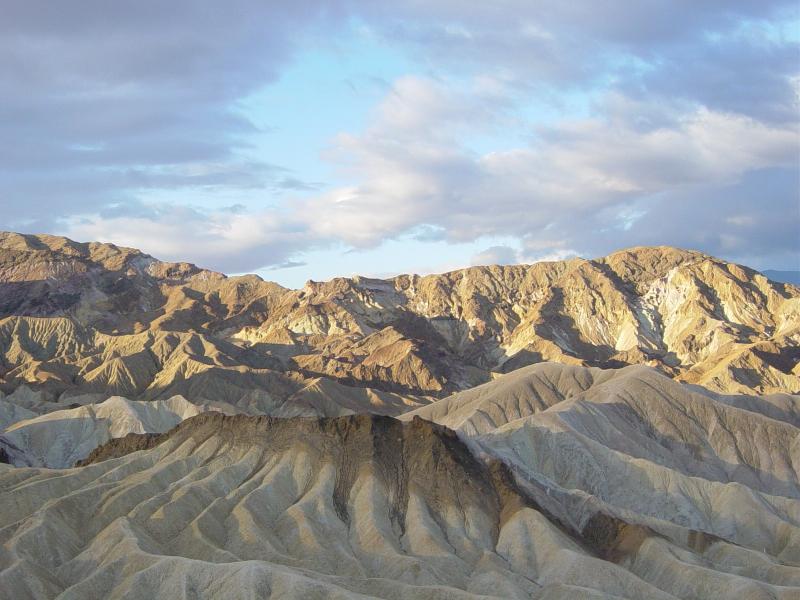
Located in California, at the heart of the Mojave Desert, Death Valley is famous for being the lowest, driest, and hottest place in all of North America. At its lowest point, Death Valley falls 282 feet below sea level and temperatures have been recorded at 130ºF+ at times. The terrain throughout the region is rugged and challenging to say the least, with rocky outcroppings, sand dunes, and desolate salt flats, which makes it an incredibly difficult place to travel through on foot.
Because DV is so dry, Todd will need to carry all of his water, along with his food and other gear, behind him in a specially designed cart that he lovingly calls the pig. Last year, the cart performed about as well as could be expected, especially considering it is hauling several hundred pounds of supplies, but Carmichael has modified it somewhat this year in order to meet the demands that he knows are waiting for him.
Sometime tomorrow, the man who once walked to the South Pole in record time, will begin another adventure in an environment that is the polar opposite (pardon the pun!) of the one he conquered at the bottom of the world. Over the course of the next few weeks, we'll see if he can tame this one too.
Tuesday, September 14, 2010
Posted By:
2Machupicchu
CheapTents.Com Interviews Andrew Skurka
CheapTents.com has posted an interview on their blog with long distance hiker Andrew Skurka, who just finished his six month long, 4700 mile Alaska-Yukon Expedition. The epic trek, which passed through multiple national parks in both the U.S. and Canada, traversed both the Alaska and Brooks mountain ranges, while passing through some of the most pristine and remote wilderness in North America.
In the interview, Andrew touches on such topics as his inspirations for these long distance treks, how he deals with solitude on the trail (Hint: it isn't an issue!), and which section delivered the best scenery on the expedition. He also offers some thoughts on gear, route planning, as well as his training for these kinds of journeys. Andrew even gives us an interesting tip on how to make your own cook stove out of a can of cat food!
I want to thank the writers of the CheapTents Blog for allowing me to participate a bit in this interview. They were kind enough to allow me to submit three questions of my own (I'm not saying which ones were mine!) and they even kept them in the final draft! This interview only adds to the quality posts that they are making over there, including an interview with long distance hiker Samuel H. Gardner that I linked to last week. Keep up the great work guys and thanks again for allowing me to have a little input on this one.
Thursday, September 9, 2010
Posted By:
2Machupicchu
The Rest of Everest Episode 137: The Agony of DeFeet
Earlier in the week I noted that the Rest of Everest video podcast had returned from its summer hiatus with a new episode for fans to enjoy. What I failed to mention was that the show's website also received a major upgrade in the interim, with a nice clean design and some new features as well. The new layout now allows us to easily sort out the distinct expeditions/seasons of the show, but we can now watch the episodes right on the website without the need to download the files or sync through iTunes. Congrats to the show's creator, Jon Miller, for the nice update!
Yesterday, episode 137 of ROE was released, continuing the Everest Trek that took place last year. In this latest episode, entitled "The Agony of DeFeet,"the team begins their descent back to Lukla after having reached Base Camp or Kala Patar. While that is the "high point" of the trek, in more ways than one, the journey back down still has a lot to offer. A large number of the trekkers from the 2009 crew join Jon this week to narrate the episode and offer insights along the way.
The episode opens in Gorak Shep, the last village before EBC, with Chris Marquardt giving us a tour of his tent and showing us all what the conditions are like in the sleeping quarters along the way. Personally, I stayed in tea houses on my recent hike through the region, which probably offered a bit more warmth and comfort overall.
As is typical with this podcast, the images are spectacular and offer a very realistic view of what traveling through the Himalaya in really like. This particular episode offers up some nice tips for staying healthy and alert while trekking through the region as well, with a particular focus on keeping your feet feeling good. Anyone who has taken a long distance trek of any kind can tell you how important that can be. I'm fortunate in that I rarely ever get a blister, and usually don't have issues with my feet. That wasn't the case for some of the trekkers in the video or on my own trek this past April.
Glad to have the Rest of Everest back and a part of my weekly routine!
Posted By:
2Machupicchu
Trekking Across Iceland With Alastair Humphreys
Adventurer Alastair Humphreys and photographer Chris Herwig completed an epic traverse of Iceland this past July that offered up everything you could hope for in a long distance backpacking expedition, and then some. The journey began in Akureyri, located in the northern part of the country, and ended in the Westman Islands, located off of Iceland's southeast coast, with most of the hundreds of miles crossed on foot and with the use of pack raft.
Although the adventure was completed back in July, Alastair has just begun sharing the experience on his blog, with several great entries already up. He kicked off his coverage of the journey with this entry, which details their pre-departure pursuit of wine, women, and food, before donning their 40kg (88 pound) packs and beginning the hike south. The second entry in the Iceland series has the duo moving into the infamous Icelandic high-lands, which are so inhospitable, that NASA used the region as a training ground for missions to the Moon. At that point of the hike, the boys were dealing with lots and lots of rain, and pretty much every piece of their gear was soaked. The third, and most recent entry, shares the details of their first foray onto the glaciers, which brought a whole host of new challenges to the expedition.
So far, Alastair is sharing a story per week on the expedition, and I have to say that it is fun and refreshing to read. While I always enjoy reading dispatches from the field, these well thought out, and written, stories offer a reflection and insight that only comes after an expedition is complete. The series is definitely worth reading, and I'm already looking forward to more.
Alastair is no stranger to the world of adventure. His previous exploits have seen him riding his bike around the world over a 4-year time span, covering 46,000 miles in the process. He has also hiked through India, sailed the Atlantic, run the Marathon de Sables, and canoed the Yukon, amongst a number of other very cool adventures.
To find out more about Alastair and the Iceland Expedition, check out this interview with him today over at Explorers Web.
Posted By:
2Machupicchu
Alaska-Yukon Expedition: Insights From Andrew
As I mentioned a few days ago, Andrew Skurka finished up his 4700-mile long Alaska-Yukon Expedition last Sunday, but he hadn't posted anything to the National Geographic Adventure blog with his final thoughts yet. I suspect those final thoughts are still coming, as it'll take some time for him to reflect on his accomplishment, but yesterday he did post a few quick, and rather amusing, thoughts.
You can read the latest entry to the blog by clicking here. In the post, Andrew shares his thoughts on what his favorite trail food was for the six-month journey and a very funny story about how he literally scared the crap out of a bear that he encountered along the way. I won't give too much away on either account, but I do think it is safe to say that Andrew will now be weighing his pack down with a lot of chocolate on his next long distance expedition.
When asked to sum up the expedition in a single word, Skurka replied with "Humbling." That probably seems appropriate for a trek that passed through some of the most remote and wild places in all of North America. The journey was not an easy one, even for a guy who is used to backpacking his way across miles of backcountry. It seems like he learned a lot about himself and the environments through which he traveled on this adventure.
I'm sure we'll get a more detailed follow-up on the trek once he's had time to rest and think about the whole experience. But for now, this brief entry is both fun and insightful at the same time.
Tuesday, September 7, 2010
Posted By:
2Machupicchu
Alaska-Yukon Expedition: Andrew's Done Too!
While we're on the topic of expeditions that are coming to a close, it appears that Andrew Skurka has finished up his Alaska-Yukon Expedition as well. In his last entry to his regular blog posts over at the National Geographic Adventure Blog, he hinted that the end was coming soon and that the end would also be "bittersweet" since his life had revolved around the project for the past 12+ months. At the time of that writing, Andrew was 200 miles and seven days away from the finish line, and according to his route map, it appears that he returned to his starting point in Kotzebue, Alaska on Sunday.
For those not familiar with the Alaska-Yukon Expedition, it was a 4700 mile journey through some of the most remote backcountry in North America on foot, skis, and pack rafts. The epic trek required nearly six months to complete, and crossed through six U.S. national parks, and two Canadian parks, as well. Along the way, Andrew made full traverses of the Alaska Range and the Brooks Range as well, all the while crossing just eight major roads.
Now for most of us, the mere thought of this type of hike is daunting enough, but for Skurka it's just another long-distance test of endurance to add to his resume. Andrew is the king of long distance hiking, have already completed numerous treks including through hikes of both the Appalachian and Pacific Crest Trails, a 6875 mile trek through the western U.S. that crossed through 12 national parks, and an 7778 mile sea-to-sea hike from the Atlantic Ocean in Canada to the Pacific Ocean in the Northwest U.S.
But the Alaska-Yukon Expedition presented some interesting challenges that Skurka had not contended with before. The weather was brutally cold for quite some time, and he had to deal with snow and ice well into the spring. On top of that, there was a remoteness to the trail that he hadn't experienced before on most of his other long-distance hikes. At times, when he was in the wilderness, Andrew was truly alone, without another person for miles around.
Congratulations to Andrew for completing yet another massive and highly impressive long distance trek. Can't wait to hear more about it.
Posted By:
2Machupicchu
Todd Carmichael Gears Up For Death Valley Round 2!
American explorer Todd Carmichael is preparing to make another attempt on Death Valley, and he'll hit the ground there on September 20th, as he once again goes for the first unsupported traverse of one of the most hostile environments on the planet.
Regular readers may recall that Todd attempted this journey last year, only to face a multitude of challenges, not the least of which was the daunting terrain that was, at times, impassable. Last year, he was pulling a cart, that he had dubbed "the Pig" behind him that was loaded down with his gear and supplies, and he regularly was forced to offload gear, in order to continue making forward progress. How he intends to deal with these conditions this year remains to be seen.
In his first dispatch for the new expedition, Todd says that he is returning with a newly designed Pig, which will once again carry his food, water, and other supplies, totaling nearly 500 pounds of weight, behind him as he makes the traverse from North to South across the desert. He'll get underway just as summer is coming to an end, in the hopes of missing at least some of the heat that Death Valley is known for, but even in the fall the place can be very hot, and that will be just one of the challenges he'll be facing.
Can Todd succeed where he failed last year? I guess we'll have to wait and see. Personally, I wouldn't bet against a guy who became the first American to make a solo journey to the South Pole, and set a speed record in the process. Good luck Todd! We'll be following your adventure!
Monday, September 6, 2010
Posted By:
2Machupicchu
The Rest of Everest Episode 136: A Rare Opportunity
Quite a lot of things happened last week while I was out of contact and offline, including the return of my favorite video podcast, the Rest of Everest. The show has been on hiatus for the past few months while creator Jon Miller made a trek to Everest BC in the spring, and has since been transitioning to making the podcast his full time gig – a challenging endeavor to be sure!
This episode, number 136 in the series, returns us to where we were when we left off back in April, with a continuation of a trek to base camp that took place in 2009. The team has split into two groups, a few that went on to Base Camp itself, while others made the climb of Kala Patar, opting to go for the better views of the mountain as opposed to actually going to BC itself.
The video quickly reminds us why we love this podcast, starting off with some great scenery and capturing views of climbers making their way up the mountain. Those opening shots, which go on for several minutes, really help to give a sense of scale to the Himalaya, as the climbers look like tiny dots in the distance.
Other highlights to the episode include a glimpse inside the cooking tent, shots of large rocks and boulders suspended above the ground in BC by columns of ice, and the return of some old friends that long time viewers will recognize.
Having now completed this trek myself, seeing some of these images is even more fun, as I recognize many of the places that they are visiting. I look forward to the rest of this series, as the next few episodes will continue to follow the 2009 trekking team as they make their way back down the mountain to Lukla, and eventually Kathmandu.
Welcome back Jon and the rest of the ROE team!
Tuesday, August 24, 2010
Posted By:
2Machupicchu
Ski the Himalayas Season 2: Episodes 2 and 3
The Ski The Himalaya team of Ben Clark and Jon Miller returns with a couple of new episodes that chronicle the next steps in their return to Baruntse, a 23,390 foot peak in western Nepal. Ben and Jon no only hope to summit that peak, but also make a ski descent as well.
The first video below is actually the second episode of the season, and shows the team arriving in Lukla, which seems fitting considering the news from Nepal this morning. Once on the ground there, they begin their trek to the mountain.
Ski The Himalayas Season 2, Episode 02 from Ben Clark on Vimeo.
This next video, Episode Three of the season, has the boys on the trail and making their way towards their destination. It's offers some great views of the surrounding mountains and gives an indication of what it is like to be trekking through the Himalaya. Really great scenery.
Ski The Himalayas Season 2, Episode 03 from Ben Clark on Vimeo.
Posted By:
2Machupicchu
Adventure Racers Conquer Wonderland Trail in 63 Hours
I've been meaning to post on this story for a couple of weeks, and it ended up getting buried in my Inbox, but considering yesterday's story about the hiker completing the thru-hike of the Adirondacks, I think this one is appropriate as well.
Back on July 25th, two hikers, Jeni McNeal and David Adlard, who also happen to be experienced adventure racers, took on the Wonderland Trail, a 93-mile classic hike that circumnavigates Mt. Rainier in Washington state. The two ended up completing the entire route in just over 63 hours, which represents one of the fastest times ever for the trail, but is all the more impressive when you discover that approximately 10% of the route was still snowed in. For reference sake, most hikers take between 8 and 12 days to complete the Wonderland.
McNeal and Adlard carried their own gear and stopped for just a few hours of sleep along the way. They also burned more than 33,000 calories each, and drank over 50 liters of fluids along the way, while climbing and descending more than 20 peaks, with 47,000 feet of elevation gain mixed in for good measure. The rugged trail is well known for its challenges, which include multiple water crossings, rocky and uneven paths, and plenty of steep ascents.
For this dynamic duo, this was just a training exercise however, as they prepare to compete, as Team Adventure Sports Week, at the upcoming Desert Winds Expedition Adventure Race. I have no doubt that those adventure racing skills came in handy when setting that hectic pace out on the trail.
Posted By:
2Machupicchu
Polarmax Giving Away A Kilimanjaro Ultimate Adventure
Polarmax, the company that makes some really great technical base layers, is currently running their Mt. Kilimanjaro Ultimate Sweepstakes, in which they'll be awarding the winner an incredible trip for two to Tanzania and a six day Kili climb. To enter the contest, all you have to do is click here, and fill out the form.
The sweepstakes will run through October 11th of this year, when a winner will be selected. That lucky person, along with their guest, will then travel to Africa in January for the opportunity to climb Mt. Kilimanjaro, the highest peak on the continent with Zara Tours and Kili expert Macon Dunnagan. The trip also includes round trip airfare, ground transportation in Tanzania, four nights hotel stay, and a custom made video of the adventure. The winners will also be outfitted with some Polarmax base layers to keep them warm and dry all the way to the summit. The contest is also sponsored by Backpacker Magazine and Cotton Incorporated.
For a taste of what you can expect on this trek to the Roof of Africa, check out the video below. Then, head over and get yourself registered. Take it from me, this is an amazing trip that any adventure traveler would love to have the opportunity to experience.
Posted By:
2Machupicchu
14 Dead in Plane Crash Near Kathmandu
A small passenger plane has crashed just south of Kathmandu today, killing everyone on board. The plane carried 14 people, including three crew members and 11 passengers, with four Americans, a Briton, and a Japanese traveler amongst them.
The plane was operated by Agni Air, and was making a routine flight to Lukla, most likely to drop off trekkers heading to the Everest region, but due to poor weather in the area, the flight was turned back. There is no word at this time as to the cause of the crash, but local villagers witnessed it going down in a field.
Having made this same flight just a few months ago, I can tell you that the airlines and flight control are all very careful about when and how you can approach Lukla. It is considered amongst the most dangerous airports in the world thanks to its sloping runway that runs up the side of the mountain. But in the case of this accident, it doesn't seem to have been an issue at all considering that the plane never even had a chance to attempt a landing. Most likely there was rain or fog in the area, and the plane was ordered to return to Kathmandu, but why it went down is a mystery at this time.
We're also right on the edge of the start of the fall climbing and trekking season, with travelers just now starting to return to the Himalaya following the monsoon season. The passengers on board this flight were probably on vacation and were looking forward to trekking in the Khumbu Valley over the next couple of weeks.
This is a sad story to start the day. My condolences to the families.
Monday, August 23, 2010
Posted By:
2Machupicchu
Hiker Crosses Adirondacks on Foot
Writer, educator, and outdoor adventurer Erik Schlimmer recently completed a 12-day hike across the Adirondacks, a chain of mountains located in northeastern New York. Schlimmer began his journey on August 6th and finished up on the 18th, covering more than 220 miles on the trail and climbing over 23,000 feet in the process. He is believed to be the first person to hike the entire length of the mountains.
Schlimmer's approach to the thru-hike was to travel as lightly as possible and to focus on being self-sufficient while in the backcountry. To that end, he carried less than 12 pounds of gear, leaving his GPS, cell phone, and personal locator beacon all behind.
The hike began in the northern Adirondacks, with Erik studying the route closely to try to determine the best path. There is no clear-cut trail that runs the length of the range, so he had to cross through both public and private lands along the way. Some of the trails weren't in the best of conditions either, with flooding causing him to adjust his route on the fly. The intrepid adventurer even admits that at times he wasn't even sure where he was exactly, and he simple just kept heading south until he could regain his bearings.
The Adirondacks aren't an especially tall mountain chain, with the highest point reaching 5344 feet on Mt. Mercy. But the trails can be quite steep, offering backpackers a significant challenge despite the altitudes. in addition, the region can be quite warm and humid in the summer months, which brings on its own set of challenges.
Schlimmer says that completing this hike has been a dream of his for a number of years. He's been visiting the Adirondacks since the 1990's, but this was his first opportunity to explore them on one long, continuous hike. It seems like it was worth the wait however, and this turned into a terrific summertime adventure.
Wednesday, August 18, 2010
Posted By:
2Machupicchu
Climbing Wyoming's Tallest Unnamed Peak
Speaking of cool videos, check out this one that comes to us courtesy of the Wend Blog. It was made by Forrest and Amy McCarthy, who were headed into Wyoming's remote backcountry to visit a peak that remains unnamed and is simply known as "13,198".
While the mountain is a simple walk-up, with no real technical skills necessary, it is still pretty cool adventure into some true wilderness. This looks like it was a great hike, and a nice climb too, with a good view from the top. What more could we ask for?
Tuesday, August 17, 2010
Posted By:
2Machupicchu
Trekking Jordan to Petra
While perusing the GreatOutdoors.com website earlier today I came across a great article about a trek I didn't even know was possible. Earlier this year writer Peter Potterfield took a 50-mile, week-long journey through the Dana Biosphere Reserve in Jordan, that culminated with a seldom traveled route to the stunning ancient site of Petra, an archeological wonder that dates back to the 6th century BC.
The Dana Biosphere is worth the visit to Jordan itself. The UNESCO World Heritage site stretches along the Great Rift Valley and features rugged backcountry that may be unexpected for travelers coming to see a desert. The deep valleys and steep, rocky peaks flow from Sandstone to Limestone to Granite, giving the place a dramatic flair. The place is also alive with both plants and animals, extending its diversity even further.
But of course, the crown jewel of Jordan tourism is Petra, a 2500+ year old city that has been carved out of the very rock walls of the region. The site was first brought to the attention of the western world in 1812, and it seems to have been capturing imaginations ever since. It is definitely a magical place, all the more enhanced by the system of narrow canyons that must be navigated to reach the site.
Peter and the group he was traveling with on this expedition made the journey on foot, far from the well trammeled trails of the tourist track. They actually approached Petra, after six days of hiking, through a series of "back doors" that aren't used by most other visitors, who usually make their way from the bus in the parking lot out front.
Along the trek, the group moved through four different climate zones, with cool alpine giving way to lush orchards, followed by a comfortable, moderate zone, and finally the scorching heat of the Sahara itself. It is quite a diverse hike that mixes culture, beautiful landscapes, and ancient history all into one spectacular trek. It seems amazing, and although I didn't know it was a possibility, it is on my radar now.
Check out the article for yourself and see if you agree. Seems like a fantastic adventure.
Wednesday, August 11, 2010
Posted By:
2Machupicchu
More Mountains For Beginners
Yesterday I posted a link to a story from Outside Online that listed the top five mountains for beginners to cut their teeth on, with the idea that these are high altitude climbs that don't require a lot of technical skills to complete. Their list included Mt. Baker in Washington, Kilimanjaro in Tanzania, Mount Khuiten in Mongolia, Elbrus in Russia, and Aconcagua in Argentina.
When posting that story, I requested suggestions for other mountains that might fit the bill, that is to say they offer a good challenge, they can help you build mountaineering skills, but can be climbed by someone who is in good shape and has the desire to make the hike to the top. I had some excellent options from a variety of sources, and in case Outside's list doesn't do it for you, here are a few more mountains for beginners.
I ended the story by suggesting Orizaba, an 18,491-foot tall volcano in Mexico and the always popular 14,411 foot Mt. Rainier, which is often used as a training ground for men and women who are looking to gain mountaineering experience. Another great suggestion, which came from a couple of readers, was Mt. Shasta in California, which is 14,179-feet in height and offers some nice glacier trekking. Shasta is a great place to work on basic technical mountain skills in a forgiving environment.
Another famous mountain that is well suited for beginners making a trek is Mt. Fuji in Japan. While "only" 12,388-feet in height, it is quite a challenging climb, with many hikers making a very early climb to the summit to watch the sun rise over the countryside below. Fuji is a tough slog to the top, but requires no technical skills at all to complete.
Paul, from the website Washington Adventures, thinks his state has the best mountains for beginners to gain experience on, and it's tough to disagree. In addition to Mt. Baker and Rainier, both mentioned above, he lists the 12,281-foot tall Mt. Adams, as well as the 7980-foot Mt. Olympus and the always popular Mt. Saint Helens, which stands at 8365 feet, as good choices for climbers to gain experience on.
For something a bit more exotic, you could head to Ecuador to take on a triple-header of alpine challenges. Reader Wade Nichols suggests Cotopaxi (19,344 feet), Cayambe (18,996 feet), and Chimborazo (20,565 feet), which he did on a single amazing trip with Alpine Ascents. Now that's a way to get some mountain experience! Wade says that these are good, challenging treks, but that you stay in huts along the way, and take a break in a hotel between each mountain as well. Sounds fantastic!
Finally, Chris Ord, editor of Outer Edge Magazine, offers up Huayna PotosÃ, a 19,974-foot peak in Bolivia, for your consideration. He went there awhile back and wrote about his experiences in this story. He describes it as mostly a tough trek, although there is an ice wall to deal with near the end, and crevasses are a danger along the way as well.
Good suggestions everyone. This list ought to keep all of us busy for awhile. :)
Posted By:
2Machupicchu
Trek Mt. Kenya for a Cause in 2011
We may still have a few months to go in 2010, but it is never too early to start looking ahead to 2011, especially when making travel plans. If you're looking for an adventure next year, perhaps you'll consider joining a trek to Mt. Kenya, which at 17,057 feet is the second tallest mountain in Africa.
There are a number of tour operators that offer a Mt. Kenya Trek, and it is a popular destination for adventure travelers the world over. But a special trek is being organized by the International Childcare Trust that will serve as a fund-raiser for that organization, while also raising awareness about the needs of the children of Kenya as well.
The ICT's Mt. Kenya Trek is scheduled to take place March 11-21, 2011 with participants trekking along a route that will see them pass through rainforests, moorlands, rock fields, and glaciers on their way to the summit, which offers spectacular views of the surrounding countryside. And once the climb is over, the team will also have the chance to visit one of the Trust's project sites and see first hand how their sponsorship dollars are being put to good use to help improve the lives of local children. For more about this great opportunity, check out the ICT's Trek Mount Kenya 2011 page.
This will be the second charity trek for the Trust, which earlier this year organized a similar trip to Nepal where the travelers hiked the Annapurna Circuit. That event raised £65,000 (roughly $101,000) and was a huge success. To get an idea of what this kind of trip is like, check out the video below.
Tuesday, August 10, 2010
Posted By:
2Machupicchu
Top Mountaineering Expeditions For Beginners
Outside Magazine's Adventure Adviser has a great post today answering the question: "What are the best beginner-level mountaineering expeditions across the world that a regular, fit trekker can attempt?" Seems like a natural question for fans of the outdoors who are looking to get into high altitude mountaineering for the first time.
And what does the Adviser recommend? His "very subjective" list of the top five mountains for beginners to cut their teeth on.
1. Mount Baker, Washington (10,781 feet)
2. Kilimanjaro, Tanzania (19,340 feet)
3. Mount Khuiten, Mongolia (14,350 feet)
4. Mount Elbrus, Russia (18,500 feet)
5. Aconcagua, Argentina (22,840 feet)
Quite a good list, as you have a strong start to the Seven Summits and a couple of other challenging, yet scenic and spectacular climbs. None of these incredibly technical, and the biggest obstacle would be dealing with altitude, but they'll give you some skills that you can take on other climbs, and a taste of what it feels like to get up into the thinner air.
What do you think? Anything that should be added to the list? I was thinking about the 18,491-foot tall Orizaba in Mexico as a possible addition and obviously something like Rainier, at 14,411 feet, which is a popular mountain for potential climbers to cut their teeth.
Any other suggestions?
Subscribe to:
Posts (Atom)