AD (728x90)

  • 2793 Pine St

    2793 Pine St

    Nulla facilisi. Cras blandit elit sit amet eros sodales, non accumsan neque mollis. Nullam tempor sapien tellus, sit amet posuere ante porta quis. Nunc semper leo diam, vitae imperdiet mauris suscipit et. Maecenas ut neque lectus. Duis et ipsum nec felis elementum pulvi...

  • 1100 Broderick St

    1100 Broderick St

    Nulla facilisi. Phasellus ac enim elit. Cras at lobortis dui. Nunc consequat erat lacus, a volutpat nisi sodales vitae. Phasellus pharetra at nulla in egestas. Vestibulum sit amet tortor sit amet diam placerat tincidunt sit amet eget lorem. Phasellus ...

  • 868 Turk St

    868 Turk St

    Nulla facilisi. Phasellus ac enim elit. Cras at lobortis dui. Nunc consequat erat lacus, a volutpat nisi sodales vitae. Phasellus pharetra at nulla in egestas. Vestibulum sit amet tortor sit amet diam placerat tincidunt sit amet eget lorem. Phasellus posuere posuere fel...

  • 420 Fell St

    420 Fell St

    Sed at vehicula magna, sed vulputate ipsum. Maecenas fringilla, leo et auctor consequat, lacus nulla iaculis eros, at ultrices erat libero quis ante. Praesent in neque est. Cras quis ultricies nisi, vitae laoreet nisi. Nunc a orci at velit sodales mollis ac ac ipsum. Na...

Showing posts with label Jon Bowermaster. Show all posts

Wednesday, June 9, 2010

Ocean Advocates Weigh In At TakePart.com


Yesterday was World Ocean Day, and I shared my own thoughts about the topic in this post. Personally, I think the threats to our oceans are one of the biggest dangers to the planet and our continued existence on it, and World Ocean Day was meant to spotlight some of those concerns, especially as events in the Gulf of Mexico continue to unfold.

I wasn't the only one talking about the plight of our oceans yesterday however, as a number of far more qualified people that me weighed on the subject over at TakePart.com. Topics ranged from global climate change, oil in the Gulf, and more.

Contributors included the likes of Philippe Cousteau, who said that he felt that increased levels of carbon are the biggest threat to the oceans today. Roz Savage shared her thoughts as well, pointing to the high levels of plastic that are now found in our waters. And our friend Jon Bowermaster, who has been filming along the Louisiana coast, discusses the chemical run off that has created a dead zone in the water at the mouth of the Mississippi River.

Each of the articles also includes some ideas on how we can "get our hands wet", or in other words, how we can all pitch in and help on an individual or grassroots level. I may be pointing these suggestions out a day after World Ocean Day, but it's never too late to start helping out.

While you're over reading the various essays, be sure to checkout TakePart.com more fully as well. The site is dedicated to tackling the biggest environmental issues today, and finding ways that we can all "take part" in making the world better place. Think of it as social networking with an eco-friendly slant.

Friday, April 30, 2010

Book Review: Oceans: The Threats to Our Seas and What You Can Do to Turn the Tide


Last week, in celebration of Earth Day, Disney and National Geographic released a ground breaking new film called Oceans. Directed by Jacques Perrin, the visionary filmmaker who brought us the acclaimed nature films Microcosmos and Winged Migration. Oceans has been years in planning and production, and by all accounts, it is stunning to behold on the big screen. I say this, because as of this writing, I have yet to see the film, due to the fact that I couldn't find a cineplex in Kathmandu.

On the other hand, while traveling abroad I did have the opportunity to read Oceans: The Threats to Our Seas and What You Can Do to Turn the Tide. The book, which is edited by Jon Bowermaster, is meant to serve as a companion of sorts to the film. It is a compilation of 31 different essays from as many authors, on a number of different topics centered around our seas, and the threats to their health, which will have wide ranging consequences for the future of the entire planet.

Some of the essays are sentimental in nature, such as Carl Safina's "Caught in the Same Net" and "Remembering the Ocean" by Celine Cousteau. Others offer up warnings about the Oceans' future, such as "Coral Reefs in Crisis", written by Abigail Alling or Richard Ellis' "The Bluefin's Uncertain Future". All of the stories are informative, insightful, and fascinating, especially if you have any level of awareness about the impact of global climate change. Other authors contributing to the book include ocean explorer Sylvia Earle, circumnavigator Liz Clarke, Captain of the Plastiki David de Rothchild, and Adventure Blog favorite Roz Savage. Even actor Leonardo DiCaprio submitted a short piece on how important, yet finite, a resource our water supply is. Bowermaster's own contribution, an essay on the changing state of the ice around Antarctica is also a sobering story about what is happening now, and how it could impact the future.

Whether you've seen the new film or not, Oceans makes for engrossing reading. But if you have seen the film, the book opens with an interview with director Perrin, who discusses what it was like to get this film made. It was a huge undertaking, involving camera crews visiting 54 locations around the globe, and on one particular day there were 26 location managers and 19 cameras in the field. A host of new technology was also created for the movie, including specially modified underwater cameras, a remotely controlled helicopter camera, and even a torpedo cam. Fascinating stuff to be sure, and something that will no doubt be on my mind when I get a chance to watch the movie itself.

So, whether you've seen the movie or not, be sure to grab a copy of this book. It is a great compilation of insights and thoughts on our oceans from some of the foremost experts on the topic.

Wednesday, April 7, 2010

Jon Bowermaster Celebrates 30 Days of OCEANS


It's no secret that Jon Bowermaster loves oceans. He's pretty much explored everyone of them in some fashion, and more often then not, it has been in the seat of a kayak no less. He has also taken ever opportunity possible to spread the word about the importance of the Earth's oceans for our environment, and the effects that global climate change are having on the health of these incredibly important bodies of water.

With this in mind, it should come as no surprise that he has kicked off a special series entitled 30 Days of OCEANS on his website to create awareness of the threats to our seas and as part of a celebration of Earth Day, which falls on April 22nd, an event that is now in its 40th year, and that Jon admits to lobbying to be renamed Oceans Day for 2010.

The 30 Days of OCEANS event centers around excerpts from a new book that Jon has served as the editor on. The book is entitled OCEANS, Threats to the Sea and What You Can Do To Turn the Tide, and consists of essays from 30 of the top experts on oceans. People who are out in the field studying the changes that are having a profound effect on those waters, and as a result, the rest of our planet as well. Some of the contributors include David de Rothschild, Roz Savage, Carl Safina, and many more.

Over the next few weeks, Jon will be posting excerpts from the book on his website, running up to, and through Earth Day. The first of those excerpts is already online, and is written by ocean exploration legend Sylvia Earle, a woman with more than 70 years of experience studying our oceans. You can read that excerpt by clicking here.

Tuesday, January 5, 2010

The Life Antarctic: Saying Goodbye For Another Year


Writer, filmmaker, and National Geographic Explorer in Residence Jon Bowermaster has spent the past few weeks exploring the Antarctic, as he is prone to doing this time of year. Jon first visited the continent two decades ago, and he has been back many times since, include each of the past ten years.

Over the course of his most recent journey, we've been able to travel along, thanks to regular updates posted to his blog. In his most recent dispatch, Jon arrives in Dallum Bay, his last stop before turning north across the Drake Passage, towards Cape Horn, which signals an end to his Antarctic exploration for this season. One of the things that Jon loves about traveling that far south this time of year is that it is daylight nearly 24 hours. At midnight, the sky remains lit like dusk, and by 2:20 AM, sunrise is already creeping over the horizon.

In this interesting and informative post, Jon talks about tourism in the Antarctic, which hit an all time high a two years back, but has been stymied a bit the past couple of seasons due to the global economic down turn. Right now, you can get rather inexpensive, at least by Antarctic standards, cruises to the region. While they remain pricey for many, they are a relative bargain for visiting one of the most remote places on the planet.

Soon, he'll be turning for home, and that brings feelings of both joy and regret for Jon. He says he loves the fact that he gets the opportunity to return to Antarctica each year, but always regrets having to leave it behind. From his writing about the place, it's clear that he has a real love affair with the frozen continent.

Thursday, December 31, 2009

The Life Antarctic: Crossing the Continent


Jon Bowermaster continues his journey through Antarctica, sending back dispatches to his blog, sharing his thoughts on the place that has become quite important to him on a personal level.

A few days back, Jon posted a story about his first journey to Antarctica, 20 years ago as part of an assignment for National Geographic. Jon joined Polar legend Will Steger and Jean-Louis Etienne, as they completed an epic 3741 mile journey across the frozen continent by dog sled. It would become the first successful journey of its kind and the last by dog sled.

Of great interest are a couple of journal entries from Will from the last week of 1989, exactly 20 years ago, in which he discusses some day-to-day issues with the expedition, including his flagging dog team and thoughts on acclimatizing to the conditions. His December 25th entry marked the team's 152nd day out on the ice, a true testament to the endurance necessary to complete such an amazing journey.

Jon notes that they are preparing a book on the expedition to commemorate the 20th anniversary of the crossing. It sounds like it'll be quite the interesting read, so keep your eyes open for it in the near future.

Also, a big thanks to Jon for reposting one of my Antarctic expedition updates from a few days back. It is much appreciated! :)

Monday, December 28, 2009

The Life Antarctic: Baby Penguins!!


While we're on the subject of Antarctica, Jon Bowermaster is continuing his journey at the bottom of the world as well, and sent back another dispatch via his blog.

Jon has now made his way to Petermann Island, where they have spotted their first penguin chicks of the season. The island is home to a unique place, where Gentoos and Adelies and blue-eyed shags all live together and hatch their young together. But Bowermaster says that the number of Adelies on Petermann is dropping by roughly 10 percent each year. This year, they number around 300 mated pairs, but just a few years ago, that was more than 500. The birds love cold weather, and the island just isn't cold enough for them any more, but where exactly they are going, remains a bit of a mystery, even amongst the scientists that study penguins.

Petermann Island is just another location in the Antarctic that is feeling the direct impact of global climate change. The birds that are a hallmark of the place have begun to abandon it, and in large numbers. There are still plenty of tiny penguin chicks there again this season, but those numbers are dropping quickly, and it won't be long before the Adelies are no longer spotted on the shores of this special and unique place.

This most recent dispatch from Jon came on the 23rd of December. Expect more from the frozen continent soon, with great insights on how climate change is directly effecting the place, from a man who has watched it change every year over the past decade.

Tuesday, December 22, 2009

The Life Antarctic: Thoughts On Copenhagen


I'm sure many of you followed the events that took place in Copenhagen recently, when the U.N. convened the largest ever conference on global climate change, with some 190 nations attending. The 11-day event met with very mixed results and ended up being about compromise and posturing rather than making any real commitment to improving the environment.

Jon Bowermaster has sent another dispatch from the Antarctic, where he weighs in with his thoughts on the Copenhagen Conference, while sitting aboard a ship passing through the icy waters off the coast of the continent that is probably seeing the most dramatic changes.

Jon was getting updates via the Internet, and like many of us, was dismayed by the end results. But to throw an even darker shadow over the proceedings, he attempted to discover the "carbon footprint" of the conference, and came to this conclusion:

1,200 limousines, 140 private jets, 15,000 delegates, 10,000 environmental activists and lobbyists, over 100 world leaders and 5,000 journalists. According to summit organizers the 11-day conference, including the participants’ travel, created a total of 41,000 tons of “carbon dioxide equivalent,” equal to the amount produced over the same period by a U.S. city, population 225,000.


For a meeting on the environment, it sure seems like they didn't think about their impact on it while organizing the event.

I know that there were a lot of politics involved in what went on in Copenhagen. China and India led a walkout of the developing countries at one point, as those nations feel that remaining environmentally conscious will stunt their economic growth and prevent them from making strides at industrializing their countries. This ended up leading to a series of compromises that took much of the bite out of the final documents.

Meanwhile, Jon reads about the results of the conference and wonders why more couldn't have been accomplished, as he sits in a place that is ruled by a treaty signed by many nations, and is a symbol of how countries can work together.

Friday, December 18, 2009

The Life Antarctic: Into Neko Harbour


Continuing his journey along the Antarctic Peninsula, Jon Bowermaster sent another dispatch yesterday, detailing his arrival at Neko Harbour, a place that he calls "one of the most beautiful along the Peninsula", although he quickly admits that he says that about a lot of places along the peninsula.

This beautifully written blog update gives us an excellent idea of what it is like on the frozen continent. Jon talks about how it is both very quiet and yet filled with ambient noises, such as penguins chattering with their newborn or the sounds of humpback whales just below the surface. For a place that is so remote, it is still filled with a lot of life.

Speaking of remote, Jon also notes that if you hike more than 100 feet from the shore, you're likely to become the first person to ever walk in that area. There are still a relatively small number of visitors to Antarctica each year, and most that do some, seldom venture away from shore at all.

After spending several hours in the area, it was time for the team to move on, but not before witnessing a large chunk of ice breaking free from the 200 foot tall glacier with a resounding crack that would be heard for miles. Just another example of life in the Antarctic.

Tuesday, December 15, 2009

The Life Antarctic: Jon Bowermaster Continues His Journey


I mentioned last week that Jon Bowermaster had returned to the Antarctic for the tenth straight year, and that he was blogging his journey, which began with his crossing of the Drake Passage. Since then, we've had a couple of more updates, including his arrival on the continent itself.

Unlike most of the visitors to the Antarctic that I write about, Jon makes the journey by ship, and generally explores the coastline, often in a Zodiac or kayak. On Day 2 of his latest journey, he arrived on Barrientos, a tiny island that is part of the South Shetlands, where he was greeted by penguins protecting their nests. Later, on Deception Island, Jon estimates that there were somewhere between 120,00-160,000 of the tuxedoed, flightless birds, who are expecting their chicks to arrive in the next few weeks.

On Day 3, the expedition traveled into the Weddell Sea, where we get some great photos of the giant, tabular icebergs. These huge patches of ice, usually a mile or more in length and 150-200 feet in height, float out into the Southern Sea, and drift ever so slowly into the surrounding waters. Jon says it'll take a "decade or so" for these behemoths to melt, but in the meantime, they make for a stunning display floating just off the Antarctic coast.

Watch for more updates, including great photos, on Jon's blog soon, and swing by Gadling, where he is also posting stories from the Antarctic, like this one that ran yesterday.

Wednesday, December 9, 2009

Back To Antarctica: Jon Bowmermaster Reports From The Drake Passage!


A quick glance at the calendar tells you that it is December, which means that a number of things happen this time of year. Of course we all worry about holiday shopping, while we dust off or snowboards, and prepare for the start of winter. But for National Geographic Explorer in Residence Jon Bowermaster, it can mean only one thing - it's time to go back to Antarctica!

Over the past two decades, Jon has made this journey a number of times, including every year for the past ten. So it should come as no surprise that his latest dispatch on his blog comes to us from The Drake Passage, a windy, tumultuous stretch of water off of Cape Horn, at the southernmost tip of South America. This is the first day of his 2009 Antarctic adventure, and at least for now, the seas remain calm. If all goes as planned, tomorrow Jon and his crew, will be setting foot on the Antarctic Peninsula for the first time this year.

Over the past few years, Jon has journeyed to the frozen continent to study the effects of climate change on the environment there. He has witnessed some dramatic changes throughout the region, and chronicled them in his film Terra Antarctica. This year, we can once again expect interesting and thought provoking dispatches from the bottom of the world, as Jon gets the opportunity to return to that amazing place. Over the next few weeks, expect frequent updates as he travels throughout the region, sharing his travels through blog posts, photos and video. For us poor, desk-bound souls, it is the closest we'll get to the place, at least for this year.

Wednesday, September 16, 2009

Trailer For 3-D IMAX Surfing Film

Last week I mentioned that Jon Bowermaster was in Tahiti working on a 3-D IMAX surfing film with Stephen Low and Kelly Slater. Today we get the first look at what they've been working on in the form of a great trailer, and it gives us a taste of what we can expect in February of 2010 when the film is released.

And after you've enjoyed the video, head over to Jon's Blog to read the latest post on "Shark City", in which a local guide takes them out to a spot in the sea where he summons up hundreds of sharks for their viewing pleasure. Good stuff, as always!

Update: I just wanted to make a small correction to this post. Jon is in Tahiti and is writing about this new film but he isn't involved in actually making it. His story will appear in the December issue of National Geographic Adventure and will cover the making of the movie ahead of its release.

Wednesday, September 9, 2009

Jon Bowermaster on BBC's The World


Our favorite ocean explorer Jon Bowermaster is off once again on another aquatic adventure, this time to French Polynesia, where he is filming a new IMAX film with Stephen Low and Kelly Slater. Jon was interviewed by the BBC on the new film and you can listen to what he's up to by clicking here.

In the interview, Jon reveals that they are in the process of making the biggest surfing film of all time off the coast of Tahiti. The film is not only being made for IMAX, but it is also in 3D as well. The team has mounted cameras on the end of the boards to catch the action up close and personal. The film should be finished up over the next couple of months, and we can look forward to it coming to an IMAX Theater down the line.

And be sure to check out Jon's dispatches from French Polynesia, where he's been posting his thoughts on a variety of topics including the impact of warming oceans on weather patterns and his travels through the Cook Islands.

The blog post that I personally found the most interesting however, was this one on Ocean Warming in which Jon talks about how scary it is to be swimming in the ocean, more than 12,000 feet deep at that point, without fins on. He ponders how long he could last out there under those conditions. Those thought mirrored my own when I dropped into the Pacific off the coast of Australia earlier this year, when I was snorkeling on the Great Barrier Reef. To protect the Reef you aren't allowed to use fins either, and when I jumped into the water, I was well off shore. There was a certain amount of panic that ran through me as I realized there was nothing below me, for hundreds of meters, and it was hard work to stay afloat without fins on. I eventually adjusted and swam into the Reef, where I proceeded to have a great time watching thousands of colorful fish, but those brief moments of panic certainly stuck with me.

As always, great stuff from Jon with very insightful commentary on the health of the oceans and the cultures that depend on them.

Tuesday, June 16, 2009

Jon Bowermaster's Terra Antarctica Wins BLUE Ocean Film Festival


A hearty congratulations to Jon Bowermaster and the rest of the team behind Terra Antarctica, which won the "Best Ocean Issues FIlm" category at this past weekend's BLUE Ocean Film Festival in Savannah, Georgia.

The film is the latest from Jon and his team, and chronicles his expedition along the Antarctic coast back in 2008. The screening at the film festival was the first public showing of the one hour long movie and obviously its message about the health of Antarctica and its impact on the world's oceans stuck a chord with judges, as it made the shortlist for the top films at the five day event.

This was the first BLUE Ocean Film Fest, and the organizers had more than 200 films submitted for review, of which, 50 were selected for screening. From there, the judges narrowed their prize considerations down to Wild Ocean, a big budget IMAX film, Call of the Killer Whale, the latest project from Jean-Michel Cousteau, The Cove, which came out of Sundance with a lot of buzz, Saving Luna, which has garnered award from a number of other film festivals, and The Great Tide, which is produced by the BBC and David Attenborough. Terra Antarctica rounded out the list, and won the Ocean Issues category, while the top honor went to The Cove.

You can read Jon's thoughts on the festival as a whole and Terra winning in the latest entry to his blog, and you can also get a sneak peak at the film by catching the trailer here.

Tuesday, May 19, 2009

Crossing The Bering Sea with Jon Bowermaster


The man who never stays home, Jon Bowermaster is off again on another adventure, this time crossing the Bering Sea from Tokyo to Alaska. For Jon, this trip is a return to his roots, a place where ten years ago his Oceans 8 project got underway while exploring the Aleutian Islands with three friends in sea kayaks.

Now, a decade later, he returns to the region to explore the culture of Japan, before moving on to the remote northern islands of that country. From there, he'll set off to Kamchatka, and then on to the Aleutian Islands once again, where he'll face "some of the most beautiful and roughest waters on the planet."

Bowermaster is already in Japan, having arrived late last week following a nearly 14 hour flight from New York. In his first dispatch, he comments on that very long flight, and arriving at his destination at last, just to be told to stay seated so everyone could be checked for the Swine Flu before exiting the plane. A sign of the times I suppose.

The second dispatch followed a few days later, with Jon, and his companion Alex Nicks, visiting the Tsukiji fish market in Tokyo, the world's largest auction house for tuna. As someone who takes a deep interest in the health of the world's oceans, the market is of great interest to Jon, in no small part thanks to its size. The place is massive and sells more than 400 different types of sea food on any given day.

Finally, the third dispatch was sent just yesterday, and it offers up even more details on the tuna auctions themselves. The auction comes fast and furious, with the giant fish being completely bought up in less than half an hour. With in minutes of the purchase, they are on a chopping block, and being cut to be sold in a variety of ways.

Check back in the days ahead, as Jon and Alex work their way through Japan and then return to the water, where they'll be exploring the remote places that we love to hear them report on. It should be another interesting set of blog posts.

Monday, May 4, 2009

Dispatches From The Pirate Coast


No, the headline for this post is not the title of the next Disney movie starring Johnny Depp. Instead it is a description of the latest round of dispatches on Jon Bowermaster's website, as his friend Dennis Cornejo, a filmmaker and marine biologist, travels through pirate infested waters off the coast of Somalia while running a passenger vessel, devoid of passengers from Tanzania to Egypt.

When the ship set out, Dennis thought it sounded like a good idea of he stayed on board to get caught up on a backlog of work while it slowly made its way up the East African coastline. That was before the increased pirate activity following the dramatic rescue of Captain Richard Phillips by Navy Seals a few weeks. Now the entire region is buzzing with activity, and Dennis sailed right into it just a few days back.

So far there have been three daily reports from the Pirate Coast. On Day 1, Dennis writes about the preparations the ship has made to combat any pirates who may see it as a potential target for highjacking. He also talks about possible security measures that would be taken should a pirate attack occur.

On Day 2, he gives another update, noting that everyone was on edge, waiting for something to occur. There is a security team onboard to try to protect the vessel and make sure that everything goes as it should, and it is interesting to hear the measures that they are taking to remain safe and undetected.

Today is Day 3 and the ship is actually running a course that is close to the Somali coastline, which seems like it would be the scariest place to be, but according to Dennis, the Captain showed him a map that indicated that most of the attacks actually occur further from land, and they are making better time through the region by following the coast.

It'll be a few more days until the ship is completely out of danger, but so far so good. Be sure to check out Jon's blog for updates tomorrow to make sure everything is going as planned.

Thursday, April 16, 2009

Jon Bowermaster is off to Madagascar


Speaking of Jon Bowermaster, when last we checked in with him, he was in the Maldives, investigating the impact of rising sea levels on that nation's future. He has since moved on to the Seychelles Islands, where he discovered that pirates have become a very real threat.

His journey across the Indian Ocean wasn't done there however, as he has proceed on to Madagascar, an already poor country that has been hit hard by the global economic recession, and is now struggling with a great deal of political unrest as well. Tourism has been a boon for the island nation for a number of years, and two recent animated films have actually helped that industry. But in this economic environment, many people are not traveling, and with the unrest in Madagascar leading to riots in recent month, those that are venturing abroad, have elected to avoid the country for the most part.

It seems Jon's tour of the region won't end here either, as judging from this map, he'll next be moving on to the Comoros Islands, a small island nation with a rich and diverse history. From there, it's on Mozambique before proceeding north to Tanzania. This trip makes my little foray into the Amazon seem like I was just dipping my toe in the water!

Be sure to check back with Jon's blog regularly. His updates are always insightful and interesting, and I almost always learn something new about the places he visits. They also almost always wish I was tagging along too!

Wednesday, April 15, 2009

Book Review: Wildebeest in a Rainstorm


One of the best things about extended travel is that it allows you to catch up on your back reading. That's just what I did while I was away, and I started with the latest book from Jon Bowermaster entitled Wildebeest in a Rainstorm: Profiles of Our Most Intriguing Adventurers, Conservationists, Shagbags and Wanderers.

The book is a collection of articles that Bowermaster has written over the past twenty years for magazines such as National Geographic Adventure and Outside profiling some of the top environmentalists, activists, and adventurers from around the globe. Peter Beard, Robert F. Kennedy Jr., Richard Branson, and George Schaller are just a few of the fascinating people in the book.

Wildebeest offers a perfect display of Bowermaster's writing style, which is, as always, excellent, even over these disparate articles written over the course of two decades about individuals who are all unique in their own right, but share some common characteristics, such as an adventurous spirit, focused determination, and a deep seeded concern with the well being of the planet on some level or another.

A perfect example of this is Peter Beard, an artist and activist, who spent much of his life in Africa, lured there at a young age by Karen Blixen's classic book Out of Africa. Beard is the subject of not just one, but two of the articles contained in Wildebeest, and he is also credited with the quote that gives the book its title. The first article is more of a profile of Beard's life working in a variety of countries on the continent sometimes as a hunter or doing wildlife research, and later taking photographs that would eventually make him famous. The second article follows a number of years later, when Bowermaster catches up with Beard in a New York hospital after a female elephant did its best to send Beard out of Africa permanently. Both stories are well done, and give you insights into Beard's character, which is both inspiring and sometimes tragic, at the same time.

One of the best elements of this book is that Jon happens to be friends with a number of the people that he had profiled. There is a casual familiarity in the way that he writes about them that makes it seem like we're joining him and a buddy as they go off on an adventure in the wilds of Nicaragua, Chile, or some other far flung place. Those friendships also put him in a unique position of understanding these men and women far better than just any writer who is sent off to cover a story.

It was also interesting to read some of the older articles and realize just how relevant they remain today, not only in the case of the particular person being profiled, but for the various causes or environmental issues that remain concerns years later. Bowermaster closes each of the chapters with a very brief update on what has become of the particular person as well, and there were times when I was reading that I couldn't help but look forward to those short follow-ups to find out how things have changed.

All in all, another good book to add to your bookshelf. It is a very quick and interesting read, and if you're like me, you'll be rushing to the Internet to see if you can find out more about these adventurers, and what has befallen them since Jon originally wrote their story.

Thursday, March 19, 2009

Jon Bowermaster's Dispatches From The Maldives


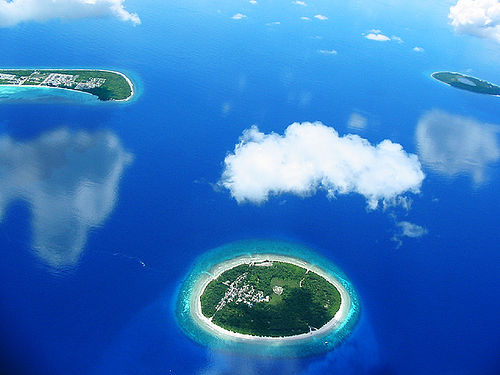
The man who never stays home (at least not for long), Jon Bowermaster is off once again, this time to the Maldives, where he is investigating the impact of rising sea levels on the tiny island nation which consists of more than 1200 islands spread out across the Indian Ocean south-west of India itself.

Yesterday Jon made his first dispatch from the Maldives, where the President has announced that he intends to make the country carbon neutral by 2010. The islands are a tourist paradise, and the place gets much of it's revenue from the tourism business, so the emphasis will shift now to ecotourism and a move away from fossil fuels and toward wind energy and solar power.

Predictions for the future of the Maldives are dire. With global climate change causing the polar ice caps to melt and sea levels to rise, the entire nation could be underwater by 2100. Because of that outlook, I put the country on my list of five places to see before they're changed forever, which I wrote at Gadling a few weeks back. If things continue as they are now, 80% of the islands could disappear before the end of this century, meaning that many of the 400,000 people who currently live there will be forced to find new homes.

Jon will be touring the area by boat and float plane over the next two weeks. Look for more dispatches on what is happening there right now in the days ahead. And be sure to checkout Jon's newly re-launched website, which has a great design, access to an amazing amount of information, and a simple to navigate layout. My favorite new feature? The "Where is Jon?" tab in the upper right corner of the home page. It tells me where he's off to in his ongoing adventures.

Monday, February 16, 2009

What Would Darwin Think?


Jon Bowermaster has written a very thoughtful post today entitled "What Would Darwin Think?" that takes a hard look at the impact of man on the Galapagos Islands, a place that is forever linked to the naturalist who developed the Theory of Evolution.

As Jon notes, last week was the 200th anniversary of the birth of Darwin, and many around the globe took time to acknowledge the day, myself included. Lost amidst all the hoopla surrounding Darwin Day however, is that the Galapagos, a place that he made famous, now finds its environment in danger because of the encroachment of man on that place. According to Jon, in the past ten years the population of the island has risen from about 1500 people to a permanent settlement of more than 25,000 on Santa Cruz, the largest of the islands. All of those people, in a place that can't naturally sustain them, is taking its toll in more ways than one and Rafael Correa, the President of Ecuador, is taking steps to limit access to the islands in order to protect the place that has become known as Darwin's Laboratory.

The Galapagos Archipelago is located about 600 miles off the coast of Ecuador, and consists of 13 main islands, 6 smaller ones, and dozens of islets. The place became famous when Darwin wrote his book The Origin of Species, in which he talked about the diversity of life in the Galapagos, when noting how the same species evolved in unique ways on the different islands. That legacy has led to it becoming a popular place for adventure travelers, looking to experience that diversity of life for themselves.

So? What would Darwin think today? Would he be horrified by our impact on these remote places? Would he be fascinated to see how the creatures on the Galapagos would react to man? It's hard to know for sure, but an upcoming film that Jon is working on will attempt to look at that very question. It certainly is an interesting question to speculate on.

Tuesday, January 20, 2009

More Notes From Sea Level by Jon Bowermaster


He may have left the Antarctic for another season, but that hasn't stopped Jon Bowermaster from continuing to reflect on his recent visit there. Jon continues to post daily updates tho is Notes from the Sea Level blog, that include amazing photos and great insights into the health of our oceans, the Antarctic, and many other places he visits on his journeys.

A few days back Jon wrote some "random notes" on the Antarctic with some updates on a number of incidences that have gone down on the Ice since he left, including the crash landing of a small supply plane and the South Pole Quest Team reaching the Pole in record time. He also note that birds are at threat to planes the world over, including on Antarctica.

On a more somber note, yesterday's dispatch takes a look at the amazing amount of trash that washes up on the shores of Barren Island, part of the Falklands. Prevailing ocean currents drag all the junk there, presumably from boats, as Jon notes that Argentina is hundreds of miles away. After departing Barren, the team is off to Carcass Island, also part of the Falklands, which is home to just a couple of families, but does have a bed & breakfast in case you're looking for someplace to get away for the weekend.

Finally, today's post, just in time for the inauguration of a new President, comes from the aptly named New Island, where Jon encounters plenty of penguins. The island is soon to be made into one large nature reserve, and it is considered the most remote, but still inhabited, island in the Falklands. The team spent their last day of the expedition there before heading back to Argentina, and then on to home.

Feature (Side)

© 2013 . : : Machu Picchu : . All rights resevered. Designed by Templateism