AD (728x90)

  • 2793 Pine St

    2793 Pine St

    Nulla facilisi. Cras blandit elit sit amet eros sodales, non accumsan neque mollis. Nullam tempor sapien tellus, sit amet posuere ante porta quis. Nunc semper leo diam, vitae imperdiet mauris suscipit et. Maecenas ut neque lectus. Duis et ipsum nec felis elementum pulvi...

  • 1100 Broderick St

    1100 Broderick St

    Nulla facilisi. Phasellus ac enim elit. Cras at lobortis dui. Nunc consequat erat lacus, a volutpat nisi sodales vitae. Phasellus pharetra at nulla in egestas. Vestibulum sit amet tortor sit amet diam placerat tincidunt sit amet eget lorem. Phasellus ...

  • 868 Turk St

    868 Turk St

    Nulla facilisi. Phasellus ac enim elit. Cras at lobortis dui. Nunc consequat erat lacus, a volutpat nisi sodales vitae. Phasellus pharetra at nulla in egestas. Vestibulum sit amet tortor sit amet diam placerat tincidunt sit amet eget lorem. Phasellus posuere posuere fel...

  • 420 Fell St

    420 Fell St

    Sed at vehicula magna, sed vulputate ipsum. Maecenas fringilla, leo et auctor consequat, lacus nulla iaculis eros, at ultrices erat libero quis ante. Praesent in neque est. Cras quis ultricies nisi, vitae laoreet nisi. Nunc a orci at velit sodales mollis ac ac ipsum. Na...

Showing posts with label Exploration. Show all posts

Wednesday, September 22, 2010

Outside Interviews Amazon Walker Ed Stafford

The Outside Blog has an interview with Ed Stafford today. He's the man who recently finished walking the length of the Amazon, an epic journey that took 859 days to complete, covering more than 4000 miles in the process. Ed's back home in the U.K. now, and taking some much needed rest before his next adventure. He's also working on a book about the Amazon walk that should make for very interesting reading.

In this interview, Stafford talks about how he came up with the idea for the journey (He Googled it!), his inspirations for becoming an explorer, and his toughest moment in the jungle. He also touches on his more exciting moments, what he missed from home while on the trek, and his favorite piece of gear on the expedition, amongst other things.

I've said it before and I'll say it again, I've got a gigantic amount of respect for Ed, and his companion Cho Sanchez who accompanied him most of the way. Traveling the length of the Amazon on foot was one of the last great feats to be accomplished, and it is an amazing testament of his stamina and determination that he was able to finish the walk from source to sea. It's also good to hear that he's planning another adventure, but we'll have to wait a year to find out what he's got planned. I guess he'll stay home just long enough to finish that book, and then hit the road again. I can't wait!

Tuesday, September 14, 2010

In Search of Shambala: The Search4Paradise Expedition

So many expeditions that we read about today are focused on visiting some remote place, usually in an effort to raise awareness (and usually funds!) for a cause. While those are certainly noble endeavors, and regular readers know that I don't shy away from writing about them, sometimes it's nice to see an expedition that is being undertaken for the exploration and sheer sense of adventure. The Search4Pardise expedition, led by Arita Baaijens, is a perfect example of just such a journey.

Baaijens is certainly no stranger to challenging journeys. Born and raised in the Netherlands, she spent much of her life caught up in the daily grind, just like the rest of us. However, in 1990, she quit her job as a consultant, bought a small caravan of camels, and began a nomadic life, spending most of the past twenty years wandering the Sahara Desert in Egypt and the Sudan. During that time, she has written a number of books, become an accomplished photographer, and a member of the Royal Geographical Society.

After spending the better part of two decades in the desert, Arita is turning her attention elsewhere. She intends to travel through Russia, Kazakhstan, China and Mongolia, on horseback, in search of the mythical and mystical Kingdom of Shambala, a place that holds deep meaning for Buddhists around the globe.

The legends that surround Shambala are fantastical to say the least. They speak of an idyllic place, hidden somewhere in the vicinity of the region that Baaijens and her team will be exploring, that is said to be a veritable paradise, although there is some debate, even amongst scholars, if Shambala is an actual place or a state of being. The Dalai Lama is one person who does believe it exists, but in order to enter this "Pure Land," one needs to have achieved an enlightened state. And like all good myths, there are accounts to back it up, including some explorers claiming to have found the place, hidden away in a maze of canyons and mountains somewhere in Inner Asia, although no one can ever seem to remember the route in.

Arita is in the process of finishing up a 10 week long reconnaissance expedition in advance of the real exploration mission that is set to go down in 2011, when she will return to the remote, and largely uncharted, Altai Mountains to really begin the search.

For centuries, man has tried to find "paradise" which is defined quite differently in many cultures. It is interesting that even now, in the 21st Century, we continue that search. It should be interesting to see if they find anything on their journey, as it is quite possible that the Shambala myth is based on some ancient, and mostly unknown, civilization that existed in that part of the world hundreds of years ago.

I'm definitely intrigued.

Friday, September 10, 2010

Bio-Fueled Snow-Scooter Preps For Antarctic Run At Last

Way back in November of 2008 I wrote about the then newly designed CIV (Concept Ice Vehicle) that was being prepped for a trans-continental ride across Antarctica as part of the Moon-Regan Expedition. Fast forward two years, and it looks like they'll finally be getting underway later this fall, when the Antarctic season returns at last.

Our friend Jon Bowermaster wrote an updated story on the CIV and the expedition for TakePart.com last week, filling in the blanks on what has been happening in recent months. It seems that the team is still hoping to make the 3000 mile transantarctic journey, and do so in record time, with their high-tech sled, designed by Lotus and powered by bio-fuel. The expedition is expected to take 40 days to complete, departing from Patriot Hills and ending at McMurdo Station.

The team will consist of 11 researchers and a couple of support vehicles that will carry the actual gear, food, and equipment. The Ice Vehicle only carries one rider at a time, although it is capable of hitting 84 mph on the ice. The high-tech sled will also use a special GPS enhanced, ground penetrating radar to keep an eye out for crevasses, being able to avoid them at high speeds will be a completely different issue however.

The expedition has two goals in mind. First, it will test out the value and performance of biofuels in extremely cold weather and secondly the team hopes to raise awareness of the impact of global climate change on environment, particularly in the arctic conditions found at the South Pole. Of course, we know that the Ice Vehicle will use environmentally friendly fuels as it passes through the Antarctic on its mission, but how about those support vehicles? What exactly will they be burning? Hmm?!?

With the 2010 Antarctic Season on the horizon, I'll be following this one closely.

Monday, August 23, 2010

Inflatable Lab Could Offer New Way To Explore The Arctic

Architectural firm Studio Les Bêtes has designed an interesting and unique approach for future explorers to potentially visit the North Pole. Their inflatable research lab, called the Arctic Drifter, would be built out of Hypalon air-bags, which high end inflatable boats use as well, and would quite literally roll across the arctic, ignoring water, ice, and crevasses in the process.

When fully inflated, the lab would be 15 meters in diameter, and could move through high winds and other inclement weather without much of a problem, while the researchers and explorers stay inside, warm and protected from the elements. When they want to go out, they simply deflate one of the air-bags, and exit the lab. The crew would stay inside a cabin that is connected to a roll cage that would keep their living quarters and equipment upright no matter which way the giant ball rolled.

While this looks like an interesting concept, there doesn't really appear to be a way to direct the lab to move in any specific direction. As a mobile lab, it seems like this has some potential in some capacity, but it's just not quite ready to be used in the field just yet. Still, kind of an interesting take on arctic exploration.

Thanks to Inhabitat for sharing this one.

Monday, August 2, 2010

Canadian Archeologist Discover Missing Ship

A week and a half ago I told you about a team of Canadian archeologists who were setting out in search of the missing ships of explorer John Franklin, who went missing in the arctic back in 1845 while searching for the fabled Northwest Passage. Just a few days later, the team had already discovered one of the prizes they were going in search of – a rescue ship that also went missing.

Using sophisticated sonar systems, the expedition discovered the HMS Investigator, at the bottom of Mercy Bay. The Investigator was sent in search of Franklin, and his two ships, the HMS Terror and HMS Erebus.  The team of archeologists are still searching for those vessels, which were said to have been trapped in the ice when Franklin and his crew abandoned ship while searching for the Northwest Passage, which they believed would open up a faster trade route to Asia. The explorer and his crew would spend three very long years living in the arctic, hoping beyond hope for rescue. Over the course of that time, all 128 men died of sickness, exposure to the cold, and slow starvation.

The Investigator is said to be in good condition and the research team reports that it was discovered within the first 15-minutes of their search. The vessel was abandoned by her crew after getting stuck in the ice as well, but it became an important supply cache for the Inuit people that live in the region. So much so, the ship is actually part of their history and lore, as they returned to it often over the years to scavenge materials from the craft.

I thought that was an interesting follow-up to the story I had just written about. It's remarkable that they found the ship so quickly, and I'll bet they wish all of their research were so easy. It'll be interesting to see if they find the other two ships they are looking for as well, as they will be far more difficult to locate.

Thursday, July 22, 2010

Walking The Amazon Update: 18 Days To Go!

After 841 days walking the Amazon Jungle, Ed Stafford is finally nearing the end of his expedition to cross the rainforest on foot. In fact, he even has a detailed schedule of his final days planned out, and promises daily updates to his blog to help us follow along over the final stage of his incredible journey.

Today Ed announced that there are just 18 days left until he crosses the finish line, in this case the finish line meaning a plunge into the ocean. He says that media attention has begun to increase, and he was even joined by a reporter who will be tagging along with he and Cho over the next six days. She's going to get an education on survival in the wilderness, as those next six days include a trek "straight through the unknown jungle on a compass bearing. No paths, no settlements to stay at, just swamps, river crossings and sore shoulders that never go away."

Ed's final schedule looks like this:

22nd to 27th July - last 6 days of walking through rainforest.
28th - Walk the Trans Cametá Highway to Cametá.
29th - Paddle across the Trocantins River.
30th - Walk back on the far side of the said river to correct any advance downstream the previous day [see rules on FAQ page].
31st to 3rd August - 4 days walk down highways into Belem City itself.
4th - Meet Keith (photographer) off plane. Interviews.
5th to 8th - 4 days walk towards the Atlantic Ocean to just short of Marudá.
9th August dawn - final 5km in the dark and arrive at Marudá, the Atlantic, for sunrise (0630 local time, 0930 BST, 1030 BST). Fall in the sea. Job done.
I love his "Fall in the sea. Job done." comment to end the schedule. I think you've earned it Ed. Good luck on the final two-and-a-half weeks. Nearly home!

Friday, July 16, 2010

South African Adventurers To Be Celebrated At FEAT!

South Africa is home to some of the most accomplished explorers and adventurers on the planet. The country has more than its fair share of mountaineers, polar explorers, sailors, and more. To celebrate these amazing men and women, a new adventure symposium will take place later this year in Johannesburg that will offers an intriguing mix of the Banff Film Festival and TED Talks.


FEAT, which stands for Fascinating Expeditions & Adventure Talks,  promises to be the ultimate armchair adventure experience.  Billed as: "1 Night, 12 Adventurers, 7 Minutes Each", that is an apt description of the format for the evening as well. 


Each of the 12 speakers will have exactly 7 minutes to, no more and no less, to share a specific aspect of one of their recent expeditions. They'll use photos and their own words to tell the story of the challenges they had to overcome to discover something about people, places, or even themselves. 


Amongst the featured speakers are Alex Harris, who has climbed the Seven Summits and Peter van Kets, who has rowed solo across the Atlantic, twice no less, as part of the Atlantic Rowing Race. Others include climber Marianne Schwankhart, who recently started the Seven Summits, Seven Flights expedition, and Riann Manser, who quite literally rode around Africa on his bicycle. 


Tickets for the event go on sale on Monday, August 2nd at Computicket, with the inaugural event taking place at the Wit Theater in Braamfontein on October 7th. 


This looks like it's going to be a really great event. I love the format and the line-up of speakers is excellent. If I were in or around, Jo'burg in early October, I'd certainly try to find away to attend this event. Looks like a fun evening. 

Monday, July 12, 2010

Nutrition and What To Eat On Prolonged Expeditions

Mikael Strandberg made another post to his Explorer Blog over at the Wide World Magazine website a few days back, this time sharing a lot of insight and information on his nutritional habits while on a prolonged expedition. A few weeks back, Mikael shared his list of the ten essential pieces of gear he would take on any arctic expedition and his latest entry offers even more insights for would be explorers or even armchair adventurers, who want to know just how these guys feed themselves while out on the trail.

If anyone has experience in this department, it is Mikael, who has been on a number of long distance expeditions in far flung places across the globe, ranging from Africa to South America to New Zealand, and beyond. Those expeditions have taught him a thing or two about the importance of good nutrition and getting plenty of calories while traveling, and he shares those insights here.

For instance, Mikael recommends that you bulk up with some extra weight before setting off, as you'll be burning plenty of calories on your adventure. He also says that you'll usually be too tired to want to hunt and fish much while trekking, and even preparing complicated meals can be exhausting at the end of a long day. Instead, he recommends taking freeze dried foods that are quick, easy, and tasty all at the same time. He highly recommends the dried moose filet, by the way.

Other items of interest include the gear he took to hunt and fish while on his 2004-2005 expedition through Siberia's Kolyma River region, his thoughts on the one tool he'd bring with him for hunting/fishing purposes (a knife!), and the ways that we can connect with indigenous people while traveling through remote places. Mikael even shares his favorite foods to bring along which include dried moose heart and dried fish. 

Much like his last entry on essential polar gear, this one is filled with good insights for anyone who wonders how these explorers feed themselves. Interesting stuff from a guy who knows how to survive, and eat well, while in the wild. 

Monday, June 28, 2010

Want To Go To Expedition School?

Explorer and adventurer Mark Kalch has put together a cool, innovative program designed to help other potential  explorers get their expeditions off the ground, and in August he'll be holding a seminar in the south of France with that very goal in mind.

The Expedition School, as it is called, will run from August 20-22, in the Pyrénées-Atlantiques region of France, near Bordeaux. Over the course of the three days, participants will sharpen their rafting and mountain trekking skills, while also learning how to craft a letter to potential sponsors, use both still and video cameras to document their journey, and select the right gear for their needs. The school will also be a place to foster ideas, share thoughts, and network with other adventurers, all of whom are considering similar expeditions of their own.


The price for the program is £295 with the camping option or £365 to stay in a twin share room. That includes all the activities you'll be taking part in, and your meals for the very active weekend as well. 


Kalch will impart his wisdom he has has gained through his own expeditions. Back in 2007 he was part of a team that went the length of the Amazon River on rafts, source to sea, through Peru and Brazil, and he recently completed a solo trek north to south across Iran. I'm sure he's learned quite a bit on those types of adventures, and will have plenty to share with his "students".


This sounds like a really cool program, and one that could be potentially very useful for anyone planning their own expedition, but could use a little help and experience to point them in the right direction. Anyone planning on attending? 

Thursday, June 24, 2010

National Geographic Joins the Pangaea Expedition

For nearly two years now Mike Horn has been out exploring the globe as part of his Pangaea Expedition. The project has been his dream for a long time, and back in 2008, he set it all in motion as a way of getting young people from around the world engaged in actively learning about our impact on the environment, and some of the remote and wild spaces that we all know and love. Horn even built a state of the art ship, called the Pangaea, to carry him on his adventures, which so far have ranged from the South Africa to the Antarctica, to Thailand and the South Pacific, and beyond. The journey is scheduled to continue through 2012 as well. 

Currently, Mike is in the Karalorum in Pakistan, where he and some young explorers are making a trek through the Baltoro region. The month long excursion will visit a number of mountain base camps along the way, with the team spending time in each, cleaning up their surroundings. 

National Geographic Adventure recently caught up with the group, and will be following them very closely over the next week or so, when the expedition is expected to come to an end. There will be daily updates on the NG Adventure Blog, starting with today's entry, which serves as an introduction to the project and includes the video below.

I've read a bit about this project over the past couple of weeks, and I think it is a very cool idea. The young adventurers that are currently with Mike in the Karakorum are certainly getting the chance to do amazing things there, and getting to see some of the most stunning scenery on the planet.


Tuesday, June 22, 2010

The Best Gear to take on a Polar Expedition

Swedish polar explorer Mikael Strandberg has been keeping a blog over at WideWorld Magazine, which covers all manner of interesting topics, including monkey sex. But his most recent posting offers some insights into the ten pieces of gear that he would take with him on any polar expedition.

Some of Mikael's favorite items for a journey into cold climes include an assortment of gloves, a down jacket, and thermal underwear, which is the item that comes in first on his list, which should tell you something.

Looking over his selection of gear, there are no major surprises, but it is interesting to read Mikael's impressions of what makes certain items useful and important, and what he would like to see improved in the future. Conversely, some of his items, such as an axe, are just one of those tried and true tools that are useful in many situations.

Strandberg has quite a resume of adventure under his belt, beginning his career as a long distance cyclist. going from Chile to Alaska on one trip, then following it up with rides from New Zealand to Cairo, and Norway to South Africa. He's also traveled through Patagonia on horseback, walked 1000km through East Africa, and more. One of his legendary polar expeditions was a 3500km journey down the Kolyma River, located in Siberia, on skis and canoe. 

Wednesday, May 26, 2010

Adventure Remembers Hiram Bingham


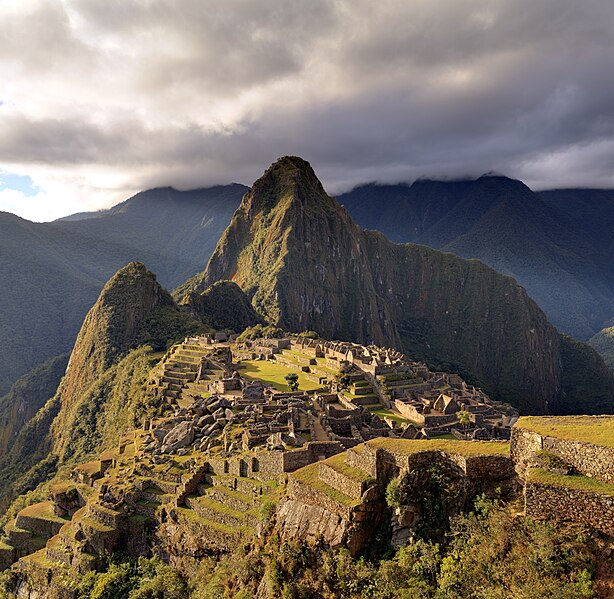
On July 24th, 1911, explorer Hirm Bingham stumbled (and I mean stumbled!) onto one of the greatest archeological finds of the 20th century in the form of Machu Picchu, a lost Inca city in the Andes. It wasn't exactly the "lost city" he was looking for, and there are some that say he only re-discovered it, but with his find, Bingham cemented his place in history, and inspired other explorers that followed.

A new book entitled Cradle of Gold: The Story of Hiram Bingham, a Real-Life Indiana Jones, and the Search for Machu Picchu by historian Christopher Heaney takes a look at Bingham's life and his influence on the iconic, whip-cracking, fictional archaeologist of the popular film series. Heaney sat down with National Geographic Adventure's Mark Adams recently for an interview and to discuss the real life adventurer.

Heaney says that Bingham was actually searching for Vitcos and Vilcabamba, the last capitals of the Inca empire, when he came across Machu Picchu instead. He would find those two lost cities eventually as well, but that would come a few months later, making 1911 a very busy and memorable year for the explorer. In the interview, Heaney talks about these important finds and their historical significance.

It has been nearly 100 years since Bingham's jungle adventure, and Machu Picchu has gone on to become the number one tourist attraction in Peru. But back in 1911, the area was a remote, mostly unexplored jungle, that was still waiting to give up its secrets. It must have been an exciting time to be an archaeologist.

Has anyone read the book? Any thoughts? Sounds really interesting.

Friday, May 21, 2010

Walking The Amazon Update: Ed and Cho Get Mainstream Coverage


It has been far too long since I posted anything on the Walking the Amazon Expedition, in which Ed Stafford and Cho Sanchez are covering the entire length of the Amazon River on foot, a journey of more than 4000 miles, through some of the harshest, most demanding terrain on the planet. Currently, Ed has been out on his little trek for 779 days (Cho joined him a bit later on down the road), and the pair are in North Central Brazil, continuing their slow, but steady, march to the sea, where the Amazon empties into the Atlantic Ocean, the finish line for this epic adventure.

Today, the expedition got a little mainstream attention with a story on ABC's Good Morning America. Reporter Bill Weir joined Ed for two days of his march through the jungle, and got a small glimpse of what it is like to hike the Amazon. The results are the video report that you can watch below, and the written story posted on the ABC News website, which you can read by clicking here.

As of now, Ed is expecting to complete his journey at the end of August, and he already has a plane ticket booked for home. I can't even imagine what it is going to be like for him when he is done, but I do know I want to read the inevitable book of his adventures.

Every time I read up on this expedition, I can't help but be blown away. It is such an incredible undertaking, and a staggering achievement. As someone who has actually been to the Amazon, I can tell you that I can't even imagine hiking for more than a day or two there. In fact, I did some jungle trekking, and it was swelteringly hot, incredibly humid, and paths were transient at best. The water levels change dramatically with the seasons, and there are plenty of nasty bugs, snakes, and diseases that can make you sick or worse. I have tremendous respect for both Ed and Cho, and I can't wait to see them finish up.

Tuesday, May 18, 2010

National Geographic Announces 2010 Emerging Explorers!


National Geographic's Emerging Explorers program annually recognizes outstanding men and women who are making significant contributions to their chosen field while still early in their careers. These explorers come from a wide variety of fields, including anthropology, archeology, mountaineering, technology, and more. Today, the organization announced the 2010 recipients of the awards, with another amazing group of visionary adventurers getting the nod.

All told, there are fourteen recipients of the Emerging Explorer status for this year. They come from diverse backgrounds and areas of studying, including an environmental scientist, mobile technology innovator, a paleontologist, an electrical engineer and more. Each of them is awarded $10,000 to assist in continuing their work, which includes important research in their area of speciality.

Amongst this years Emerging Explorers are Aparajita Datta, a wildlife biologist in India who is working to preserve tropical rainforests in the Arunachal Pradesh region. She is joined in the 2010 class by Mongolian paleontologist Bolortsetseg Minjin, who not only digs up the bones of dinosaurs, but works diligently to attract young Mongolian students to her passion. Musician and activist Feliciano dos Santos uses his music to promote sanitation and hygiene in remote areas of Mozambique, while conservationist and wildlife researcher Emma Stokes works with the government in the Congo to preserve an area of the contry inhabited by 125,000 lowland gorillas.

One name you're likely to recognize on the list is that of Albert Yu-Min Lin, who has not only been named an Emerging Explorer, but was also one of NG's Adventurers of the Year as well. You may recall that Albert is the explorer who has been looking fo the tomb of Genghis Khan, and he gets a nod here for his innovative use of technology which allows him to search without ever digging up the ground. To say Albert is having a good year is probably an understatement huh?

Congratulation to the 2010 class of Emerging Explorers. They all seem very deserving of the honor. To read more about these young men and women, and their research, click here.

Wednesday, May 12, 2010

Catlin Arctic Survey: They Did It!! Explorers At 90ºN!


We've been following the Catlin Arctic Survey Team for 60 days now, and after some very long, and hard days out on the ice, the word has just come through that the Explorers Team has, at long last, reached the North Pole!

As you probably already know by now, the team consists of Ann Daniels, Charlie Paton and Martin Hartley, three veteran polar explorers. The trio has been making their way north for two months now, and along the way, they have been taking samples of the water in the Arctic Ocean to track the acidification of the water, and the effects of high levels of carbon dioxide on the ocean. Today, they took their final sample through a "Hole at the Pole", bringing an end to their journey.

Setting out on March 14th, Daniels, Paton, and Hartley covered 483 miles on their trek to the Pole. They also had to pick up their pace, and increase their daily distance, in an effort to reach that point before the end of the arctic season, which is usually marked by the break-up of the ice as the warmer months set in. The team also battled extreme cold, whiteout conditions, large open leads, and lots and lots of negative drift along the way. To say that they are ecstatic about reaching their goal is probably an understatement. They are now the last team out on the ice, and will be retrieved sometime in the next few days.

Once they do return home, their water samples will serve as the baseline for some important new research on the effects of global climate change on the polar ice caps and the water underneath. Future expeditions are likely to take similar samples, but they will all be compared to the ones this team has gathered. It is a testament to their determination and stamina that they were able to reach the North Pole while still collecting all of their samples as well.

Congratulations to Ann, Charlie, and Martin on a job well done. Get some rest team, you've earned it.

Monday, May 3, 2010

Catlin Arctic Survey: Explorers Face "Ice Armageddon"


While the Catlin Arctic Survey Ice Base Team may have packed up and headed for home, the Explorers Team is still out on the ice, still conducting, scientific data, and still battling the unforgiving elements of the Arctic. Today, those conditions including a very large lead of open water, 65 meters in width at the narrowest point, and an ice field that team leader Ann Daniels has labeled Ice Armageddon" for its gigantic blocks of ice that made progress very tough for an already weary team.

Joining Daniels out on the ice are Martin Hartley and Charlie Paton, both veteran polar explorers. As of this writing, the team is sitting at 88.36ºN, but are now in a race against time if they hope to see the Pole this year. Despite making 7 nautical miles of progress today, they're likely to face negative drift tonight, thanks to a steady and constant northerly wind. On top of that, it is getting very late into the Arctic Season at this point, which means the pack ice is starting to break up, and soon it will be impossible to land a plane to pick the team up. Reportedly they have given themselves until the end of the week to reach as far north as they can before calling for an evac.

Thanks to that giant lead mentioned above, the trio had the opportunity to do a little swimming today. Donning their dry suits, they set out across the wide open water in an effort to reach the far shore, and continue their mission on towards the Pole. In order to cross the water, the team has to lash two of their sledges together, and float them across, with Charlie riding along on top, using his poles for stability. That's exactly how they managed to circumnavigate their latest challenge, and within a half hour, they reached the opposite shore, safe and dry.

With their days now clearly numbered, the team will continue moving forward as best they can, collecting ice samples for study as they go. Those samples will be used to research the health of the polar ice caps, and specifically the amount of CO2 in the ice and its impact on that health.

Friday, April 9, 2010

Catlin Arctic Survey: Ice Conditions Remain Unpredictable, Research Progressing


The two teams that make up the Catlin Arctic Survey team continue to have very busy and eventful days in the arctic. The explorers are continuing to make their way north, amidst some of the strangest and most dangerous ice conditions they've ever seen, while back in the Ice Base, a new group of scientists are hard at work.

The Explorers team is made up of polar vets Ann Daniels, Martin Hartley and Charlie Paton, and their mission to take samples of the arctic ice while making their way to the North Pole. Presently, they're at roughly 86.34ºN, and contending with, quite literally, constantly changing ice conditions. The has been so unstable in fact that one morning during breakfast the trio heard it cracking all around them outside of their tent, and they were forced to evacuate their shelter, and quickly decide which side of the crack they wanted to be on, pulling gear and sleds along with them in order to avoid catastrophic damage. Charlie Paton described the scene like this, “We heard a crack, a few bangs and then suddenly the ice started to break apart. It all happened very quickly and was unlike anything I’ve experienced before"

This wasn't the only dangerous situation they've found themselves in either. One day, while navigating through the ice flows and around open water, they actually found themselves surrounded on all sides by ice that was too thin to cross. It was a sobering reminder of how quickly things can change in the arctic. Check out this amazing video that the team captured that demonstrates just what kind of conditions they are dealing with on their long, cold journey to the top of the world.

It hasn't been all bad for the explorers though, as they received their first resupply this week, providing them with some much need fresh food and gear. The team remains confident and upbeat that they'll arrive at the Pole on schedule.

Meanwhile, back at the Ice Base the scientists continue their work, which included a little home improvement, including an update and improvement to the loo. Of course, they're continuing their valuable research on the effects of CO2 in the atmosphere on the Arctic Ocean, with Laura Edwards, of Bangor University, who has been at the base since Day 1, providing an update on the process. The research team has been happy to find a wide variety of life thriving in the water, including plankton, tiny crustaceans called copepods, and lentil-sized sea snails called pteropods.

Finally, click here to meet Brownie, the Ice Base's early warning system for polar bears. Brownie is a part-Husky, part- German Shepherd mix who is always on watch for the big, hungry white bears that are common in the area. Brownie also earns her keep by pulling a sled for the scientists as they go about their daily chores, and in turn, they've become quite fond of the four legged member of the team.

Tuesday, March 30, 2010

Catlin Arctic Survey: Explorers Cross 85ºN


For the Catlin Arctic Survey Teams it has been another busy and challenging week in the Arctic. While the Explorers Team makes slow, but steady progress northward, the Ice Base Team is continuing its valuable and important research on the impact of carbon dioxide absorption on our oceans.

It was a week of important milestones none the less, as the Explorers Team, which consists of Ann Daniels, Martin Hartley, and Charlie Paton, managed to cross the 85º mark in their journey to the North Pole. The trio battled extremely cold temperatures however, with wind chills often reaching -60ºC, and high winds, thin ice, and negative drift made for a frustrating combination at times. Despite those nasty conditions however, the team has managed to continue their own scientific work, taking core ice samples and other weather readings. To hear the team discuss their daily routine click here.

As if dealing with the weather wasn't hazardous enough, the Explorers also came across a fresh set of polar bear tracks a few days back. The tracks were a reminder that they are not alone in this frozen wilderness and that the big bears actually rule the day. Trailing behind the bear was a fresh set of arctic fox prints as well, although those prints gave them less cause for pause of course.

Meanwhile, back at the Ice Base, the scientists and researchers there eagerly awaited their first resupply, but inclement weather prevented that from happening as it should. High winds in Resolute Bay prevented a plane carrying their goods from taking off for several days. As of this writing, they are still waiting for the weather to clear, allowing a delivery drop of food and gear, but also four new staff members, who will swap places with four who are currently at the base and awaiting extraction. While they do wait however, their work continues. Click here to check out some videos of the Ice Base Team explaining their work.

While conditions in the Arctic haven't been great for either team, they are all committed to being there and completing their important tasks. The research that is being conducted is very important to helping us understand how global climate change is effecting the ice caps and the oceans as a whole, and the entire team is not only aware of that, but are happy to be where they are, despite the brutal temperatures and winds.

Monday, March 29, 2010

Exploring The Himalaya By Paraglider


When most of us think about Himalayan adventures, our minds conjure up images of mountaineers in their down suits struggling to summit 8000 meter peaks or even intrepid trekkers exploring mountain passes. But the Himalayan Odyssey team wanted to explore those iconic mountains in a different way, and from a very unique perspective.

The expedition got underway a few weeks back, with Brad Sander, Antoine Laurens, and Mike Laengle, setting out to explore over 700 miles of Himalayan territory, stretched out through India, Nepal, and Sikkim, not on foot, but on paraglider instead. The journey is expected to take approximately six weeks to complete, and with much of it being filmed and photographed along the way. The team is also joined by guest pilots along the way, adding new faces to the expedition for some of the segments.

A typical day for the Himalayan Odyssey crew is to get up and check the thermal air currents to see how they'll impact their daily travel. If all is well there, they'll climb up above 2000 meters and launch out into the open skies, riding those thermals and traveling from one valley to the next along their route. As the day whittles away, they'll scout the ground below for a good place to camp, only coming in for a landing when they've found a a good site to pitch their tents.

While exploring the Himalaya from a paraglider probably is its own reward, the team has other goals in mind as well. Besides having an adventure of a lifetime, they're also exploring the amazing Himalayan culture, while also working to raise awareness of the plight of the Himalayan Condor, a bird that is dying out at an alarming rate.

You can track the progress of the expedition on the website, and follow along on their Twitter account as well.

Thanks to Alan for the tip on this one!

Thursday, March 25, 2010

Catlin Arctic Survey: "Weirdest Weather Conditions Ever"


The Catlin Arctic Survey Explorers Team is experiencing some very challenging and unusual conditions, even by Arctic standards. Team leader Ann Daniels went so far as to describe it as the "weirdest weather conditions ever seen" by the highly experienced team. Daniels is joined by Martin Hartley and Charlie Paton on a journey that will eventually lead them to the top of the world and the North Pole.

The team has been inching along over the past few days because the ice is behaving in unusual ways. Daniels says that it is "constantly moving, breaking and shifting," and "bending, bouncing and wobbling" while the intrepid trio passes over it. As a result, the team hasn't made much headway the past few days while the move through a patch of ice that is unstable at best.

The Catlin home team, based out of London, says that it is a "combination of fast moving ice, large amounts of open water and a continual breaking up of ice floes splitting and rucking up right in front of your eyes, hour after hour for days”. Polar explorer Pen Hadow, who was part of the team last year and is now serving as the Director for the program, says that he hasn't seen anything like it in his years of polar exploration. An unusual weather pattern, which has delivered constant, steady winds from the north is being blamed for the thinner ice that is disrupting travel for the Catlin Team as well as other explorers in the area.

Perhaps most disheartening is the strong negative drift which is preventing them from making much progress. According to a press release from the team today, the Explorers Team hit the ice back on May 14th and should have covered more than 53km by now. Thanks to negative drift however, they've only managed to gain 5.5km.

This year's survey is broken into two teams, and while the Explorers head north, collecting ice samples as they go, the Ice Base Team is made up of a group of scientists and researchers who are staying in one place and taking their own samples from the ice and saltwater found underneath. That base is located in the Nunavut territory of Canada, and will serve as a scientific research station while the team remains in the arctic.

Feature (Side)

© 2013 . : : Machu Picchu : . All rights resevered. Designed by Templateism