AD (728x90)

  • 2793 Pine St

    2793 Pine St

    Nulla facilisi. Cras blandit elit sit amet eros sodales, non accumsan neque mollis. Nullam tempor sapien tellus, sit amet posuere ante porta quis. Nunc semper leo diam, vitae imperdiet mauris suscipit et. Maecenas ut neque lectus. Duis et ipsum nec felis elementum pulvi...

  • 1100 Broderick St

    1100 Broderick St

    Nulla facilisi. Phasellus ac enim elit. Cras at lobortis dui. Nunc consequat erat lacus, a volutpat nisi sodales vitae. Phasellus pharetra at nulla in egestas. Vestibulum sit amet tortor sit amet diam placerat tincidunt sit amet eget lorem. Phasellus ...

  • 868 Turk St

    868 Turk St

    Nulla facilisi. Phasellus ac enim elit. Cras at lobortis dui. Nunc consequat erat lacus, a volutpat nisi sodales vitae. Phasellus pharetra at nulla in egestas. Vestibulum sit amet tortor sit amet diam placerat tincidunt sit amet eget lorem. Phasellus posuere posuere fel...

  • 420 Fell St

    420 Fell St

    Sed at vehicula magna, sed vulputate ipsum. Maecenas fringilla, leo et auctor consequat, lacus nulla iaculis eros, at ultrices erat libero quis ante. Praesent in neque est. Cras quis ultricies nisi, vitae laoreet nisi. Nunc a orci at velit sodales mollis ac ac ipsum. Na...

Showing posts with label Egypt. Show all posts

Wednesday, May 19, 2010

Tour d'Afrique 2010: Race Finished, Australian and German Cyclists Win!


The 2010 Tour d'Afrique came to an end this past weekend when the riders rolled into Cape Town amidst cheers from the locals gathered to welcome them. Sunday marked the final day of the annual race from Cairo to Cape Town that saw competitors in the saddle for more than 120 days, and covering over 7500 miles across the length of Africa.

27-year old Australian, Stuart Briggs was the winner in the men's category, claiming victory with an overall time 398:26 for the race. South African Jethro de Decker took second place with a time of, 16 hours back, and American Tim Thomas came in third at 418:09. de Decker won the most stages with 18, and the most sections, with 3, but Briggs was the overall more consistent rider from start to finish.

In the women's division there was no problem figuring out who won, as 26-year old German Gisela Gartmair dominated the field. Garmair racked up an incredible 56 stage wins, claimed all 9 of the race’s “mando” days, and was victorious on 7 of the 8 tour sections. Her final time was 404:34, second only to Briggs in the overall standings. Juliana Austin-Olsen, 39 and Jennifer Crake, 40, both of Canada, finished second and third respectively with times of 452:38 and 531:33.

There were 55 riders that rode the entire length of the Tour, with others coming and going from different sections. For some, iti s a highly competitive event, as winning a stage race of 120+ days is quite a feat. For others however, it is more about the adventure of the ride, which crossed through Egypt, the Sudan, Ethiopia, Kenya, Tanzania, Mozambique, Zimbabwe, Zambia, Botswana, Namibia, and South Africa. Personally, I can't think of a more amazing way to tour Africa, and it's many diverse landscapes.

Registration for the Tour d'Afrique 2011 is already open, so if you would like to take part in the adventure next year, sign up now and start planning. It's going to be a heck of a ride.

Thursday, January 14, 2010

2010 Tour d'Afrique Starts This Weekend Too!


The Tour Down Under isn't the only cycling event to get underway this weekend, as the 2010 Tour d'Afrique prepares to start this Saturday as well. This annual event kicks off from Cairo, Egypt and ends four months later in Cape Town, South Africa. Riders will cover more than 7500 miles, and cross through ten countries in this trans-continental, north-south journey.

All told, this Tour includes 96 days of cycling, averaging 77 miles per day. The schedule also factors in 22 rest days and 2 additional days of travel by ferry, which brings the total travel time to 120 days. The stages range in length from about 50 miles on rough terrain to 112 miles over smooth, paved roads.

The route begins in Egypt and wanders south through the Sudan, Ethiopia, Kenya, Tanzania, Malawi, Zambia, Botswana, and Namibia, before finishing up at the Cape in South Africa. Some of the landmarks that the riders pass along the way include ancient Egyptian temples along the Nile, Ethiopia's Simian Mountains, Kilimanjaro, the highest peak on the continent, and Victoria Falls. The conditions will range from arid, open plains, to dry deserts, and temperate cloud forests, and as you might expect, the wildlife will be spectacular as well.

The Tour can be done as one giant four month long ride, or travelers can elect to join at specific legs of the journey as they see fit. There are eight different legs that can be linked together in any fashion that the rider wishes.

I've written about the Tour d'Afrique a number of times in the past, and this is one of my ultimate trips. It looks like it would be quite the adventure to explore Africa on the back of your bike with a great group of fellow travelers. One of these days, when I'm a rich and famous blogger, I'll find a way to join the Tour, as it really does seem like the trip of a lifetime.

Friday, November 14, 2008

New Pyramid Found In Egypt


National Geographic has a story up today reporting that a new pyramid has been discovered in Egypt, near the site of the pyramid to the tomb of Teti, in Saqqara, a settlement not far from Cairo.

This new pyramid is believed to be the tomb of Queen Sesheshet, mother of Teti. That would make this structure more than 4500 years old, dating back to the 6th Dynasty. It's the third pyramid discovered in the Teti complex, but the first in over 14 years. Archaeologists were surprised to find the structure, as they thought that the area had been throughly excavated.

Sesheshet's tomb once stood five stories in height, but has been buried under 23 feet of sand for years. When other structures in the dig site were being excavated in the past, the sand from those digs as dumped on top of this one. The other two pyramids discovered here belonged to Teti's two wives, which is why it is believed that this one most likely belonged to his mother.

Those expecting to see amazing treasures like the ones pulled out of Tut's tomb will be disappointed however. Archeologists say that they have already seen an access tunnel, dug by grave robbers, who raided the site centuries ago. Instead, they are likely to find historical treasures, such as hieroglyphs on the walls and quite possibly Sesheshet's mummy.

More than likely we will never see a treasure like Tut's ever again. He was a rather unimportant pharaoh who didn't rule for very long, and his grave site was dug rather hastily, due to his untimely death, in the Valley of the Kings. That tomb was actually directly under the tomb of another pharaoh, so when tomb raiders robbed the one above his, Tut's tomb went unnoticed and untouched.

I remain in awe of the treasures found in Tut's tomb. His iconic golden mask is a sight to behold, and is 35 pounds of gold. His sarcophagus was over 200 pounds of gold. But when you think about how insignificant he was in the history of Egypt, you can't help but wonder how impressive the treasures of Rameses II were before his tomb was robbed.

Monday, October 27, 2008

The 2008 Sahara Race is Underway


The 2008 Sahara Race, part of the 4 Deserts series of ultramarathons, got underway over the weekend, with two stages already in the books. More than 150 racers from 30 countries, have descended on Cairo, where they will spend seven grueling days in the desert, racing through one of the hottest environments on Earth.

You can find results from the first two stages by clicking here. Stage 1 was 35 km (22 miles) in length, and wound it's way through giant rock formations, forcing the runners to use careful navigation throughout the day. Stage 2 took place in the beautiful White Desert and covered a distance of 41.8 km (26 miles). After these two stages, runner Ryan Sandes of South Africa leads the way, with Paolo Barghini of Italy in second, and ultramarathon man Dean Karnazes of the U.S. in third. Karnazes is attempting to become the first man to complete the 4 Deserts and the Badwater in the same year. German Nina Breith is the top female competitor, currently in 4th place overall.

The race will continue over the the next few days with the fifth stage, dubbed The Black Desert March, covering 92.6 km (57.5 miles) on Friday. Saturday will see the racers running home, with a short 10 km (6 mile) run to the finish line. Amongst the competitors this year, for the first time, is a team from Egypt, who are proudly carrying the flag for the host country.

Good luck to all the runners. Be safe in the Sahara heat.

Tuesday, October 21, 2008

Off The Beaten Path In Cairo


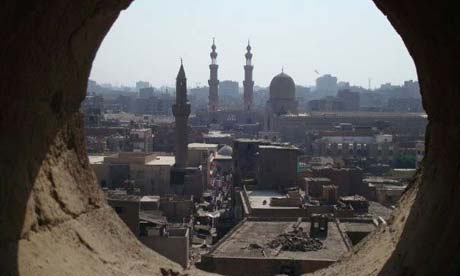
The Guardian's Travel section offers another great article today, this time it's all about exploring Islamic Cairo, far from the tourist destinations that garner most of the attention in that ancient city.

Typically, when visiting the bustling city of more than 20 million, most foreigners opt for the Egyptian Museum, a stroll through the Khan El-Khalili bizaar, and of course the pyramids and the sphinx. These amazing sites are of course wonderful, but they are also often packed with tourists, and offer very little in the way of modern cultural experiences in Egypt.

For a different experience, the article recommends visiting some of the many beautiful mosques, souks and minarets that put the countries Islamic heritage on display. While not quite as old as the ancient wonders you'll find elsewhere, some of these attractions date back to the 9th century, reflecting an entirely different side to Egypt's history. One that is often overlooked by visitors.

When I was in Cairo, we took a city tour, that showed us slices of the amazing history there. We of course took in the pyramids and other ancient attractions, but we also visited Coptic Cairo for a view of the Christian influence there, as well as a beautiful mosque that was breathtaking to behold. While traveling through various parts of the city, we also saw Roman aqueducts, crumbling city walls, hundreds of years old, and remnants of a civilization that has existed in the same place for more than 5000 years. For history buffs, it's simply amazing.

Combine this article with the one I posted a few weeks back on Egypt's "other treasures" and you'll have a well rounded experience in one of the most fascinating countries on Earth.

Monday, October 6, 2008

Egypt's Other Treasures


Forbes Traveler is back with another good travel story today, this time on the Hidden Treasures of Egypt, and by hidden they mean impressive monuments, ruins, and sites that are off the beaten path and less visited by tourists. Sure, we all know about the Pyramids and the Sphinx, but what other wonders does the country have to offer?

The list starts off with a great choice in the Valley of the Kings, where dozens of tombs have been discovered, although not all of them are open to the public. I can tell you from first hand experience though, that the ones that are open are spectacular. The colored hieroglyphs on the walls are still very impressive, and some of them even look like something you'd see out of an old Boris Karloff movie. Just don't bother waiting in line for Tut's tomb. He was a very unimportant pharaoh, and it's not all that special for the wait you'll have to endure.

Other hidden treasures on their list include the Temple of Ramses III, which has an extremely long history and was once used a coptic monastery. They also list Aswan as well, which is a study of contrasts with ancient Nubian tribes living in the shadow of one of the largest modern dam projects in the world. The Valley Temple of Khephren at Giza is also noted as the mortuary where Khephren's remains were prepared for entombment.

Egypt is an amazing and spectacular place to visit, with far too many things to see in one visit. It is one of those rare vacations that can be wonderful mix of culture, history, and adventure all wrapped up in one. This guide will give you some ideas on what to visit to get away from the crowds and to see a slice of history that you might not otherwise have thought of, and if you have an interest in the country, I can't recommend visiting it highly enough. You'll have an amazing time.

Tuesday, September 23, 2008

Bandit's Kidnap Tourists in Egypt


I caught this scary story earlier today while browsing the Guardian's website. It seems a group of masked bandits have grabbed a group of tourist that were visiting a remote area of the desert in southern Egypt yesterday. They then moved across the border into the Sudan and notified the Egyptian authorities that they would release the prisoners for $6 million.

In all, 11 tourists were snatched, five Italians, five Germans and a Romanian. Their guides and guards, another eight Egyptians, were also kidnapped, in what is being called "an act of banditry not of terrorism". There have also been conflicting reports on the ransom, with Al-Arabiya TV claiming the bandits are actually demanding $15 million.

The Egyptian military is searching the area for any signs of the missing tourists and their guides. Egypt's economy revolves around their tourism, and any type of threat to visitors can do major harm to that trade. More than a decade ago, 62 people were killed in a terrorist attack, 58 of those being foreign tourists, near Luxor, causing the tourist traffic to dry up for a time, and causing major damage to Egypt's economy. The Ministry of Tourism took steps to make the country safer for tourists by hiring more police to give armed escorts and making it mandatory for armed guards to go with all tourist groups. Since that time, there have been few incidences directed at foreign visitors.

When I was in Egypt a few years back, we had two very well armed guards with us at all times, and they didn't let us stray too far out of sight. At night, two police cars would escort our vehicles through Cairo, and most of the major monuments, such as the pyramids and sphinx, were patrolled by guards as well. They made it clear that while things were very safe, there were still people in the country that might want to do harm to westerners. I didn't have any major issues (with the exception of a scary incident in the Khan El-Khalili Bizaar where I got lost), and everyone I met there was very accommodating.

Lets hope these kidnapped tourists make it home safe and sound.

Wednesday, July 2, 2008

Alexandria, done the right way...

Roman Amphitheater


The Pillar of Pompey


The New Library of Alexandria


Prior to arriving in Cairo, my friend and I had concocted a remarkably ambitious plan for our third day that would have us taking a 9 hour night train to Luxor, seeing everything in approximately 12 hours and then taking a ride across the desert to Hurghada to catch our flight the following afternoon. Heat, exhaustion and the realities of Egypt all collided to persuade to us to reconsider. Instead, we happily accepted the suggestion of Mohammed, the night manager at our hostel and now, our travel coordinator and opted to do a much more civilized 2-3 hour day trip to the ancient capital city of Alexandria. The day started off as was now the norm. Tusin, our driver dropped us off at an ancient Roman ampitheater, we bought the tickets and then lacking a tour group to shadow, found some Americans with a Lonely Planet guidebook we could borrow to try to discern what we were looking at, all the while avoiding the tourist police and their demands for backsheesh. Ditto for the excavations at the Pillar of Pompey (minus the guidebook, here it was a Spanish guide who I cornered as soon his customers had wandered off for some photos). By the time we had gotten to our third stop, the Catacombs of Kom el-Shuqafa, we finally got wise. It was here that we were approached by an English-speaking tour gude. We understood him, he understood us, he seemed very well-informed and passionate about Egyptian history, in other words, he was a keeper...we launched into some negotiations and after seeing him bring the history of the catacombs to life, we hired him for the remainder of the day. At the catacombs, he methodically pointed out symbols adorning the main tomb which reflected Egyptian beliefs, Greek beliefs and even some cleverly concealed Christian beliefs. Instead of being contradictory, he explained that at this time of religious upheaval, when so many different faiths were being promoted, people would sometimes take a shotgun approach. You throw in a little bit of this, a little bit of that and regardless of who is right, in the end, you are covered. Call it the "just in case" approach.

Next he took us to the site where the world's greatest library once stood.The Library of Alexandria, which may have housed as many as a million scrolls and is believed to have been burned down at least four times (once by Julius Caesar himself). It was once said to be the center of all learning in the ancient world. As of 2003, there is a new library which attempts to recapture the spirit of global learning while commemorating the spot where the original once stood. It was here that we visited a small museum of antiquities, housing finds from around the Alexandria area. This was also the spot where our guide informed us that if we had anything laminated with a picture on it, it would pass for a student id and get us half off on the admission price. We tried it with our work id's and all of a sudden, instead of the feeling like we were being ripped off (a feeling that had become common in Egypt), we were now the scammers. Normally, I would fret and feel guilty about this, ripping off a cultural institution and all that, but in this instance, it felt wildly refreshing. We repeated our trick at the Graeco-Roman Museum of Alexandria, where our guide showed us artifacts reflecting the chronological shift from the Pharonic period to the Greek period, followed by the Christians and finally the Muslims. My favorite item on display was a chalice commemorating a battle where Christians and Muslims fought side-by-side. It featured a crescent with a cross inside, revealing a unity and open-mindedness which sadly seems to be lacking today. We finished off the tour with a visit to the coptic church of St. Mark's, which, according to the priest present, houses the Saint's head (the body having been absconded to the better known St. Mark's Basilica in Venice) and finally to St. Catherine's church, which we were told was the largest Roman Catholic church in the Middle East. Four hours into meeting our guide, we had criss-crossed Alexandria, and more importantly, we knew exactly what we had been looking at and had learned loads. It made us wish we had met him two earlier and had him show us around Cairo. Just think of all the Egyptian Pounds his id trick could have saved on entrance tickets alone....

Monday, June 30, 2008

Cairo

The Nile: not just a condition characterized by the ability to disregard reality


Morning at the Pyramids of Giza

The Pyramid of Khufu


Pyramid at the Saqqara necropolis


And inevitable vendor at the Saqqara necropolis

Statue of Ramses II at the Memphis Museum


The Mosque of Mohammad Ali at the Citadel


Abolution fountain within the its courtyard


It is also known as the Alabaster Mosque for its interior

The Sultan Hassan Mosque


Outside the Church of Saint Barbara in the Coptic quarter


Note the Pyramids way in the background.
I think I need to come up with some shorthand way of saying that I had some time off, a chance at cheap airfare and not much else, because there is definitely a pattern to be discerned here. This past Monday, after a nano-second of thought, the last-minute destination chosen was Cairo. Without sufficient time to plan an itinerary, Diana and I put our fate in the hands of a tour operator who was to book our hotel, arrange all our tours and basically handle all the details that we did not have time for. Great idea in theory, it was only when we found ourselves arriving on the streets of Cairo at 3:30 in the morning without yet having received a response from this so-named Naglaa that we saw the massive flaw in our plan. We knew nothing of the layout of the city, so we rolled the dice, got into a cab and began the search for a place to spend the remainder of the night. After a visit to a wildly overpriced Hilton and its business center, we found ourselves booked for a couple of nights at the African Hostel. That took care of our most pressing problem. Mohammad, the night manager, now playing the role of the still yet to be found Naglaa, provided the solution to our next problem, a severe lack of direction. He awoke his friend,Tusin, who within an hour was at the hostel with an itinerary in mind. As is to be expected, he started out by taking us to to see the Pyramids of Giza. I guess when you have the only remaining original World Wonder in your backyard, that bit of planning comes easy. It is here that I should interject that I had already come with the knowledge that Cairo was going to be dirty, busy, hot, full of aggressive salesmen, etc. etc. I had talked to plenty of people who had warned me about their own experiences, yet, somehow I felt that I would be able to look past all this in exchange for seeing the wonder that is ancient Egypt. I was able to sustain that illusion for all of an hour...maybe. Tusin started out the morning by taking us to a stable to rent camels for a sunrise ride through the Giza plateau. The man running the stable had all the well-practiced charm of a used car salesman, without any of the corresponding integrity. He threw some inflated prices our way and we, freshly arrived, sleep deprived and excited, accepted. For the next three hours, we rode around on a pair of the saddest, most run-down animals, through a trash strewn dessert, led around by a cocky charlatan who took every opportunity to hit the poor creatures, while mumbling in broken English. It was so heart-breaking and upsetting, that I spent the next two days hoping for a do-over, as I did not want my only impression of the pyramids to be so tainted with sadness and disgust. This was not to be, but it did prepare me for the remainder of our stay. The scenario that repeatedly played itself out, as if on a loop, was the following: Tusin would take us to a site or museum, tell us what it was called, where to buy the entrance ticket and show us where he would be waiting for us. We would buy our tickets and enter, not really sure what we were looking at. If there was a tour group speaking English, Spanish or German in the vicintity, we would try our best to eavesdrop. Usually there wasn't, so the vendors or more commonly, the tourist police (!!) would try to lead us around, explaining the significance of this or that. Even if we declined their help, they would aggressively demand "backsheesh", or tips. We knew it was bad when even the imam at one of the mosque hit us up for money. The result of this was that we learned to avoid the areas where these folks congregated, thus usually missing one or more of the most significant parts of any given site. For the first time, I sincerely envied the package tour folks who were receiving thorough explanation, while being shielded from the constant harassment. Of course, along with all the hassles, there were some moments when we did enjoy the benefits of being solo travellers. We hired an enthusiastic and vastly knowledgeable guide for a private tour of the Egyptian Museum, who enthralled us with the history of the Pharoahs and answered all our questions in just two short hours. Mohammad took us on a locals-only boat trip along the Nile (after instructing us not to talk to anyone because that would automatically triple the price of everything we wanted), where I danced along with a group of giggling Muslim girls. People of all ages would help us cross the chaos that is a Cairo street, laughing all the way and not demanding backsheesh (one man suggested that, while crossing, we close our eyes and talk to Allah). It certainly was not all bad. In the most hostile of enviroments, the pyramids still manage to impress, so I can't, in good conscience, write Cairo off as a bad experience, not to be recommended, yet now having done it, I do not know that I would return. It felt like even the infrastructure that alledgedly was there was our benefit, the tourist police, was trying to take advantage of us. I recognize their salaries are probably quite low, they have families to feed, all of that... yet creating an uncomfortable situation for those you are meant to serve, is only bound to backfire. It is possible that after further reflection, I will look back on Cairo more fondly, at which time I may revisit the topic, but for now, I can honestly say that I am in no hurry to return.

Feature (Side)

© 2013 . : : Machu Picchu : . All rights resevered. Designed by Templateism