Showing posts with label Backpacking. Show all posts
Wednesday, September 15, 2010
Posted By:
2Machupicchu
Driving Montana's Beartooth Highway
While visiting Montana a few weeks back I had the opportunity to take a drive along U.S. Route 212, better known as the Beartooth All American Road. I wrote about those experiences for travel sight Gadling.com today, but wanted to share some thoughts here as well, because if you're planning to head to Montana or Yellowstone in the future, you owe it to yourself to take this route.
The Beartooth Highway is just 69 miles in length, stretching between Red Lodge and Cooke City. But those are some of the most beautiful 69 miles you'll find anywhere on the planet. The scenery is breathtaking with deep valleys carved by glaciers, clear mountain lakes, rushing waterfalls, and unique rock formations lining the road. Luckily, there are plenty of scenic overlooks and pull offs along the way, giving you a chance to stop the car and capture the landscapes with your camera.
The road tops out at the Beartooth Pass at an altitude of 10,947 feet. At that altitude the weather can be of a challenge at any time of the year, which is why the road closes for the winter in mid to late October each year and doesn't re-open until Memorial Day Weekend the following year. Indeed, while I was there at the end of August, we had heavy snow on consecutive days, with whiteout conditions at the higher elevations. Those freak August blizzards are rare, but you'll want to dress appropriately no matter what time of the year you make the drive.
Outdoor enthusiasts will love the Beartooth Highway for other reasons as well. There is great hiking and backpacking along the route, and plenty of places to camp too. In the winter, the trails allow for snowmobiling, skiing, and snowshoeing too, making it an excellent, and not overcrowded, playground all year long.
Perhaps best of all, the road ends at the Northeast Entrance to Yellowstone, so while you'll lament the end of the drive, you'll have that spectacular park to offer consolation. This is one of the least used entrances to the park, and few even know it exists, so it's a perfect way to gain access without too much traffic getting in the way, and once inside, you'll have a whole new landscape to explore.
Next year is the 75th Anniversary of the Beartooth Highway, and celebrations are planned to commemorate the event. The best celebration of all however is to take the ride for yourself. I promise it's worth the trip.
Tuesday, September 14, 2010
Posted By:
2Machupicchu
CheapTents.Com Interviews Andrew Skurka
CheapTents.com has posted an interview on their blog with long distance hiker Andrew Skurka, who just finished his six month long, 4700 mile Alaska-Yukon Expedition. The epic trek, which passed through multiple national parks in both the U.S. and Canada, traversed both the Alaska and Brooks mountain ranges, while passing through some of the most pristine and remote wilderness in North America.
In the interview, Andrew touches on such topics as his inspirations for these long distance treks, how he deals with solitude on the trail (Hint: it isn't an issue!), and which section delivered the best scenery on the expedition. He also offers some thoughts on gear, route planning, as well as his training for these kinds of journeys. Andrew even gives us an interesting tip on how to make your own cook stove out of a can of cat food!
I want to thank the writers of the CheapTents Blog for allowing me to participate a bit in this interview. They were kind enough to allow me to submit three questions of my own (I'm not saying which ones were mine!) and they even kept them in the final draft! This interview only adds to the quality posts that they are making over there, including an interview with long distance hiker Samuel H. Gardner that I linked to last week. Keep up the great work guys and thanks again for allowing me to have a little input on this one.
In the interview, Andrew touches on such topics as his inspirations for these long distance treks, how he deals with solitude on the trail (Hint: it isn't an issue!), and which section delivered the best scenery on the expedition. He also offers some thoughts on gear, route planning, as well as his training for these kinds of journeys. Andrew even gives us an interesting tip on how to make your own cook stove out of a can of cat food!
I want to thank the writers of the CheapTents Blog for allowing me to participate a bit in this interview. They were kind enough to allow me to submit three questions of my own (I'm not saying which ones were mine!) and they even kept them in the final draft! This interview only adds to the quality posts that they are making over there, including an interview with long distance hiker Samuel H. Gardner that I linked to last week. Keep up the great work guys and thanks again for allowing me to have a little input on this one.
Thursday, September 9, 2010
Posted By:
2Machupicchu
Alaska-Yukon Expedition: Insights From Andrew
As I mentioned a few days ago, Andrew Skurka finished up his 4700-mile long Alaska-Yukon Expedition last Sunday, but he hadn't posted anything to the National Geographic Adventure blog with his final thoughts yet. I suspect those final thoughts are still coming, as it'll take some time for him to reflect on his accomplishment, but yesterday he did post a few quick, and rather amusing, thoughts.
You can read the latest entry to the blog by clicking here. In the post, Andrew shares his thoughts on what his favorite trail food was for the six-month journey and a very funny story about how he literally scared the crap out of a bear that he encountered along the way. I won't give too much away on either account, but I do think it is safe to say that Andrew will now be weighing his pack down with a lot of chocolate on his next long distance expedition.
When asked to sum up the expedition in a single word, Skurka replied with "Humbling." That probably seems appropriate for a trek that passed through some of the most remote and wild places in all of North America. The journey was not an easy one, even for a guy who is used to backpacking his way across miles of backcountry. It seems like he learned a lot about himself and the environments through which he traveled on this adventure.
I'm sure we'll get a more detailed follow-up on the trek once he's had time to rest and think about the whole experience. But for now, this brief entry is both fun and insightful at the same time.
You can read the latest entry to the blog by clicking here. In the post, Andrew shares his thoughts on what his favorite trail food was for the six-month journey and a very funny story about how he literally scared the crap out of a bear that he encountered along the way. I won't give too much away on either account, but I do think it is safe to say that Andrew will now be weighing his pack down with a lot of chocolate on his next long distance expedition.
When asked to sum up the expedition in a single word, Skurka replied with "Humbling." That probably seems appropriate for a trek that passed through some of the most remote and wild places in all of North America. The journey was not an easy one, even for a guy who is used to backpacking his way across miles of backcountry. It seems like he learned a lot about himself and the environments through which he traveled on this adventure.
I'm sure we'll get a more detailed follow-up on the trek once he's had time to rest and think about the whole experience. But for now, this brief entry is both fun and insightful at the same time.
Wednesday, September 8, 2010
Posted By:
2Machupicchu
Long Distance Trekker Set To Go "All-In" For 2011
Long distance hiker Samuel H. Gardner is preparing for an epic adventure in 2011 when he plans to set out on his "All-In Trek", which will see him taking on four BIG trails in the U.S. and covering more than 12,500 miles in the process.
The plan is for Gardner to begin his journey by hiking the length of the North Country Trail from New York to North Dakota, in winter no less. That is a 4600 mile hike in and of itself. From there, he'll move directly on to the 2650-mile long Pacific Crest Trail before hopping over to the Continental Divide Trail, which will add another 3100 miles to the trek. Finally, he'll finish things up with a little 2178-mile long stroll down Appalachian Trail just for good measure. Samuel will go on the journey solo, and will hike the trails back-to-back in continuous fashion, with the hopes of completing the entire project in just one calendar year.
CheapTents.com has an excellent interview with Gardner on their blog today in which he talks about his inspirations for making this trek, the experiences that have given him the confidence to attempt the journey, and much more. Gardner says that he is going on the All-In Trek because he feels it is the next step for long distance backpackers and that he simply wants to experience the adventure of it. Clearly he also enjoys testing himself as well, as he once spent six months living in a snow cave just to see if he could.
At the moment, Gardner is in the final stages of planning and preparation, and has been training hard for what is sure to be a long year on the trail. January is still a few months off, but there is a lot to do before he gets underway.
And for those keeping score at home, Sam is going to have to average more than 34 miles per day to complete the trek in a single year. That's a very ambitious pace to say the least.
The plan is for Gardner to begin his journey by hiking the length of the North Country Trail from New York to North Dakota, in winter no less. That is a 4600 mile hike in and of itself. From there, he'll move directly on to the 2650-mile long Pacific Crest Trail before hopping over to the Continental Divide Trail, which will add another 3100 miles to the trek. Finally, he'll finish things up with a little 2178-mile long stroll down Appalachian Trail just for good measure. Samuel will go on the journey solo, and will hike the trails back-to-back in continuous fashion, with the hopes of completing the entire project in just one calendar year.
CheapTents.com has an excellent interview with Gardner on their blog today in which he talks about his inspirations for making this trek, the experiences that have given him the confidence to attempt the journey, and much more. Gardner says that he is going on the All-In Trek because he feels it is the next step for long distance backpackers and that he simply wants to experience the adventure of it. Clearly he also enjoys testing himself as well, as he once spent six months living in a snow cave just to see if he could.
At the moment, Gardner is in the final stages of planning and preparation, and has been training hard for what is sure to be a long year on the trail. January is still a few months off, but there is a lot to do before he gets underway.
And for those keeping score at home, Sam is going to have to average more than 34 miles per day to complete the trek in a single year. That's a very ambitious pace to say the least.
Tuesday, August 24, 2010
Posted By:
2Machupicchu
Adventure Racers Conquer Wonderland Trail in 63 Hours
I've been meaning to post on this story for a couple of weeks, and it ended up getting buried in my Inbox, but considering yesterday's story about the hiker completing the thru-hike of the Adirondacks, I think this one is appropriate as well.
Back on July 25th, two hikers, Jeni McNeal and David Adlard, who also happen to be experienced adventure racers, took on the Wonderland Trail, a 93-mile classic hike that circumnavigates Mt. Rainier in Washington state. The two ended up completing the entire route in just over 63 hours, which represents one of the fastest times ever for the trail, but is all the more impressive when you discover that approximately 10% of the route was still snowed in. For reference sake, most hikers take between 8 and 12 days to complete the Wonderland.
McNeal and Adlard carried their own gear and stopped for just a few hours of sleep along the way. They also burned more than 33,000 calories each, and drank over 50 liters of fluids along the way, while climbing and descending more than 20 peaks, with 47,000 feet of elevation gain mixed in for good measure. The rugged trail is well known for its challenges, which include multiple water crossings, rocky and uneven paths, and plenty of steep ascents.
For this dynamic duo, this was just a training exercise however, as they prepare to compete, as Team Adventure Sports Week, at the upcoming Desert Winds Expedition Adventure Race. I have no doubt that those adventure racing skills came in handy when setting that hectic pace out on the trail.
Back on July 25th, two hikers, Jeni McNeal and David Adlard, who also happen to be experienced adventure racers, took on the Wonderland Trail, a 93-mile classic hike that circumnavigates Mt. Rainier in Washington state. The two ended up completing the entire route in just over 63 hours, which represents one of the fastest times ever for the trail, but is all the more impressive when you discover that approximately 10% of the route was still snowed in. For reference sake, most hikers take between 8 and 12 days to complete the Wonderland.
McNeal and Adlard carried their own gear and stopped for just a few hours of sleep along the way. They also burned more than 33,000 calories each, and drank over 50 liters of fluids along the way, while climbing and descending more than 20 peaks, with 47,000 feet of elevation gain mixed in for good measure. The rugged trail is well known for its challenges, which include multiple water crossings, rocky and uneven paths, and plenty of steep ascents.
For this dynamic duo, this was just a training exercise however, as they prepare to compete, as Team Adventure Sports Week, at the upcoming Desert Winds Expedition Adventure Race. I have no doubt that those adventure racing skills came in handy when setting that hectic pace out on the trail.
Thursday, August 19, 2010
Posted By:
2Machupicchu
America's Best Adventures
A few days back I posted a link to some suggestions for adventure travel destinations this fall, with ten great spots to visit once the summer crowds, and heat, dissipate. Not to be outdone by that list, National Geographic Adventure has been running their selections for America's Best Adventures, providing us with 100 of the best escapes, with no passports required.
The list really does have something for everyone with activities ranging from backcountry skiing to climbing to mountain biking, and a whole lot more. There is even a state-by-state list of destinations, as well as an interactive map, with a majority of the states represented by at least one adventure. Not surprisingly though, most of these are located in the western part of the country, with places like Colorado, California, and Utah having more than their fair share of destinations making the top 100.
Some of the suggestions for domestic adventure bliss include backpacking Glacier National Park in Montana, mountain biking from Durango, Colorado to Moab, Utah, and paddling the Adirondacks, in New York. I was also happy to see ride RAGBRAI from my home state of Iowa make the list, as well as Float Big Bend and Boulder Hueco Tanks from my adopted state of Texas too.
With the economy continuing to remain sluggish, to say the least, and many travelers electing to stay close to home yet again this year, this list offers up some really great suggestions for those who would like to put some adventure into their life, but not break the bank doing so. It also serves as a great reminder of the incredibly diverse landscapes we have here in the U.S. and how many great activities we have in our own backyard.
The list really does have something for everyone with activities ranging from backcountry skiing to climbing to mountain biking, and a whole lot more. There is even a state-by-state list of destinations, as well as an interactive map, with a majority of the states represented by at least one adventure. Not surprisingly though, most of these are located in the western part of the country, with places like Colorado, California, and Utah having more than their fair share of destinations making the top 100.
Some of the suggestions for domestic adventure bliss include backpacking Glacier National Park in Montana, mountain biking from Durango, Colorado to Moab, Utah, and paddling the Adirondacks, in New York. I was also happy to see ride RAGBRAI from my home state of Iowa make the list, as well as Float Big Bend and Boulder Hueco Tanks from my adopted state of Texas too.
With the economy continuing to remain sluggish, to say the least, and many travelers electing to stay close to home yet again this year, this list offers up some really great suggestions for those who would like to put some adventure into their life, but not break the bank doing so. It also serves as a great reminder of the incredibly diverse landscapes we have here in the U.S. and how many great activities we have in our own backyard.
Wednesday, August 18, 2010
Posted By:
2Machupicchu
Climbing Wyoming's Tallest Unnamed Peak
Speaking of cool videos, check out this one that comes to us courtesy of the Wend Blog. It was made by Forrest and Amy McCarthy, who were headed into Wyoming's remote backcountry to visit a peak that remains unnamed and is simply known as "13,198".
While the mountain is a simple walk-up, with no real technical skills necessary, it is still pretty cool adventure into some true wilderness. This looks like it was a great hike, and a nice climb too, with a good view from the top. What more could we ask for?
Monday, August 16, 2010
Posted By:
2Machupicchu
Fall Adventure Travel Suggestions
Looking for a fall escape to add a little adventure back into your life? Then check out this list posted over at the Adventure Travel page, hosted at About.com. The list offers up author Lois Friedland's picks for the top 10 fall getaways, with options for those looking to stay close to home, or visit far flung locales.
Some of the adventures making the list include an opportunity to learn how to sail during American Sailing Week 2010 in Clearwater, Florida. That event goes down on Sept. 10th-17th (not technically fall, but close enough!) and includes a host of waterborne adventures. The Appalachian Club is also offering guided backpacking adventures this fall in a variety of locations, with a chance to see the autumn colors in all their glory, and you can always go to Yellowstone for a hiking, biking, fishing adventure as well. (I'm doing this one in a few weeks!)
If you have the time and really want to get away from it all however, Lois recommends heading to Antarctica to play with the penguins or making an adventurous trip to Borneo with Gap Adventures if you prefer the warmer climes. Personally, I'd prefer the visit to the Pushkar Camel Market in India for a truly unique experience.
That isn't the entire list of course, and there are some other good suggestions for just about any kind of traveler who is looking to escape the grind for a few days or a few weeks. Fall is always an excellent time to travel as the crowds tend to lessen and the weather takes a turn for the better as well. It is never too early to start planning your next trip!
Some of the adventures making the list include an opportunity to learn how to sail during American Sailing Week 2010 in Clearwater, Florida. That event goes down on Sept. 10th-17th (not technically fall, but close enough!) and includes a host of waterborne adventures. The Appalachian Club is also offering guided backpacking adventures this fall in a variety of locations, with a chance to see the autumn colors in all their glory, and you can always go to Yellowstone for a hiking, biking, fishing adventure as well. (I'm doing this one in a few weeks!)
If you have the time and really want to get away from it all however, Lois recommends heading to Antarctica to play with the penguins or making an adventurous trip to Borneo with Gap Adventures if you prefer the warmer climes. Personally, I'd prefer the visit to the Pushkar Camel Market in India for a truly unique experience.
That isn't the entire list of course, and there are some other good suggestions for just about any kind of traveler who is looking to escape the grind for a few days or a few weeks. Fall is always an excellent time to travel as the crowds tend to lessen and the weather takes a turn for the better as well. It is never too early to start planning your next trip!
Thursday, August 12, 2010
Posted By:
2Machupicchu
Outdoor Retailer Wrap-Up: Gear Junkie Shares the Best of the Show
Last week the Outdoor Retailer show took place in Salt Lake City, Utah, with many in the outdoor industry making their biannual pilgrimage to check out all the new gear. (I promise I'll be there in January everyone!) I made a couple of posts on the event, noting some of the more interesting gear that I spotted from afar, but as usual, the Gear Junkie has the low down on the most innovative new products that we can expect to see in our favorite stores in the months ahead.
The list contains 12 new products, most of which probably won't be available until 2011, but each brings something new and interesting to their category. For instance, the new Z-Pole from Black Diamond is a nice looking set of trekking poles for light hikers and endurance athletes, that feature carbon fiber poles that easily break down to make them easier to pack. Other items include new SteriPEN Sidewinder, which does away with batteries in favor of a hand crank system for your water treatment needs, and the new Anitdote water reservoir from CamelBak looks like a nice evolution of the product, making it lighter and easier to clean.
The one item on the list that I'm really looking forward to hearing more about, and seeing how it performs, is the nPowerPEG, which is a device that promises to use the kinetic energy gained from our movements while hiking to charge our portable gadgets, such as GPS devices, cell phones, iPods, and so on. The idea of using kinetic energy in this way isn't a new one, but it hasn't always been very efficient either. It'll be interesting to see if this actually works well in the real world, and what kind of charges it produces.
There are plenty of other interesting items on the Gear Junkie list as well, ranging from tents and sleeping bags to innovative new footwear, and just about everything in between. Looks like I'll need to start saving my pennies today to afford some of this stuff in a few months time.
The list contains 12 new products, most of which probably won't be available until 2011, but each brings something new and interesting to their category. For instance, the new Z-Pole from Black Diamond is a nice looking set of trekking poles for light hikers and endurance athletes, that feature carbon fiber poles that easily break down to make them easier to pack. Other items include new SteriPEN Sidewinder, which does away with batteries in favor of a hand crank system for your water treatment needs, and the new Anitdote water reservoir from CamelBak looks like a nice evolution of the product, making it lighter and easier to clean.
The one item on the list that I'm really looking forward to hearing more about, and seeing how it performs, is the nPowerPEG, which is a device that promises to use the kinetic energy gained from our movements while hiking to charge our portable gadgets, such as GPS devices, cell phones, iPods, and so on. The idea of using kinetic energy in this way isn't a new one, but it hasn't always been very efficient either. It'll be interesting to see if this actually works well in the real world, and what kind of charges it produces.
There are plenty of other interesting items on the Gear Junkie list as well, ranging from tents and sleeping bags to innovative new footwear, and just about everything in between. Looks like I'll need to start saving my pennies today to afford some of this stuff in a few months time.
Posted By:
2Machupicchu
Gear Box: Icebreaker Tech T Lite
Sometimes the best gear is the stuff you didn't know you needed until you had it. Such is the case with the Tech T Lite from Icebreaker, a company that makes a whole line of performance apparel using Merino Wool as its basic building blocks. Made from 100% natural fibers, Merino Wool is soft, comfortable, and breathes well in all kinds of conditions. The fabric is also designed to keep you warm in the winter and cool in the summer, and while I can't attest to the former just yet, I can confirm the latter.
The Tech T Lite is a super soft and very comfortable technical t-shirt that is great for hiking, backpacking, or simply wearing around town. It comes in a wide variety of colors, and proudly bears the Icebreaker logo on the left breast. Aside from that, there isn't much to say about the design. It is simple, straight forward, and well cut, but looks good in its simplicity.
But looks aren't what we're most concerned about, it is performance, and I can tell you that I've been wearing this shirt throughout the warm Texas summer, and it has exceeded my expectations. The shirt breathes well, even in 100º+ temperatures, and it does an exceptional job of wicking moisture away from the body, keeping you comfortable whether you're on a day hike in the Hill Country or simply kicking around town with friends.
Considering the quality of the Tech T Lite, I'm pretty sure it is going to make a great, lightweight base layer later in the year when the weather turns cool. (It never really gets cold in Texas) The shirt is also very durable and wears quite well. Mine looks brand new, even after being worn, and washed a number of times.
This is my first experience with Icebreaker gear, and I have to say that I'm quite impressed overall. I look forward to trying more of their clothing in the future, especially their cold weather gear and their new line of cycling apparel that was announced last week at Outdoor Retailer.
MSRP on the Tech T Lite: $59.95 but is currently on sale on the Icebreaker website for $44.95. (Check out other Icebreaker gear, including base layers, at TravelCountry.com.)
The Tech T Lite is a super soft and very comfortable technical t-shirt that is great for hiking, backpacking, or simply wearing around town. It comes in a wide variety of colors, and proudly bears the Icebreaker logo on the left breast. Aside from that, there isn't much to say about the design. It is simple, straight forward, and well cut, but looks good in its simplicity.
But looks aren't what we're most concerned about, it is performance, and I can tell you that I've been wearing this shirt throughout the warm Texas summer, and it has exceeded my expectations. The shirt breathes well, even in 100º+ temperatures, and it does an exceptional job of wicking moisture away from the body, keeping you comfortable whether you're on a day hike in the Hill Country or simply kicking around town with friends.
Considering the quality of the Tech T Lite, I'm pretty sure it is going to make a great, lightweight base layer later in the year when the weather turns cool. (It never really gets cold in Texas) The shirt is also very durable and wears quite well. Mine looks brand new, even after being worn, and washed a number of times.
This is my first experience with Icebreaker gear, and I have to say that I'm quite impressed overall. I look forward to trying more of their clothing in the future, especially their cold weather gear and their new line of cycling apparel that was announced last week at Outdoor Retailer.
MSRP on the Tech T Lite: $59.95 but is currently on sale on the Icebreaker website for $44.95. (Check out other Icebreaker gear, including base layers, at TravelCountry.com.)
Monday, August 2, 2010
Posted By:
2Machupicchu
Outdoor Retailer Gear Preview
On the eve of the Outdoor Retailer Summer Market, held twice a year in Salt Lake City, Utah, the Gear Junkie has posted a nice preview of some things that are in the works, and expected to make their debut at the show. As usual, the four day event will highlight the latest and greatest outdoor gear that will be draining our wallets later this year and into 2011.
Amongst the items in the preview article are a new ultralight tent from Terra Nova that weighs just 1 pound, 1 ounces and an "endurance vest" from Salomon that looks like a hydration system for minimalist triathletes and ultra-runners. Other items include the first sit-on-top kayak from Necky, a shoulder bag designed for the iPad courtesy of STM Bags, and a new tri-suit from Wacoal Sports Science.
Perhaps the most interesting items to me are the nPower PEG and a new line of backpacks from a company called Mile High Mountaineering. The nPower PEG is an intriguing new device that purportedly generates power while you walk, and stores it for later use. You can then use the device to recharge your iPod, cell phone, or GPS device. (Can't wait to see how well this works!) The backpacks from MHM are being touted for some new thoughts on design, including a side loading sleeping bag compartment and a new approach to the internal compression system.
Keep an eye out for other new, and innovative products, in the next few days. I'm sure they'll be plenty of gear on display.
Amongst the items in the preview article are a new ultralight tent from Terra Nova that weighs just 1 pound, 1 ounces and an "endurance vest" from Salomon that looks like a hydration system for minimalist triathletes and ultra-runners. Other items include the first sit-on-top kayak from Necky, a shoulder bag designed for the iPad courtesy of STM Bags, and a new tri-suit from Wacoal Sports Science.
Perhaps the most interesting items to me are the nPower PEG and a new line of backpacks from a company called Mile High Mountaineering. The nPower PEG is an intriguing new device that purportedly generates power while you walk, and stores it for later use. You can then use the device to recharge your iPod, cell phone, or GPS device. (Can't wait to see how well this works!) The backpacks from MHM are being touted for some new thoughts on design, including a side loading sleeping bag compartment and a new approach to the internal compression system.
Keep an eye out for other new, and innovative products, in the next few days. I'm sure they'll be plenty of gear on display.
Thursday, June 24, 2010
Posted By:
2Machupicchu
The Best Backpack for Two Hours or Two Months
Sierra Magazine posted a nice little story listing their selections for their favorite backpacks, whether you're hitting the trail for two hours, two days, two weeks, or two months.
They start off their list with a daypack from ChicoBag called the DayPack rePETe. It comes in 15 and 20 liter varieties, sports a couple of bottle holders, and enough room for lunch and not much more, but is also made out of 95% recycled materials. Cost: $20
The selection for a two day back is a bit more conventional, with the Talus pack from JanSport earning the nod. This is a 35 liter pack that adds a few more frills such as hydration sleeve, trekking pole holders, and plenty of storage for an overnight in the woods. Cost: $120
There is a significant jump up to the next packs, the Baltoro 70 and Deva 70 from Gregory, which would offer plenty of space and options for a two week long trek through the Himalaya or just about anywhere else. These are the full on, real deal, travel packs for active escapes. They have pretty much all the features you would expect, including hydration, suspension systems, and massive 70 liters of storage. Cost: $290
Finally, the two month option goes to the durable and versatile Arc'teryx Altra models. Like everything from Arc'teryx, they are pricey, but amazingly high quality too. This is a big, 75 liter pack that can get you through the long haul anywhere. It's also well regarded for it's comfort and ability to carry a load. Cost: $400.
There are some cool packs on the list, but I'm still a bit partial to the offerings from Osprey. What are your picks for these packs? Any good suggestions?
They start off their list with a daypack from ChicoBag called the DayPack rePETe. It comes in 15 and 20 liter varieties, sports a couple of bottle holders, and enough room for lunch and not much more, but is also made out of 95% recycled materials. Cost: $20
The selection for a two day back is a bit more conventional, with the Talus pack from JanSport earning the nod. This is a 35 liter pack that adds a few more frills such as hydration sleeve, trekking pole holders, and plenty of storage for an overnight in the woods. Cost: $120
There is a significant jump up to the next packs, the Baltoro 70 and Deva 70 from Gregory, which would offer plenty of space and options for a two week long trek through the Himalaya or just about anywhere else. These are the full on, real deal, travel packs for active escapes. They have pretty much all the features you would expect, including hydration, suspension systems, and massive 70 liters of storage. Cost: $290
Finally, the two month option goes to the durable and versatile Arc'teryx Altra models. Like everything from Arc'teryx, they are pricey, but amazingly high quality too. This is a big, 75 liter pack that can get you through the long haul anywhere. It's also well regarded for it's comfort and ability to carry a load. Cost: $400.
There are some cool packs on the list, but I'm still a bit partial to the offerings from Osprey. What are your picks for these packs? Any good suggestions?
Tuesday, June 22, 2010
Posted By:
2Machupicchu
Alaska-Yukon Expedition: Andrew is Halfway Done, But Does it Matter?
Long distance super-hiker Andrew Skurka has reached a major milestone on his Alaska-Yukon Expedition, which he began back in March. Andrew has been posting updates on his journey over at the National Geographic Adventure Blog, and his most recent update indicates that he has now reached the half-way point of the expedition, but he wonders if that really matters, considering the challenges that still await him.
The Alaska-Yukon Expedition is a seven-month long, 4700-mile excursion through some of the most remote and unexplored wilderness in all of North America. The trek began in Kotzebue, Alaska and will eventually end there as well, most likely in October. In between, Skurka is making one giant loop that has already taken him south along snowmobile routes to the Iditrod Trail, which he then followed east through the Alaska Range of mountains, before turning south once again and passing through Wrangell-St. Elias National Park, to the Lost Coast. Hugging the coast, Andrew continued down the Inside Passage, and has now made the turn north to his current location in Haines, Alaska.
With a good chunk of the trail behind him now, Andrew is happy to have reached the halfway mark, but he also wonders if it really matters much beyond just a point on the map. Ahead of him is still plenty of things to overcome, including traveling up the Yukon River, and crossing three mountain ranges, not the least of which will be a traverse of the Brooks Range. He also says that he is preparing for the last major stage of the journey, trekking from Whitehorse in the Canadian Yukon back to Kotzebue, something that he also says he suspects will change his definition of wilderness forever.
This has been amazing adventure to follow so far, and Andrew has done a great job of sharing it with us with his regular blog updates. I can't wait to hear about his experiences in the Brooks Range, which may be the most untouched and remote wilderness that remains in North America. It should prove to be very interesting.
The Alaska-Yukon Expedition is a seven-month long, 4700-mile excursion through some of the most remote and unexplored wilderness in all of North America. The trek began in Kotzebue, Alaska and will eventually end there as well, most likely in October. In between, Skurka is making one giant loop that has already taken him south along snowmobile routes to the Iditrod Trail, which he then followed east through the Alaska Range of mountains, before turning south once again and passing through Wrangell-St. Elias National Park, to the Lost Coast. Hugging the coast, Andrew continued down the Inside Passage, and has now made the turn north to his current location in Haines, Alaska.
With a good chunk of the trail behind him now, Andrew is happy to have reached the halfway mark, but he also wonders if it really matters much beyond just a point on the map. Ahead of him is still plenty of things to overcome, including traveling up the Yukon River, and crossing three mountain ranges, not the least of which will be a traverse of the Brooks Range. He also says that he is preparing for the last major stage of the journey, trekking from Whitehorse in the Canadian Yukon back to Kotzebue, something that he also says he suspects will change his definition of wilderness forever.
This has been amazing adventure to follow so far, and Andrew has done a great job of sharing it with us with his regular blog updates. I can't wait to hear about his experiences in the Brooks Range, which may be the most untouched and remote wilderness that remains in North America. It should prove to be very interesting.
Wednesday, May 26, 2010
Posted By:
2Machupicchu
Gear Box: Osprey Aether 70 Backpack
It's no secret that I'm a fan of backpacks. I have far more packs in my gear closet than any one person ought to, but they each fill a specific need, and depending on where I'm going, and what I'm doing, I can rest assured that I have the perfect pack to fill my needs. My favorite pack is definitely my Atmos 50 from Osprey, as it is the perfect size for traveling light, while still carrying all of your necessary equipment. That pack has been with me on multiple continents and on multiple adventures.
I had hoped to carry the Atmos 50 with me when I went to Nepal recently, but it was just a bit too small for carrying all of the gear that I needed for that trip, which included a 4-season sleeping bag, down jacket, and multiple fleece layers. I knew I needed something a bit larger, and with that in mind, I was excited to try out the Aether 70 pack, also from Osprey.
The first thing I noticed about the Aether was that it shared the same high quality fabrics, belts, and padding as the Atmos, a good oman in my mind. It also offered plenty of room for all the gear that I would need to carry with me, with room to spare for a few extras. But the Aether had a few tricks up its sleeve that set it apart from its older, smaller sibling. For instance, it's "InsideOut" compression system makes it easy to balance your load and carry it comfortably, and the front panel has offers access to all of your gear, no matter where it is at in the main compartment, thanks to a unique zipper system. Better still, the top pocket easily clips off and converts to a lumbar pack for carrying smaller loads on shorter day hikes.
To say my first impressions were favorable would probably be an understatement, which is why I was a bit surprised when I filled up the pack with gear, and tried it on for the first time, only to find that it wasn't quite a comfortable as I had hoped. In fact, it was no where near as comfortable as my Atmos 50. But, that was before I took it into the local REI store for a custom fitting with the belt. Yep, that's right the thickly padded hipbelt on the Aether can be custom molded by a specialist using a heat gun to achieve a better fit, and I can tell you that it makes all of the difference. Once the custom molding was complete, the pack fit much better, and was very comfortable to wear. It also helps to properly place the load on your hips, where it belongs, making this pack comfortable to wear on longer treks.
The Aether also has a newly designed suspension system that offers better airflow behind the back as well, helping to keep you somewhat cooler, and dryer, while on the trail. The pack comes with built in straps for carrying your sleeping pad, and additional straps for carrying ice axes or trekking poles. Of course, the pack is also hydration compatible, and it's a cinch to get your bladder in and out when needed. In short, it pretty much has everything you could ask for in multi-day backpack with plenty of room for your gear, but not so large as to be unwieldy or uncomfortable.
There were a few nits to pick however, as I'm sure you can imagine. Coming from the Atmos, I missed the zip pockets on the hipbelt, which really come in handy for holding snacks or keeping a small camera close at hand. That minimalist design holds over to the rest of the pack as well, which could have used an extra external pocket or two to keep some essential gear close at hand or to offer further organizational options. Aside from that, it is difficult to find anything wrong with Aether 70 in my opinion.
If you're looking for a very comfortable pack, that can handle a full load with ease (especially when custom fit!), then I can't recommend the Aether highly enough. It is definitely a worthy successor to my Atmos, and the added space and extra features are welcome additions. Osprey's legendary quality and excellent design is intact with the Aether, and you can't go wrong with adding it to your gear closet. (MSRP: $259)
Disclaimer: This pack was provided to me for review purposes by Osprey Packs.
Thursday, May 13, 2010
Posted By:
2Machupicchu
Announcing The Brooks-Range Map Tool Giveaway!

The Adventure Blog and gear company Brooks-Range Mountaineering Equipment have teamed up to give away three of their All-in-One Map Tools, an indispensable item for backpackers, hikers, and adventure racers the world over.
The map tool is 4”x7” in size, is made of a non-glare, flexible plastic material, and has multiple scales for use with topo maps in the US, Alaska, Canada, Europe, New Zealand and Japan. It features seven slope indexes, a compass rose, a Universal Transverse Mercator (UTM) Grid and Three UTM corner readers. It’s accurate within 1/50th of an inch. The tool weighs just .4 ounces, and can easily be slipped into a pocket for quick access when navigating and orienteering in the backcountry.
In order to win one of the three map tools that we'll be giving away, you simply need to go to the Brooks-Range Facebook Page, and become a fan. Than, leave a note on the wall mentioning the Adventure Blog. The contest will be open for the next week, and after that, the good folks at Brooks-Range will select three random winners who will each receive one of the tools, which are valued at $21 each.
I know that these tools are especially popular with adventure racers, who use them to quickly plot their course and orient themselves while navigating through the course. There were a number of teams that used them at Primal Quest the past few years. For them, these tools are considered essential gear. But these map tools aren't just useful in the sport of adventure racing. Backpackers and long distance hikers will definitely see the benefit of them as well. When paired with your compass and a topographical map, they can make backcountry navigation an easier task.
Thanks to Brooks-Range for providing these to give away, and good luck to everyone. Now head over to Facebook and get signed up now!
Wednesday, May 12, 2010
Posted By:
2Machupicchu
Gear Box: Origo Granite Peak and Rendezvous Peak Altimeter Watches
If you're anything like me, you feel naked without a watch on your wrist. I rarely walk out the door without some kind of timepiece on, whether it's a dress watch when I'm heading out on the town or a sports watch when I'm going for a run. When I was planning for my Himalaya trek I knew that I wanted to take an altimeter watch along to help track my progress. Turns out, thanks to Origo, I took two watches, their Granite Peak and Rendezvous Peak models.
For the most part, the functionality of these two watches is pretty much identical, and even the interface is the same. In addition to the standard watch functions, such as time, day, and date, the Grantie and Rendezvous also offer an altimeter, barometer, temperature, digital compass, and weather forecast. They also include a lap timer that stores your performance in memory, and a similar memory function that keeps track of altimeter data, recording height gained with date and time. Both watches display barometric trends and altitude changes over an 8 hour period while offering dual time options and two separate daily alarms. In short, they're both perfect companions for your next hike or backpacking excursion.
Where the two watches differ greatly is in their cases. The Granite uses a titanium case while the Rendezvous plays it a bit safer with a solid, well constructed plastic case, each of which has their advantages and disadvantages. For instance, the Granite definitely has a more solid, rugged feel to it thanks to the titanium shell, but that metal casing adds weight and cost to the package. The Granite is nearly twice the weight of the Rendezvous, and it costs $100 more as well. On the other hand, the Rendezvous is a lightweight watch that doesn't compromise on the options, and while it's plastic casing isn't as fancy as the metal one found on the Granite, it is still very strong and sturdy.
If you've ever used an altimeter watch before you know that they need to be calibrated from time to time with a known altitude and/or barometric reading. These two watches are no different of course, although I was continually impressed with how well they held their accuracy. Once calibrated properly, they not only reflected the changes in altitude, both up and down, but they also held their calibration over a couple of days time. Other similar watches that I've used generally needed to be calibrated every day, and didn't always stay as accurate over time.
Another plus of these two watches are their ease of use. After familiarizing yourself with their functions, it is very easy to jump from time to altimeter to barometer and back. It is also easy to switch between metric and english measurements, something I found useful while traveling with trekkers from a variety of places around the world. Adjusting the time, setting the alarms, calibrating the altitude, and using the compass are all a very simple affair, and there is no need to carry a manual with you to use either of these watches. Something that is appreciated while in the field.
In short, both the Granite Peak and Rendezvous Peak watches are excellent timepieces. In functionality, they are pretty much identical, so it comes down to whether you want the heavier, more costly, yet more rugged Granite or the more cost effective, lighter weight, yet still sturdy Rendezvous. Either way, you can't go wrong, and you'll have an outdoor watch that will serve you well for years to come. (MSRP: Granite $299, Rendezvous $180)
Friday, April 2, 2010
Posted By:
2Machupicchu
The Appalachian Trail Faces Challenges
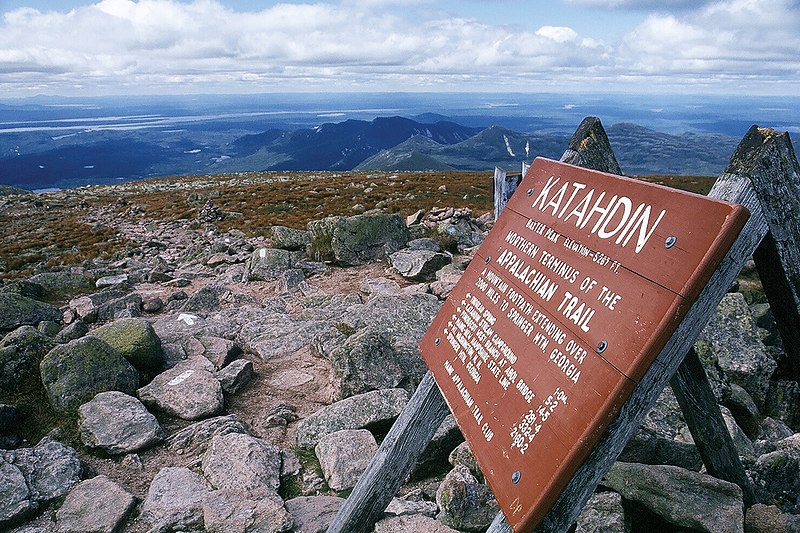
At 2178 miles in length, the Appalachian Trail is one of the longest and best known trails in the world. In fact, it has served as the basis for many other long distance hiking trails around the globe, and for backpackers, it is often considered one of the crown jewels of trekking. But a few days back, the National Parks Conservation Association released a report that examined some of the unique challenges and opportunities that the AT has in front of it if it is to remain the unique resource that it is.
Entitled Appalachian National Scenic Trail: A Special Report, the document takes a look at the cultural and natural resources that line the trail, which runs from Maine to Georgia, and attracts thousands of hikers each year. Amongst the biggest challenges for the AT are over development of the lands adjacent to the trail, air quality and pollution concerns, and a lack of adequate funding to protect and further develop trail resources and historic sites along the route.
To help further identify and spotlight some of the locations of interest along the trail the NPCA has posted this handy map that gives more insight into exactly what portions of the trail are at risk. Some of the development that is sited in the report include the building of power lines, pipelines, and even racetracks next to the trail, all of which take away from the scenic beauty and disrupt the natural environments there.
But the Appalachian Trail Conservancy and the Appalachian Trail Park Office are not standing still on these issues. Those two groups are working hard to protect and monitor the AT, as well as to educate the public about their concerns. The Appalachian Trail is one of the great outdoor resources in the U.S., and it is important that we protect it now, before it becomes too late. It is an amazing hike, and future generations of backpackers should be given the opportunity to enjoy it too.
To read the report in PDF format click here.
Friday, March 5, 2010
Posted By:
2Machupicchu
Top 10 Great Backpacking Destinations
Are you looking for new destinations to take an international backpacking trip this year? Then Off Track Planet has just the list for you, naming their selections for the Top 10 Backpacking Destinations for 2010. The list is meant to inspire young travelers to visit unique places that offer more than your typical Spring Break fare, but the list has something to offer anyone who is searching for new destinations to explore.
Rather than simply counting down the destinations as is typical with these kinds of list, Offtrack offers their selections by category. For instance, under the heading of "Cheapest" they recommend Cambodia, recommending it not only for it's inexpensive options, but the fact that it is far less crowded than similar destinations, such as Thailand. For the best "Sightseeing" they give the nod to Italy for its rich history and numerous attractions, and in their "Adventurous" category they recommend the HImalaya, saying take your pick between Nepal, Tibet, and Bhutan.
Other categories include " Nightlife", "Best Art Scene", and "Nature Filled", giving this list a very broad appeal to a lot of different travelers. Their selection for "Overall" best destination goes to Colombia, which has become a popular adventure travel destination again following years of high crime and deadly gang warfare. It seems to have bounced back onto the travel radar once again, allowing safe access to foreign visitors once again.
Wednesday, March 3, 2010
Posted By:
2Machupicchu
Gear Box: Gerber Tools and Knives
Anyone who has spent a little time hiking, backpacking, or backwoods camping knows the value of good tools and knives that are versatile, high quality, and lightweight. In fact, these kinds of tools can be a real life saver in a pinch, and it's always nice to have them in your pack, just in case you need one.
Recently the fine folks over at Gerber sent me a couple of their products to review, and after spending a little time with both of them, I can honestly say that I'm quite impressed with both their usefulness and functionality. both the knife and multi-tool that I used were well designed and were very well designed, although the were at opposite ends of the spectrum from one another. One was a simple double bladed pocket knife, while the other was a tool that had more blades, clippers, and other options than I knew what to do with. Let's take a look at each of them individually.

Gerber Mini-Remix 2 Blade
The Mini-Remix 2 pocket knife is a perfect example of simplicity at it's finest. It offers just two blades, one standard, and one serrated, in a stylish package that gives this knife its own unique look. Weighing just 3.4 ounces, the Mini-Remix can be slipped into your pocket, and you won't even notice that it's there, but when you take it out, the blades pivot into place and are ready to go to work. When closed, the knife is just 3.5 inches in length, but with one of the blades locked into place, it expands to 5.6 inches of sharp, sturdy steel.
Easy to operate, the blades are simple to pull out of the housing and lock into their cutting position, and when they are, they do their job very well. Both the fine blade and the serrated edge cut through rope, fabric, and small branches with ease, although the overall shortness of the knife can make it awkward to slice at thicker items. But considering this is meant to be an all purpose, easy to use, and convenient to carry blade, it served its main purpose very well. When you're ready to move the blade back into place, there is a simple release mechanism that removes the lock, allowing you to fold it back up again. The location of that release is a bit awkward to use however, being located on the handle itself, directly behind the blade when it is folded back into the closed position.
So far, the knife has held its edge and remains sharp and easy to use. Only time will tell if that will continue to be the case, but for the time that I have used it so far, it has proven to be a nice addition to my pack when heading out on the trail. (MSRP: $41.26)

Gerber Strata Multi-Tool
Where as the Mini-Remix 2 had just two blades, the Strata packs 13 different tools, including pliers, a carbide pinch cutters, both fine and serrated blades, and a small scissors, amongst many others. The first thing I noticed after removing it from the included belt case was that it offered plenty of heft, weighing in at a very solid 7.4 ounces. The stainless-steel brushed metal finish also gave it a feeling of quality and strength.
The Strata opens up in "butterfly" fashion, extending from its closed length of just four inches out to six inches with the spring loaded pliers extended. Those pliers are the center point of the entire tool, with the other blades, screw drivers, and clippers folding out of the handles of the multi-tool. Those other items are accessible without opening the Strata completely and are easy to lock into position when you need to use one.
The solid construction and added weight give the Strata a bit of a beefy feel, but that actually helps when using the it. None of the tools feel like they are going to break off in your hands, nor does it ever feel like you're putting too much pressure on the device. On top of that, it feels comfortable and safe in your hands, in no small part thanks to the Gerber's Safe.T Plus locking system, which ensure that when you lock any of the blades, or other tools, in place, they're going to stay there, and not give you any surprise cuts or nicks to your fingers.
All told, I really like the Strata. It really is a very solid and useful addition to your back as well. That said, with 13 different types of tools on the Strata, you can't help but wonder if it's a bit of overkill. There are certain options that I'm not even sure what I would use them for. But, then again, those extra items lend the Strata a level of versatility that you don't get out of a pocket knife alone. in the greater scheme of things, it's probably better to have those items and not need them, then to have a use for them and not have the right tool. One thing is for sure, the Strata puts the "multi" in multi-tools.
If you're in the market for a great, very functional, well built and designed tool to add to your pack, I recommend giving the Strata a look. It really does have ever tool you'll need (and then some), in a small package. (MSRP: $104)
Recently the fine folks over at Gerber sent me a couple of their products to review, and after spending a little time with both of them, I can honestly say that I'm quite impressed with both their usefulness and functionality. both the knife and multi-tool that I used were well designed and were very well designed, although the were at opposite ends of the spectrum from one another. One was a simple double bladed pocket knife, while the other was a tool that had more blades, clippers, and other options than I knew what to do with. Let's take a look at each of them individually.
Gerber Mini-Remix 2 Blade
The Mini-Remix 2 pocket knife is a perfect example of simplicity at it's finest. It offers just two blades, one standard, and one serrated, in a stylish package that gives this knife its own unique look. Weighing just 3.4 ounces, the Mini-Remix can be slipped into your pocket, and you won't even notice that it's there, but when you take it out, the blades pivot into place and are ready to go to work. When closed, the knife is just 3.5 inches in length, but with one of the blades locked into place, it expands to 5.6 inches of sharp, sturdy steel.
Easy to operate, the blades are simple to pull out of the housing and lock into their cutting position, and when they are, they do their job very well. Both the fine blade and the serrated edge cut through rope, fabric, and small branches with ease, although the overall shortness of the knife can make it awkward to slice at thicker items. But considering this is meant to be an all purpose, easy to use, and convenient to carry blade, it served its main purpose very well. When you're ready to move the blade back into place, there is a simple release mechanism that removes the lock, allowing you to fold it back up again. The location of that release is a bit awkward to use however, being located on the handle itself, directly behind the blade when it is folded back into the closed position.
So far, the knife has held its edge and remains sharp and easy to use. Only time will tell if that will continue to be the case, but for the time that I have used it so far, it has proven to be a nice addition to my pack when heading out on the trail. (MSRP: $41.26)
Gerber Strata Multi-Tool
Where as the Mini-Remix 2 had just two blades, the Strata packs 13 different tools, including pliers, a carbide pinch cutters, both fine and serrated blades, and a small scissors, amongst many others. The first thing I noticed after removing it from the included belt case was that it offered plenty of heft, weighing in at a very solid 7.4 ounces. The stainless-steel brushed metal finish also gave it a feeling of quality and strength.
The Strata opens up in "butterfly" fashion, extending from its closed length of just four inches out to six inches with the spring loaded pliers extended. Those pliers are the center point of the entire tool, with the other blades, screw drivers, and clippers folding out of the handles of the multi-tool. Those other items are accessible without opening the Strata completely and are easy to lock into position when you need to use one.
The solid construction and added weight give the Strata a bit of a beefy feel, but that actually helps when using the it. None of the tools feel like they are going to break off in your hands, nor does it ever feel like you're putting too much pressure on the device. On top of that, it feels comfortable and safe in your hands, in no small part thanks to the Gerber's Safe.T Plus locking system, which ensure that when you lock any of the blades, or other tools, in place, they're going to stay there, and not give you any surprise cuts or nicks to your fingers.
All told, I really like the Strata. It really is a very solid and useful addition to your back as well. That said, with 13 different types of tools on the Strata, you can't help but wonder if it's a bit of overkill. There are certain options that I'm not even sure what I would use them for. But, then again, those extra items lend the Strata a level of versatility that you don't get out of a pocket knife alone. in the greater scheme of things, it's probably better to have those items and not need them, then to have a use for them and not have the right tool. One thing is for sure, the Strata puts the "multi" in multi-tools.
If you're in the market for a great, very functional, well built and designed tool to add to your pack, I recommend giving the Strata a look. It really does have ever tool you'll need (and then some), in a small package. (MSRP: $104)
Monday, March 1, 2010
Posted By:
2Machupicchu
Blind Hiker Set To Challenge Appalachian Trail
The 2174 mile long Appalachian Trail is a tough enough challenge for any backpacker to handle on a single thru-hike. The classic trail runs through the Appalachian Mountain range of the Eastern United States, from Maine to Georgia, and passes through 12 other states along the way. It is a truly epic hike with truly epic challenges. But now, according to this story in the Minneapolis Star Tribune, a blind hiker is going to take on those challenges for himself.
44-year old Mike Hanson set off this morning from the Georgia end of the trail, and hopes to complete his journey in seven months time, when he'll cross the finish line in Maine. Along the way, he'll use a special GPS device that connects to his phone to help him navigate and he says that the device offers him everything he needs, except for the view. In fact, the gadget offers 32-hours of battery life, which is vital to a hike such as this one, and verbally reads the GPS information to the hiker as he goes.
Mike plans on covering roughly 15 miles per day, with a stop once per week in a town to resupply. The entire journey is also being filmed so that a documentary can be made of the hike, which means that Mike will be joined by cameraman Gary Steffens, who says that he won't navigate at all, he'll simply be along for the walk, following Mike at every turn.
As the article points out, Mike won't be the first person to make such a hike, but he might just be the first to navigate it himself. Of the 11,000+ hikers who have completed the thru-hike, 3 or 4 of them have been blind. Those have tended to go with others as their guides or used a guide dog instead. Hanson has programmed the entire route of the AT into his GPS device, and had already tested is route finding out on a 40 mile stretch to be sure that it all works. With success on that stretch of the trail, he's now ready to uses his gadgets to navigate its entire length.
You can follow along with Mike's progress on his website, with updates coming via Facebook.
Subscribe to:
Posts (Atom)