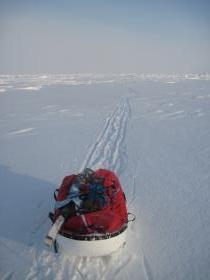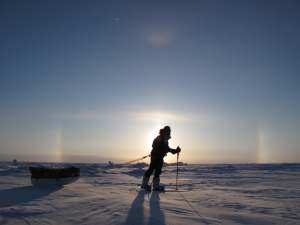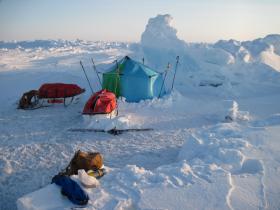
PolarTREC, an organization that works to give K12 teachers an opportunity to conduct research in the field while helping to distribute curriculum to classrooms, is looking for a few adventurous educators to join them in conducting arctic research in the next couple of years.
Showing posts with label Arctic. Show all posts
Thursday, September 23, 2010
Posted By:
2Machupicchu
Any Teachers Want To Explore The Arctic In 2011/2012?
PolarTREC, an organization that works to give K12 teachers an opportunity to conduct research in the field while helping to distribute curriculum to classrooms, is looking for a few adventurous educators to join them in conducting arctic research in the next couple of years.
The organization is currently looking for 12 individuals who are interested in going to the Arctic in 2011 or the Antarctic in 2011-2012. If selected, those teachers will assist in the research process on varying levels and will be asked to share their experience with others on their return. More details, including the application form, can be found by clicking here. If you're interested, you won't want to wait to apply. The deadline for submittal is October 1st!
Thanks to Richard Byrne for sharing this information with me and writing about it here in his own blog. Well, I'm being polite when I say thanks for sharing, because not being a teacher myself, I suspect Richard was actually just taunting me. ;) (Just kidding! Good luck Richard, I hope you get picked!)
I knew I should have gotten that education degree!
Monday, September 13, 2010
Posted By:
2Machupicchu
North Pole Circumnavigation Update: Racing The Ice
The two ships that are racing to become the first to circumnavigate the North Pole via the Northeast and Northwest passages are continuing their perilous journey, even as the colder weather begins to move in, and the ice starts to close for another season.
ExWeb posted an update today on the circum navigation race that is being conducted between the Russian ship Peter 1 and Børge Ousland's Northern Passage. The two expeditions are both hoping to become the first to successfully sail through both the Northeast and Northwest passages on a single journey, thereby completing the first full voyage around the arctic circle. Both ships have cleared the fist leg of their journey and are now dealing with the NE Passage above Canada.
According to the latest updates, the Peter 1 has once again moved out in front, but the crew is beginning to get concerned about the weather reports. The forecasts call for strong, cold northerly winds that will begin the process of freezing over the passage for another year. Those conditions are expected to arrive on Thursday, although they could be more of a problem for Børge's boat which is lighter, and faster, but made of fiberglass, while the Russian vessel is made of steel and can deal with the ice a bit more easily.
ExWeb estimates that it will take roughly another two weeks before either ship clears the Passage and makes their way out into the North Atlantic. That is a long time to battle the elements and conditions, which will be changing very rapidly during that time. The voyage for both ships and their crews has been challenging already, but they're about to get a whole lot more difficult. Neither expedition is a sure thing, and they'll definitely need to stay vigilant as the ice begins to close.
It should be interesting to watch the progress of the two ships as they not only race one another but the end of the season too.
ExWeb posted an update today on the circum navigation race that is being conducted between the Russian ship Peter 1 and Børge Ousland's Northern Passage. The two expeditions are both hoping to become the first to successfully sail through both the Northeast and Northwest passages on a single journey, thereby completing the first full voyage around the arctic circle. Both ships have cleared the fist leg of their journey and are now dealing with the NE Passage above Canada.
According to the latest updates, the Peter 1 has once again moved out in front, but the crew is beginning to get concerned about the weather reports. The forecasts call for strong, cold northerly winds that will begin the process of freezing over the passage for another year. Those conditions are expected to arrive on Thursday, although they could be more of a problem for Børge's boat which is lighter, and faster, but made of fiberglass, while the Russian vessel is made of steel and can deal with the ice a bit more easily.
ExWeb estimates that it will take roughly another two weeks before either ship clears the Passage and makes their way out into the North Atlantic. That is a long time to battle the elements and conditions, which will be changing very rapidly during that time. The voyage for both ships and their crews has been challenging already, but they're about to get a whole lot more difficult. Neither expedition is a sure thing, and they'll definitely need to stay vigilant as the ice begins to close.
It should be interesting to watch the progress of the two ships as they not only race one another but the end of the season too.
Thursday, September 9, 2010
Posted By:
2Machupicchu
Bear Grylls Completes Charity Expedition Through The Northwest Passage
I received a press release about this story last week while I was out of contact and off the grid. It seems Bear Grylls, star of Man vs. Wild, has just finished an expedition through the Northwest Passage in an effort to raise funds and awareness for the Global Angels, an organization dedicated to aiding children living in poverty or with other disadvantages, around the world.
Bear, and his four companions, set out on the expedition on the 28th of August, and reached their end point of Paulutuk earlier today, 12 days after they got underway. The small, and very remote village is located on Darnley Bay, on the western side of the Passage.
The team made the journey aboard a specially designed Zodiac rigid inflatable boat dubbed the Arctic Wolf. In order to prepare the boat for the rigors of the Northwest Passage however it needed to be fitted with a special shock-aborbing counsel and seats, as well as long range fuel tanks, storage lockers, heaters, and three outboard Mercury engines. Apparently it performed very well, as Bear and the rest of the boys, arrived at their destination ahead of schedule.
To read more about the expedition, as well ad the crew's daily blog click here.
Bear, and his four companions, set out on the expedition on the 28th of August, and reached their end point of Paulutuk earlier today, 12 days after they got underway. The small, and very remote village is located on Darnley Bay, on the western side of the Passage.
The team made the journey aboard a specially designed Zodiac rigid inflatable boat dubbed the Arctic Wolf. In order to prepare the boat for the rigors of the Northwest Passage however it needed to be fitted with a special shock-aborbing counsel and seats, as well as long range fuel tanks, storage lockers, heaters, and three outboard Mercury engines. Apparently it performed very well, as Bear and the rest of the boys, arrived at their destination ahead of schedule.
To read more about the expedition, as well ad the crew's daily blog click here.
Monday, August 23, 2010
Posted By:
2Machupicchu
Inflatable Lab Could Offer New Way To Explore The Arctic
Architectural firm Studio Les Bêtes has designed an interesting and unique approach for future explorers to potentially visit the North Pole. Their inflatable research lab, called the Arctic Drifter, would be built out of Hypalon air-bags, which high end inflatable boats use as well, and would quite literally roll across the arctic, ignoring water, ice, and crevasses in the process.
When fully inflated, the lab would be 15 meters in diameter, and could move through high winds and other inclement weather without much of a problem, while the researchers and explorers stay inside, warm and protected from the elements. When they want to go out, they simply deflate one of the air-bags, and exit the lab. The crew would stay inside a cabin that is connected to a roll cage that would keep their living quarters and equipment upright no matter which way the giant ball rolled.
While this looks like an interesting concept, there doesn't really appear to be a way to direct the lab to move in any specific direction. As a mobile lab, it seems like this has some potential in some capacity, but it's just not quite ready to be used in the field just yet. Still, kind of an interesting take on arctic exploration.
Thanks to Inhabitat for sharing this one.
When fully inflated, the lab would be 15 meters in diameter, and could move through high winds and other inclement weather without much of a problem, while the researchers and explorers stay inside, warm and protected from the elements. When they want to go out, they simply deflate one of the air-bags, and exit the lab. The crew would stay inside a cabin that is connected to a roll cage that would keep their living quarters and equipment upright no matter which way the giant ball rolled.
While this looks like an interesting concept, there doesn't really appear to be a way to direct the lab to move in any specific direction. As a mobile lab, it seems like this has some potential in some capacity, but it's just not quite ready to be used in the field just yet. Still, kind of an interesting take on arctic exploration.
Thanks to Inhabitat for sharing this one.
Monday, August 2, 2010
Posted By:
2Machupicchu
Canadian Archeologist Discover Missing Ship
A week and a half ago I told you about a team of Canadian archeologists who were setting out in search of the missing ships of explorer John Franklin, who went missing in the arctic back in 1845 while searching for the fabled Northwest Passage. Just a few days later, the team had already discovered one of the prizes they were going in search of – a rescue ship that also went missing.
Using sophisticated sonar systems, the expedition discovered the HMS Investigator, at the bottom of Mercy Bay. The Investigator was sent in search of Franklin, and his two ships, the HMS Terror and HMS Erebus. The team of archeologists are still searching for those vessels, which were said to have been trapped in the ice when Franklin and his crew abandoned ship while searching for the Northwest Passage, which they believed would open up a faster trade route to Asia. The explorer and his crew would spend three very long years living in the arctic, hoping beyond hope for rescue. Over the course of that time, all 128 men died of sickness, exposure to the cold, and slow starvation.
The Investigator is said to be in good condition and the research team reports that it was discovered within the first 15-minutes of their search. The vessel was abandoned by her crew after getting stuck in the ice as well, but it became an important supply cache for the Inuit people that live in the region. So much so, the ship is actually part of their history and lore, as they returned to it often over the years to scavenge materials from the craft.
I thought that was an interesting follow-up to the story I had just written about. It's remarkable that they found the ship so quickly, and I'll bet they wish all of their research were so easy. It'll be interesting to see if they find the other two ships they are looking for as well, as they will be far more difficult to locate.
Using sophisticated sonar systems, the expedition discovered the HMS Investigator, at the bottom of Mercy Bay. The Investigator was sent in search of Franklin, and his two ships, the HMS Terror and HMS Erebus. The team of archeologists are still searching for those vessels, which were said to have been trapped in the ice when Franklin and his crew abandoned ship while searching for the Northwest Passage, which they believed would open up a faster trade route to Asia. The explorer and his crew would spend three very long years living in the arctic, hoping beyond hope for rescue. Over the course of that time, all 128 men died of sickness, exposure to the cold, and slow starvation.
The Investigator is said to be in good condition and the research team reports that it was discovered within the first 15-minutes of their search. The vessel was abandoned by her crew after getting stuck in the ice as well, but it became an important supply cache for the Inuit people that live in the region. So much so, the ship is actually part of their history and lore, as they returned to it often over the years to scavenge materials from the craft.
I thought that was an interesting follow-up to the story I had just written about. It's remarkable that they found the ship so quickly, and I'll bet they wish all of their research were so easy. It'll be interesting to see if they find the other two ships they are looking for as well, as they will be far more difficult to locate.
Friday, July 23, 2010
Posted By:
2Machupicchu
Archeologists Search For Franklin Ships in the Canadian Arctic
Back in 1845, Sir John Franklin set out in search of the then mythical Northwest Passage. Unlike today, the Passage didn't exist, and he and his crew of 128 men died a horrible death hundreds of miles from civilization, stranded without the hope of rescue. But that death didn't come quickly. According to historians, Franklin and his crew spent three long years in the Arctic, while scurvy, botulism, starvation, and sub-zero temperatures slowly did them in.
The remains of the crew have been found and extensive forensic studies have been done to help determine what exactly happened to the ill fated team, and while those studies have revealed a lot, such as the fact that the crew apparently resorted to cannibalism, the expedition's ships have remained missing.
Now, according to the BBC, a team of Canadian archeologists are heading to the Arctic in search of Franklin's long lost ships – the HMS Terror and the HMS Erebus. They'll take with them sophisticated sonar systems to search the ocean floor and they'll investigate locations that local Inuit tribes once reported seeing the ships locked in ice 150 years ago. They'll also be searching for the HMS Investigator, the rescue ship that went looking for Franklin and also disappeared in the process.
The BBC articled that I've linked to above has more details on the Franklin expedition, but describes the explorer as a man obsessed with finding the Northwest Passage. At that time, it meant a major new trade route, and could have been worth a fortune for the man who discovered it. It also talks about some of the men who went in search of the missing crew, and the stories and legends that have arisen about what happened out there on the ice.
I have to admit, I don't know a ton about this story, but it is a fascinating one. It reminds me a bit of Shackleton's ill fated expedition, although that one ended up with a happy ending. I can't imagine spending three years stranded out on the ice, wondering and hoping that someone would come. Amazing.
Thanks to the National Geographic Adventure Blog for the tip on this one.
The remains of the crew have been found and extensive forensic studies have been done to help determine what exactly happened to the ill fated team, and while those studies have revealed a lot, such as the fact that the crew apparently resorted to cannibalism, the expedition's ships have remained missing.
Now, according to the BBC, a team of Canadian archeologists are heading to the Arctic in search of Franklin's long lost ships – the HMS Terror and the HMS Erebus. They'll take with them sophisticated sonar systems to search the ocean floor and they'll investigate locations that local Inuit tribes once reported seeing the ships locked in ice 150 years ago. They'll also be searching for the HMS Investigator, the rescue ship that went looking for Franklin and also disappeared in the process.
The BBC articled that I've linked to above has more details on the Franklin expedition, but describes the explorer as a man obsessed with finding the Northwest Passage. At that time, it meant a major new trade route, and could have been worth a fortune for the man who discovered it. It also talks about some of the men who went in search of the missing crew, and the stories and legends that have arisen about what happened out there on the ice.
I have to admit, I don't know a ton about this story, but it is a fascinating one. It reminds me a bit of Shackleton's ill fated expedition, although that one ended up with a happy ending. I can't imagine spending three years stranded out on the ice, wondering and hoping that someone would come. Amazing.
Thanks to the National Geographic Adventure Blog for the tip on this one.
Friday, June 11, 2010
Posted By:
2Machupicchu
Catlin Arctic Survey: Videos Redux
Yesterday I mentioned that the Catlin Arctic Survey had posted a couple of cool, and interesting videos on their website, but that I couldn't get them to embed properly here to share them. Today they've added them to YouTube, making it a win for all of us.
The first video is an excellent look at what the Expedition Team went through on their journey to the North Pole. It combines Google Earth with the expedition's tracking data, and photographs from out on the Ice to give us a good indication of what the journey was like. It is very well done, and will give you a new appreciation for polar travel. The second video is an overview of the entire project, which is exploring the impact of acidification on the Arctic Ocean, and how that is effecting life there, and elsewhere on the planet.
Thursday, June 10, 2010
Posted By:
2Machupicchu
Catlin Arctic Survey: Introduction and Recap of the Expedition, On Video!
The Catlin Arctic Survey may be over for 2010, but the research into their findings is just getting underway. According to the website, the initial findings won't come until some time in the Fall, and they promise to post those findings as soon as they become available.
But for now, they've posted two great videos that demonstrate what the program is about, and what their goals were for the expedition, namely to get samples of the arctic water and test its levels of acidification. Their findings should speak directly to the current health of our oceans and the effects that we are having on it.
Update: For some reason, I'm having issues getting their embedded videos to work on my page. So, to check them out, click here.
But for now, they've posted two great videos that demonstrate what the program is about, and what their goals were for the expedition, namely to get samples of the arctic water and test its levels of acidification. Their findings should speak directly to the current health of our oceans and the effects that we are having on it.
Update: For some reason, I'm having issues getting their embedded videos to work on my page. So, to check them out, click here.
Wednesday, May 19, 2010
Posted By:
2Machupicchu
Amazing Video Of North Pole Expedition
I just saw this video pop up in Eric Larsen's Twitter feed. It is an amazing movie of his recently completed journey to the North Pole, which completed the second leg of his Save The Poles Expedition. Next up, Everest in the fall, but for now, it's time to reflect on another successful journey. Really great video that captures the essence of what it is like for an arctic explorer. Enjoy.
Wednesday, May 12, 2010
Posted By:
2Machupicchu
Catlin Arctic Survey: They Did It!! Explorers At 90ºN!
We've been following the Catlin Arctic Survey Team for 60 days now, and after some very long, and hard days out on the ice, the word has just come through that the Explorers Team has, at long last, reached the North Pole!
As you probably already know by now, the team consists of Ann Daniels, Charlie Paton and Martin Hartley, three veteran polar explorers. The trio has been making their way north for two months now, and along the way, they have been taking samples of the water in the Arctic Ocean to track the acidification of the water, and the effects of high levels of carbon dioxide on the ocean. Today, they took their final sample through a "Hole at the Pole", bringing an end to their journey.
Setting out on March 14th, Daniels, Paton, and Hartley covered 483 miles on their trek to the Pole. They also had to pick up their pace, and increase their daily distance, in an effort to reach that point before the end of the arctic season, which is usually marked by the break-up of the ice as the warmer months set in. The team also battled extreme cold, whiteout conditions, large open leads, and lots and lots of negative drift along the way. To say that they are ecstatic about reaching their goal is probably an understatement. They are now the last team out on the ice, and will be retrieved sometime in the next few days.
Once they do return home, their water samples will serve as the baseline for some important new research on the effects of global climate change on the polar ice caps and the water underneath. Future expeditions are likely to take similar samples, but they will all be compared to the ones this team has gathered. It is a testament to their determination and stamina that they were able to reach the North Pole while still collecting all of their samples as well.
Congratulations to Ann, Charlie, and Martin on a job well done. Get some rest team, you've earned it.
Monday, May 10, 2010
Posted By:
2Machupicchu
Catlin Arctic Survey: Past 89º, Still Heading North
While the Arctic Season is over and done with for the most part, the intrepid trio that make up the Catlin Arctic Survey's Explorers Team are still out on the ice and still heading towards the North Pole, even as they face more negative drift, wide open leads, and a race against the clock.
Yesterday was a very long, and tiring day, for the already exhausted team. Team leader Ann Daniels, along with polar explorers Martin Hartley and Charlie Paton covered more than 12 miles, only to give more than a mile and half back over night, thanks to negative drift. As of their last recorded position, the team was sitting at 89.29ºN, butting them so close to the Pole they can almost taste it, but with still quite a few miles to cover before they are done.
The team has now been out on the ice for nearly two months, and that has begun to take a physical and psychological toll. There is no doubt that they are all very tired, but remain committed to reaching the top of the world before they go home. In their latest report, the team talks about the caloric imbalance they've had to deal with while out on the ice. It is estimated that they are burning somewhere in the neighborhood of 12,000 calories per day, but are living on about 6000 calories per day. Over the course of their journey that means a significant loss of weight and energy, while they battle to stay focused and on target with their goals. The update also says that they could end up losing as much as 10% of their body weight and have essentially zero fat when they have completed the expedition.
Meanwhile, despite all of that, and the long days out on the ice, the team has not lost sight of their mission. In addition to reaching the North Pole, they still continue to collect ice samples which will be scrutinized closely upon their return to examine the levels of Carbon Dioxide present in the Arctic Ocean as part of a larger effort to determine how global climate change is effecting the polar ice caps. This is something that the Ice Base Team, the second arm of the survey, was working on before they closed up shop and went home for the season.
Speaking of which, it now appears that the Explorers will continue on to the North Pole no matter what. They'll be retrieved from the ice once they complete their journey, but it is now getting very late in the Arctic Season, and the ice is breaking up significantly at this point. Hopefully that will not have an impact on the ability for a rescue plane to come get them once they are at 90ºN. If they keep going at their present speed, they should reach that point in a matter of days.
Monday, May 3, 2010
Posted By:
2Machupicchu
Catlin Arctic Survey: Explorers Face "Ice Armageddon"
While the Catlin Arctic Survey Ice Base Team may have packed up and headed for home, the Explorers Team is still out on the ice, still conducting, scientific data, and still battling the unforgiving elements of the Arctic. Today, those conditions including a very large lead of open water, 65 meters in width at the narrowest point, and an ice field that team leader Ann Daniels has labeled Ice Armageddon" for its gigantic blocks of ice that made progress very tough for an already weary team.
Joining Daniels out on the ice are Martin Hartley and Charlie Paton, both veteran polar explorers. As of this writing, the team is sitting at 88.36ºN, but are now in a race against time if they hope to see the Pole this year. Despite making 7 nautical miles of progress today, they're likely to face negative drift tonight, thanks to a steady and constant northerly wind. On top of that, it is getting very late into the Arctic Season at this point, which means the pack ice is starting to break up, and soon it will be impossible to land a plane to pick the team up. Reportedly they have given themselves until the end of the week to reach as far north as they can before calling for an evac.
Thanks to that giant lead mentioned above, the trio had the opportunity to do a little swimming today. Donning their dry suits, they set out across the wide open water in an effort to reach the far shore, and continue their mission on towards the Pole. In order to cross the water, the team has to lash two of their sledges together, and float them across, with Charlie riding along on top, using his poles for stability. That's exactly how they managed to circumnavigate their latest challenge, and within a half hour, they reached the opposite shore, safe and dry.
With their days now clearly numbered, the team will continue moving forward as best they can, collecting ice samples for study as they go. Those samples will be used to research the health of the polar ice caps, and specifically the amount of CO2 in the ice and its impact on that health.
Thursday, April 29, 2010
Posted By:
2Machupicchu
Catlin Arctic Survey: Ice Base Team Packing Up, Explorers Continue North
While most of the Arctic explorers have called it a season, the Catlin Arctic Survey Teams are still out their on the ice, conducting their experiments and taking readings on the impact of heightened levels of CO2 in the Arctic Ocean on the healthy of the ice caps.
As you probably remember, the project was broken up into two teams, the Ice Base Team, which remained in one place on the ice to take daily readings and conduct experiments and the Explorers Team, which is still making their way to the North Pole, taking ice samples as they go. Today, the Ice Base Team began packing up their gear and equipment, and are preparing to be airlifted to warmer climes either today or tomorrow, depending on weather conditions. The Ice Base, which is located off Ellef Ringnes island in the Canadian High Arctic, has been in operation for 40 days, and according to the Survey's website, has served as home for "six scientists, five journalists, three polar guides, two chefs, two ice base managers, two communication managers, one Inuit guide, one passing Japanese skier and an extremely lovable polar bear guard dog." It will be some time before the results of their findings will be known, but the men and women who lived and worked at the base have started some important research into the acidification of the oceans, and the long term effects that will have on the health of the planet and the human race.
And as if we needed more proof that we are in the midst of a global shift in climate and weather, the Ice Base Team received a real shock a few days back, when it actually started to rain. Now, most of us would take April Showers in stride, and think nothing of it, but it is HIGHLY unusual in the Arctic this time of year, especially above 79ºN. Needless to say, it made the scientists at the Base a bit nervous, considering they were camped on a patch of ice, with nothing but Arctic Ocean beneath them.
Meanwhile, the Explorers Team, consisting of polar veterans Ann Daniels, Martin Hartley, and Charlie Paton are still making their way North, with designs on reaching the Pole itself. Last Friday they received their second, and final, resupply, and while they continue to deal with the usual challenges, namely negative drift, open leads, thin ice, and difficult weather conditions, their spirits remain high, and they are as dedicated as ever to their jobs.
Like most of the other explorers heading to the Pole this year, they are dragging their equipment behind them sleds as they make the long, difficult journey north. But unlike the others, who at the end of their day would set up their tent, go inside, warm up, and begin the process of melting snow, this trio has a set of ice samples to gather and readings to take, before they can go about those other duties. But it is all in the name of climate research, and they seem up to the task.
Last year, the Survey Team didn't make it to the North Pole, simply running out of time for when a safe evac could occur. Hopefully this year, they'll reach their destination. I'm sure it would be especially sweet for Ann and Martin to stand at 90ºN.
Wednesday, April 28, 2010
Posted By:
2Machupicchu
North Pole 2010: Two Teams Reach North Pole!
While I was away, two teams managed to complete their journeys to the North Pole, while other explorers were forced to give up on their dreams and call for an evac, ending their long, cold, struggles against the Arctic conditions.
Back on April 23rd, Eric Larsen and his team reached 90ºN, finishing their quest to stand at the top of the world. It took them 51 days to cover the route, and the fittingly enough, they reached the Pole on Earth Day no less. For Eric, this is the second of three poles that he expects to visit this year, as part of his Save The Poles campaign, leaving just the "third pole", Mt. Everest, yet to be conquered. He'll take on that task this fall. Congrats to Eric, Antony, and Darcy on a job well done.
Just two days after the boys reached their finish line, Dan Darley and Amelia Russell brought their expedition to a successful conclusion as well. The two Brits made the last few days into a marathon of sorts, spending upwards of 18 hours on their skis in an effort to battle the negative drift and finish off the few remaining miles. For Amelia, this is a major milestone, as she becomes just the third woman to complete the North Pole trek, joining Tina Sjogren and Cecilie Skog. The pair were picked up by a Russian helicopter yesterday and are now at the Barneo Base, waiting extraction back to civilization. A hearty congratulations to both Dan and Amelia on their amazing efforts as well.
Unfortunately, two other solo adventurers were not quite as lucky in their quests to reach 90º N. Aussie Tom Smithengale activated his emergency beacon back on April 15th, and had to be retrieved from the ice post haste. Tom was suffering from frostbite on several fingers and toes, and was displaying signs of exhaustion as well. Pictures posted to his website also show significant weight loss, as you would expect on an expedition like this one. The rescue team indicated that the explorer was picked-up at the right time, before things got really dangerous. I'm sure Tom is feeling a bit of a personal let down for not reaching his goal, but upon reflection later on, he'll understand what an amazing adventure he has had. I always enjoyed reading his updates, and was rooting for him to reach the Pole, as he always seemed to have a great attitude, and a positive outlook. Rest up Mate! I hope those fingers and toes all heal up quickly and properly.
Finally, Italian Michele Pontrandolfo also called for an evacuation, but his retrieval was a bit delayed thanks to a storm. He was picked up a few days back after giving a very valiant effort as well. Michele was ready and eager for the task, but was suffered from slow progress due to the various challenges of the Arctic, and was never really able to mount a true challenge to reaching the North Pole. Perhaps he'll take the lessons learned from this expedition and give it a go next year, when he'll be more experienced and prepared for the journey. I salute him for not giving up however, as that is a very large part of the adventurous spirit.
That about wraps it up for the North Pole Season for this year. Sorry I had to post a recap instead of following along as it happened. I was a bit busy the past two weeks though, so I'm sure you'll understand. :)
Friday, April 9, 2010
Posted By:
2Machupicchu
Catlin Arctic Survey: Ice Conditions Remain Unpredictable, Research Progressing
The two teams that make up the Catlin Arctic Survey team continue to have very busy and eventful days in the arctic. The explorers are continuing to make their way north, amidst some of the strangest and most dangerous ice conditions they've ever seen, while back in the Ice Base, a new group of scientists are hard at work.
The Explorers team is made up of polar vets Ann Daniels, Martin Hartley and Charlie Paton, and their mission to take samples of the arctic ice while making their way to the North Pole. Presently, they're at roughly 86.34ºN, and contending with, quite literally, constantly changing ice conditions. The has been so unstable in fact that one morning during breakfast the trio heard it cracking all around them outside of their tent, and they were forced to evacuate their shelter, and quickly decide which side of the crack they wanted to be on, pulling gear and sleds along with them in order to avoid catastrophic damage. Charlie Paton described the scene like this, “We heard a crack, a few bangs and then suddenly the ice started to break apart. It all happened very quickly and was unlike anything I’ve experienced before"
This wasn't the only dangerous situation they've found themselves in either. One day, while navigating through the ice flows and around open water, they actually found themselves surrounded on all sides by ice that was too thin to cross. It was a sobering reminder of how quickly things can change in the arctic. Check out this amazing video that the team captured that demonstrates just what kind of conditions they are dealing with on their long, cold journey to the top of the world.
It hasn't been all bad for the explorers though, as they received their first resupply this week, providing them with some much need fresh food and gear. The team remains confident and upbeat that they'll arrive at the Pole on schedule.
Meanwhile, back at the Ice Base the scientists continue their work, which included a little home improvement, including an update and improvement to the loo. Of course, they're continuing their valuable research on the effects of CO2 in the atmosphere on the Arctic Ocean, with Laura Edwards, of Bangor University, who has been at the base since Day 1, providing an update on the process. The research team has been happy to find a wide variety of life thriving in the water, including plankton, tiny crustaceans called copepods, and lentil-sized sea snails called pteropods.
Finally, click here to meet Brownie, the Ice Base's early warning system for polar bears. Brownie is a part-Husky, part- German Shepherd mix who is always on watch for the big, hungry white bears that are common in the area. Brownie also earns her keep by pulling a sled for the scientists as they go about their daily chores, and in turn, they've become quite fond of the four legged member of the team.
Wednesday, April 7, 2010
Posted By:
2Machupicchu
North Pole 2010: Dan and Amelia Hit 87º
It has only been a few days since I posted an update from the Arctic with news on the progress of the teams making their way to the Geographic North Pole, but it continues to be both business as usual for the explorers and quite eventful at the same time.
Amelia Russell and Dan Darley crossed another milestone today, crossing the 87ºN mark, although it didn't come without a lot of work. The pair stumbled into some very challenging rubble early on, and watched in amazement as the ice once again moved around them. Then, throughout the rest of the day, they experienced a number of small leads, which weren't too difficult to navigate around, but were a major nuisance none the less. Clouds rolled in during the morning as well, meaning they were forced to navigate using their GPS, but at the end of the day, they achieved their goal, and had gained another degree. They also noted how much respect they have for the solo explorers out on the ice, as they say they can't imagine making this incredibly demanding journey on their own, without someone to share in the joy and misery.
Speaking of solo explorers, Australian Tom Smitheringale continues to have some long, trying days in the Arctic as well. Weather conditions have not been cooperative over the past few days, with sunshine giving away early in the morning to clouds and wind. Throw in the fact that Tom continues to struggle with frostbite on several of his fingers and thumbs, and you'll start to understand how this long march north has taken its toll. Still, he did have some bit of positive news, however small. While sleeping last night, he managed to actually have 500 meters of POSITIVE drift! It's not much, but it had to feel like miles after all the negative drift the teams have faced this year. On another positive note, Tom is also past 86º now, and seems as determined as ever to reach the Pole.
The Save The Poles Team had an entirely different kind of challenge on their hands, as they battled whiteout conditions throughout the day that started with clouds moving in, making it challenging to see, and then later with 30 mph winds blowing snow and mist off the open leads, navigation became even more difficult. They did manage to use a large, six foot block of ice as a raft to cross a lead at one point, but aside from that, it seemed like a very challenging day for the boys.
Finally, while I haven't written much about Michele Pontrandolfo, I think it is important to post an update. The last time I mentioned the Italian it was to note that he was struggling quite a bit, and not making the progress he had hoped for, and as a result, he was considering calling for an evacuation. That was a couple of weeks back, but in a real testament to his dedication and determination, he is still in the Arctic and is still trying to make his way north. In fact, he seems to be moving much more quickly and making up time, with his last reported coordinates over the 85ºN mark. He still has a long way to go, and obviously time is not in his favor, but I salute his courage and strength.
Tuesday, April 6, 2010
Posted By:
2Machupicchu
North Pole 2010: Barneo Opens and Other Expeditions
For the past month or so we've been following the polar explorers who have been slowly making their way toward the North Pole from the Canadian side of the ice. For those intrepid few it has been a challenging slog as they battle huge ice fields, open water, and frustrating bouts with negative drift. Those warriors continue towards their goal, but there are others who are hitting the ice and will be making a similar, albeit shorter, journey to 90ºN.
Explorers Web is reporting that the Barneo Ice Station is now open on the Russian side of the Pole. This temporary base is built each spring when a team parachutes onto the ice and helps construct a runway that allows for well heeled adventure travelers to be shuttled to the Arctic. The base is often used for "last degree" expeditions to the Pole, and many explorers get airlifted off the ice from Barneo once they've completed their long distance treks. The station, which opened on March 30th, will likely stay open for about a month or so, providing support for a number of teams.
With the opening of the Ice Station, there are others making their way out onto the ice now that haven't been out there for weeks already, but still hope to visit the top of the world. Take for example 15-year-old Parker Liautaud, who was interviewed for the Outside Blog yesterday. Parker is attempting to create a network of similarly minded, adventurous teens, who want to share ideas on how to protect the environment, and he is inviting everyone to follow him on his Last Degree adventure on his Facebook, Twitter, and YouTube accounts.
In the Outside interview, Parker discusses his preparation and training for the journey, what inspired his expedition, and the gear that he is taking along with him. Something he discusses in the video below.
Another young adventurer heading out on a challenging journey. Going to the North Pole is a struggle, and I envy his opportunity to visit that place, although it is an altogether different experience from going to Everest.
Monday, April 5, 2010
Posted By:
2Machupicchu
Explorer Sets Out For North Pole In Hot Air Balloon
French doctor and explorer Jean-Louis Etienne set out this morning on another arctic adventure, this time with the goal of flying solo, in a hot air balloon, over the North Pole. Etienne left from Spitzbergen, Norway at 6AM local time, with low winds, a warm temperature, and all around great weather.
For Etienne, this is the culmination of years of preparation. The good doctor has spent plenty of time in the arctic in the past, but this was his dream for closing out his "arctic trilogy". Back in 1986 he spent 63 days out on the ice, making the journey to the North Pole on foot, dragging his sled behind, and in 2002 he drifted in the Arctic Ocean, alone, for four months, taking scientific readings and observations.
This voyage by balloon was set to go back in 2008, but Etienne's airship was destroyed when it was slammed into a building due to high winds before it even got off the ground. The resulting damage was catastrophic, and forced him to not only design and build a new balloon, but also seek further funding, and reschedule the entire event. The new balloon measures 25 meters in height and 16 meters in diameter, and is capable of carrying as much as 360 kilograms of propane for the flight. That's enough to keep it aloft for 15 to 20 days.
Etienne says he is making the journey to draw the world's attention to the shrinking ice caps and the threat of global climate change to the polar regions.
Posted By:
2Machupicchu
North Pole 2010: Christina Goes Home
The arctic continues to challenge the polar explorers at every turn with massive ice fields, open leads, and negative drift all taking their toll. For one of those explorers, enough was enough, while others continue to their way north.
We'll start with Christina Franco, who was evacuated from the ice on Friday after spending three days trying to find a way around an open body of water. Christina traveled east, rather than north, for that entire time, and still couldn't find a way to cross that lead. It was a struggle, as she knew that the days were already running short, and with negative drift still working against her, she elected to hitch a ride on a resupply plane, rather than continue the journey. The pilots on that plane said that she was stuck on a large, narrow, piece of ice, and that there really wasn't much of a way forward for her. Reportedly, Christina is already back home in London, and as a result, she won't become the first woman to go solo to the North Pole. At least not this year. This move has to come as a disappointment for Christina, who had to abandon her quest last year following major equipment failure. I wish her the best of luck. I hope she's enjoying a warm bed and good food, but is already plotting for next season.
Christina wasn't the only one contemplating extraction. Aussie Tom Smitheringale was all but ready to call off his solo expedition as well, as the frostbite in his fingers had gotten to the point where he was in agony every step of the way. Tom consulted with his home team over the weekend, and was ready for an extraction as well, but finally decided he wasn't ready to give up yet, despite the pain and possible loss of digits. He is continuing on today, with a bit of urging from polar legend Børge Ousland, and is hoping to make up for lost time, although he is battling negative drift once again too.
Eric Larsen's Save the Poles Expedition, which includes Antony Jinman and Darcy St Laurent as well, spent Easter Sunday working towards another milestone. As of yesterday, the boys were closing in on 87ºN, which is great progress, despite the continued negative drift that they've been facing as well. Eric did report that the drift wasn't as bad as they expected, and when the sun was out, it was actually quite pleasant. Being a holiday, each of the men took turns on the satellite phone calling their families and soaking in the well wishes. It was good for team morale and a welcome respite from the long days out on the ice.
Finally, Amelia Russell and Dan Darley are back on the polar treadmill as well, having lost 2 nautical miles over night. They did gain more than 10nm later in the day yesterday however, and spent their Easter Sunday with sunshine and relatively calm winds. The duo reports that they are now five and a half weeks into the expedition and are feeling quite exhausted at this point. They mention that they are doing 11+ hours of intense exercise each day, while pulling the sleds, and having little food and sleep at night in the tents. That has begun to really take it's toll, although aside from being tired, they are not experiencing any other physical issues, including frostbite. The good news is that they are now covering more mileage per day than what they would need to average to actually reach the Pole on time. That means they're picking up speed and progressing very well, and while the end is in sight for the two Brits, it is still a good ways off yet.
Wednesday, March 31, 2010
Posted By:
2Machupicchu
North Pole 2010: Ben Heads Home, Others Struggle On
While one of the polar explorers decides to pack it in for 2010, another contemplates his own fate after a very slow start. Just another day in the Arctic, a place that conspires against you with every step.
As I've mentioned a couple of times, Ben Saunders, who was attempting a speed record to the North Pole, had to be evacuated from the ice last week thanks to an equipment malfunction. A broken fuel canister contaminated more than 70% of his food supply, prompting a return to Resolute Bay just a few days after he set out. he had hoped to return to the ice, and give his expedition another go, but after a few days back in civilization, Ben has elected to go home for the season, and return in 2011 to make another attempt.
Meanwhile, Italian Michele Portrandolfo seems to be struggling as well. I haven't written much about Michele, mostly because it is difficult to follow his progress due to the language barrier to his website. But, ExploraPoles.org is reporting that he has been sounding very pessimistic in his latest dispatches due to the slow progress he has been making thus far. As of yesterday, Michele had been out on the ice for more than 24 days and had just reached the 84th parallel. With negative drift working against him, and ice conditions amongst the worst anyone has seen, it seems highly unlikely that he'll reach the Pole at that pace. I still hold out hope that he can make it, but won't be surprised if he has to be evacuated either.
Eric Larsen and his crew have become the latest team to come across fresh polar bear tracks in their northward wanderings. Like all the other explorers who have come across the tracks in recent days, they are a bit unnerving to say the least. While polar bears are beautiful, amazing creatures, they are a scary beast to the arctic teams. Not only are they the largest living land carnivores on the planet, they are the only ones that are known to stalk humans. They pretty much see everything as prey, and are happy to get dinner where they can. For Eric, this is a far cry from the South Pole, where getting stalked by penguins seems like it would be kind of fun.
Progress is much better for Dan and Amelia, who crossed another degree today, putting them above 86ºN for the first time. That leaves them just four degrees to go until they're at the top of the world. The duo report that they started off the day at a blistering pace, covering over 3 nautical miles in the first two and a half hours. But later they ran into plenty of open water, rubble, and a pressure ridge that was more than 25-feet tall. Still, the two Brits seem to be picking up speed now, and I suspect that it won't be long and they'll have a clear and clean route to the Pole. There is still plenty of miles to go, and they're not passed all the challenges yet, but things are looking very good.
Solo female explorer Christina Franco continues to have her ups and downs on the ice. She started the day today with great progress and smooth going, but by afternoon she found a huge lead that stretched in all directions. She described it as being "as wide as the River Thames". This big lead caused her to walk well out of her way, hoping to find a route around, but that fed her into even more leads, with few options as to proceed forward. For now, she decided to set up camp for the night and tackle the problem tomorrow, but it is clear that she's either going to have to get wet or backtrack for some time to find a way around.
Finally, Tom Smitheringale is celebrating one month out on the ice, and while it hasn't been an easy one, he continues to demonstrate those good Aussie spirits and seems as happy as ever to be out there. Tom's on a solo and unsupported trek to the Pole, and is hoping to become just the third person to accomplish that feat. However, he may be in a bit of trouble once he gets there, as he currently doesn't have a way to get home! Which is why his team is making a last ditch effort to find a sponsor to help get the adventurous Australian back off the ice when he finishes what he set out to do. The expedition will be greeted at the North Pole by a major Australian television network, which could potentially offer great exposure for someone looking to sponsor Tom's journey. If you, or someone you know, might be interested in helping out, contact the his home team at georgina@onemanepic.com or jim@onemanepic.com. Lets help get Tom back from the North Pole. It's not a very nice place to stay.
Subscribe to:
Posts (Atom)