Showing posts with label History. Show all posts
Monday, September 20, 2010
Posted By:
2Machupicchu
Artifacts From Robert Falcon Scott Expedition To Be Auctioned
Christie's Auction House has announced that it will put relics left over from the doomed Robert Falcon Scott Antarctic expedition on the block this week, with skis, photos, scientific equipment, and other items all up for bid.
According to this story, the artifacts actually belong to Canadian team member Charles Seymour Wright, who is the man who discovered Scott's frozen remains in a tent after the explorer and his four companions perished on the return trip from the South Pole. Scott and his team were in a desperate race to be the first to reach that point, but were beaten by just a few weeks by Norwegian Roald Amundsen. Wright discovered the remains 8 months after the team disappeared.
The tragic story of Scott and his men is one of those epic tales of a long lost age of exploration. In 1910, he set out from England to attempt once again to become the first man to reach the South Pole. He arrived in January of 1912, but found the Norwegian flag of his rival waiting there. Beaten and dejected, Scott and his men began the long, cold, and grueling trek back to the point of origin, but bad weather and deteriorating health slowed their progress, and eventually they ended up stranded in the tent, where Scott and two of his companions would die just 11 miles away from a food and fuel depot that would have almost assuredly saved their lives.
The relics up for auction belong to Wright's grandson and are believed to be worth between $235,000 and $390,000.
According to this story, the artifacts actually belong to Canadian team member Charles Seymour Wright, who is the man who discovered Scott's frozen remains in a tent after the explorer and his four companions perished on the return trip from the South Pole. Scott and his team were in a desperate race to be the first to reach that point, but were beaten by just a few weeks by Norwegian Roald Amundsen. Wright discovered the remains 8 months after the team disappeared.
The tragic story of Scott and his men is one of those epic tales of a long lost age of exploration. In 1910, he set out from England to attempt once again to become the first man to reach the South Pole. He arrived in January of 1912, but found the Norwegian flag of his rival waiting there. Beaten and dejected, Scott and his men began the long, cold, and grueling trek back to the point of origin, but bad weather and deteriorating health slowed their progress, and eventually they ended up stranded in the tent, where Scott and two of his companions would die just 11 miles away from a food and fuel depot that would have almost assuredly saved their lives.
The relics up for auction belong to Wright's grandson and are believed to be worth between $235,000 and $390,000.
Friday, August 13, 2010
Posted By:
2Machupicchu
Did a Massive Storm Claim Mallory and Irvine?
A physicist from the University of Toronto in Canada believes he may have discovered an important clue as to what may have led to the death of George Mallory and Sandy Irvine on Everest back in 1924. While in London recently, G.W. Kent Moore visited the Royal Geographical Society where he poured through weather data from early June of that year, and discovered a significant drop in barometric pressure in the days preceding June 8th, the day that the two climbers went missing. Such a drop usually signifies a dramatic change in weather conditions, resulting in a storm.
According to this story, after analyzing the data and comparing it to modern weather information and examining Indian meteorological maps from that time frame, Moore believes that not only did a storm rage over Everest, but it was a big one. A storm that rivaled the one that buffeted the mountain back in 1996, killing eight people. In fact, the two storms had nearly identical barometric shifts.
Most accounts of the events of that day say that a storm did indeed hit the mountain, but it was described as a fairly short, fairly intense blizzard that came and went rather quickly, leaving the skies clear for Mallory and Irvine to go to the summit. But those reports could be inaccurate, and the two men may have found themselves fighting for their lives due to a freak storm, and without the far superior gear that their 1996 counterparts had.
This is an interesting theory and obviously the weather data supports it to a certain degree. The element of the weather just adds another challenge for Mallory and Irvine, who clearly had the deck stacked against them anyway. Remember, it took nearly another 30 years before someone finally did successfully summit Everest, and yet we still remain fixated and fascinated with what happened in 1924.
A big thanks to Ripley Davenport for sharing the article with me. Thanks Mate! Glad to hear you're rested and already planning for 2011.
According to this story, after analyzing the data and comparing it to modern weather information and examining Indian meteorological maps from that time frame, Moore believes that not only did a storm rage over Everest, but it was a big one. A storm that rivaled the one that buffeted the mountain back in 1996, killing eight people. In fact, the two storms had nearly identical barometric shifts.
Most accounts of the events of that day say that a storm did indeed hit the mountain, but it was described as a fairly short, fairly intense blizzard that came and went rather quickly, leaving the skies clear for Mallory and Irvine to go to the summit. But those reports could be inaccurate, and the two men may have found themselves fighting for their lives due to a freak storm, and without the far superior gear that their 1996 counterparts had.
This is an interesting theory and obviously the weather data supports it to a certain degree. The element of the weather just adds another challenge for Mallory and Irvine, who clearly had the deck stacked against them anyway. Remember, it took nearly another 30 years before someone finally did successfully summit Everest, and yet we still remain fixated and fascinated with what happened in 1924.
A big thanks to Ripley Davenport for sharing the article with me. Thanks Mate! Glad to hear you're rested and already planning for 2011.
Monday, August 2, 2010
Posted By:
2Machupicchu
Canadian Archeologist Discover Missing Ship
A week and a half ago I told you about a team of Canadian archeologists who were setting out in search of the missing ships of explorer John Franklin, who went missing in the arctic back in 1845 while searching for the fabled Northwest Passage. Just a few days later, the team had already discovered one of the prizes they were going in search of – a rescue ship that also went missing.
Using sophisticated sonar systems, the expedition discovered the HMS Investigator, at the bottom of Mercy Bay. The Investigator was sent in search of Franklin, and his two ships, the HMS Terror and HMS Erebus. The team of archeologists are still searching for those vessels, which were said to have been trapped in the ice when Franklin and his crew abandoned ship while searching for the Northwest Passage, which they believed would open up a faster trade route to Asia. The explorer and his crew would spend three very long years living in the arctic, hoping beyond hope for rescue. Over the course of that time, all 128 men died of sickness, exposure to the cold, and slow starvation.
The Investigator is said to be in good condition and the research team reports that it was discovered within the first 15-minutes of their search. The vessel was abandoned by her crew after getting stuck in the ice as well, but it became an important supply cache for the Inuit people that live in the region. So much so, the ship is actually part of their history and lore, as they returned to it often over the years to scavenge materials from the craft.
I thought that was an interesting follow-up to the story I had just written about. It's remarkable that they found the ship so quickly, and I'll bet they wish all of their research were so easy. It'll be interesting to see if they find the other two ships they are looking for as well, as they will be far more difficult to locate.
Using sophisticated sonar systems, the expedition discovered the HMS Investigator, at the bottom of Mercy Bay. The Investigator was sent in search of Franklin, and his two ships, the HMS Terror and HMS Erebus. The team of archeologists are still searching for those vessels, which were said to have been trapped in the ice when Franklin and his crew abandoned ship while searching for the Northwest Passage, which they believed would open up a faster trade route to Asia. The explorer and his crew would spend three very long years living in the arctic, hoping beyond hope for rescue. Over the course of that time, all 128 men died of sickness, exposure to the cold, and slow starvation.
The Investigator is said to be in good condition and the research team reports that it was discovered within the first 15-minutes of their search. The vessel was abandoned by her crew after getting stuck in the ice as well, but it became an important supply cache for the Inuit people that live in the region. So much so, the ship is actually part of their history and lore, as they returned to it often over the years to scavenge materials from the craft.
I thought that was an interesting follow-up to the story I had just written about. It's remarkable that they found the ship so quickly, and I'll bet they wish all of their research were so easy. It'll be interesting to see if they find the other two ships they are looking for as well, as they will be far more difficult to locate.
Tuesday, July 13, 2010
Posted By:
2Machupicchu
Have Archaeologists Found King Arthur's Round Table?
Here's an interesting story from a few days back. British newspaper the Telegraph is reporting that historians believe that they may have found King Arthur's round table, claiming that it isn't a table at all, but instead a large amphitheater capable of seating over 1000 people.
The Arthurian legend has always said that the round table was a place where Arthur and his knights would gather to discuss their bold deeds, plot strategy, and debate matters of state. Located in Camelot, Arthur's mythical fortress, the round table has often played a pivotal role in stories about the king who is believed to have ruled at least part of England following the withdrawal of the Romans. But the location of Camelot, and the round table, had remained a mystery. At least until now.
Historians have unearthed a large stone amphitheater built by the Romans in the town of Chester. It is their belief that that structure was occupied by Arthur and his crew, and the theater was used for open forums, with noblemen sitting in the first few rows around the building, while others filtered into the back. They also point to early descriptions of the round table that indicated that it was more like an open room, such as an amphitheater than an actual wooden table as it would later be depicted.
To further support their cause, these same historians say that a monk named Gildas was the first to write about the Arthurian legend and he called the place where the round table was said to be the "City of Legions." He also said that inside that place there was a shrine to Christian martyrs. When this new Roman structure was uncovered, they did indeed find such a shrine inside.
An interesting story that lends a little more credence to the Arthur legend. I love when we discover thesse kinds of things, and it allows us to hold on to those myths and stories a little more tightly in this modern age.
The Arthurian legend has always said that the round table was a place where Arthur and his knights would gather to discuss their bold deeds, plot strategy, and debate matters of state. Located in Camelot, Arthur's mythical fortress, the round table has often played a pivotal role in stories about the king who is believed to have ruled at least part of England following the withdrawal of the Romans. But the location of Camelot, and the round table, had remained a mystery. At least until now.
Historians have unearthed a large stone amphitheater built by the Romans in the town of Chester. It is their belief that that structure was occupied by Arthur and his crew, and the theater was used for open forums, with noblemen sitting in the first few rows around the building, while others filtered into the back. They also point to early descriptions of the round table that indicated that it was more like an open room, such as an amphitheater than an actual wooden table as it would later be depicted.
To further support their cause, these same historians say that a monk named Gildas was the first to write about the Arthurian legend and he called the place where the round table was said to be the "City of Legions." He also said that inside that place there was a shrine to Christian martyrs. When this new Roman structure was uncovered, they did indeed find such a shrine inside.
An interesting story that lends a little more credence to the Arthur legend. I love when we discover thesse kinds of things, and it allows us to hold on to those myths and stories a little more tightly in this modern age.
Wednesday, May 26, 2010
Posted By:
2Machupicchu
Adventure Remembers Hiram Bingham
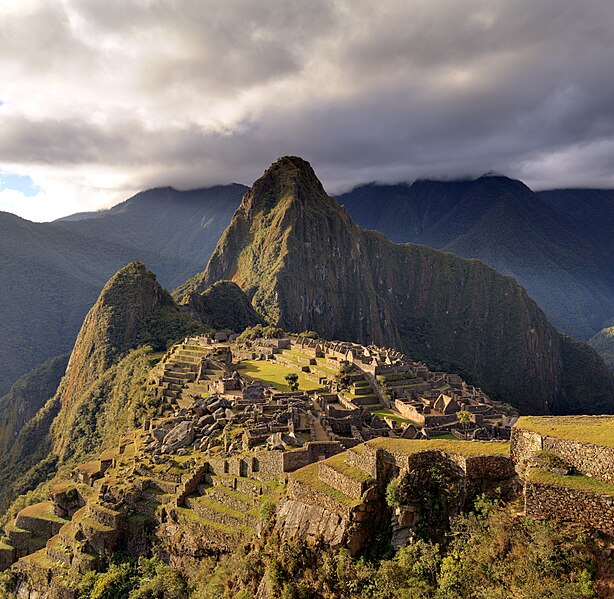
On July 24th, 1911, explorer Hirm Bingham stumbled (and I mean stumbled!) onto one of the greatest archeological finds of the 20th century in the form of Machu Picchu, a lost Inca city in the Andes. It wasn't exactly the "lost city" he was looking for, and there are some that say he only re-discovered it, but with his find, Bingham cemented his place in history, and inspired other explorers that followed.
A new book entitled Cradle of Gold: The Story of Hiram Bingham, a Real-Life Indiana Jones, and the Search for Machu Picchu by historian Christopher Heaney takes a look at Bingham's life and his influence on the iconic, whip-cracking, fictional archaeologist of the popular film series. Heaney sat down with National Geographic Adventure's Mark Adams recently for an interview and to discuss the real life adventurer.
Heaney says that Bingham was actually searching for Vitcos and Vilcabamba, the last capitals of the Inca empire, when he came across Machu Picchu instead. He would find those two lost cities eventually as well, but that would come a few months later, making 1911 a very busy and memorable year for the explorer. In the interview, Heaney talks about these important finds and their historical significance.
It has been nearly 100 years since Bingham's jungle adventure, and Machu Picchu has gone on to become the number one tourist attraction in Peru. But back in 1911, the area was a remote, mostly unexplored jungle, that was still waiting to give up its secrets. It must have been an exciting time to be an archaeologist.
Has anyone read the book? Any thoughts? Sounds really interesting.
Thursday, May 20, 2010
Posted By:
2Machupicchu
What Really Happened To Mallory and Irvine? (Part 3)
The mystery of what actually happened to George Mallory and Sandy Irvine on that fateful day, high on Everest, back in 1924, has been one of mountaineering's enduring mysteries. It has provided fodder for discussion and debate around the campfire for years, with the only thing we know for sure being that they didn't make it back down.
Over the past few weeks, mountaineer and photographer Jake Norton has been sharing his thoughts on what he believes really happened to the two men, sharing his unique perspective on the Mallory and Irvine mystery. Jake was part of the team that found Mallory's remains on Everest back in 1999, and he later came across the duo's lost Camp VI high on the mountain as well. He has studied Mallory and Irving and even followed their route to the summit, so his speculation as to what happened to them has been particularly fascinating to me.
Today, Jake has posted the third part of his series, found here, in which he discusses Mallory and Irvine's descent from the summit. Obviously we all know that they died trying to make the first ascent of the mountain, but how and why that happened remains a mystery. Jake logically lays out his thoughts on what he believe happened to them after they successfully reached the summit late in the day. As with the other two parts of the series, it is a very interesting and compelling read.
If you haven't read the first two parts of the series, I'd encourage you to do so before going on to Part 3. Part 1 can be found here and gives excellent background info on the entire affair. Part 2 is here, and it is a detailed account of what Jake thinks the ascent was like. All three parts make for a great read.
Thursday, May 6, 2010
Posted By:
2Machupicchu
What Really Happened To Mallory and Irvine? (Part 2)
A few days backed, I mentioned that climber/photographer/Everest historian Jake Norton was exploring what really happened to George Mallory and Sandy Irvine back on June 8, 1924. In that post, I noted that Jake was more than qualified to speculate on the situation having been a part of the 1999 team that discovered Mallory's remains, and then later personally discovering Mallory's Camp VI. He's also climbed along the same route, and spent plenty of time on Everest, so he knows the area very well.
In Part I of his look at the Mallory and Irvine story, Jake gives us a lot of background information and lays out the facts as we know it. He includes a first hand account by Noel Odell, a team mate of the climbers, who was the last person to see them alive as they scrambled up the Everest's North Ridge, less than 1000 feet beneath the summit. He also examines the artifacts and evidence that have been found since their disappearance, and puts it all into context in regards to what it was like to climb the mountain back in 1924.
Today, Jake posted Part II of the story, which moves into the area of speculation on his part. Jake freely admits that we have no way of knowing for sure what happened on the mountain that day, but knowing what he does about Mallory and his climbing abilities, not to mention the pressure on him to succeed, Jake weaves together a compelling account of what could have happened to the two British climbers who were setting out to make history. He even proposes a creative, and most likely over looked, way for Mallory and Irvine to overcome the daunting Second Step, one of the major obstacles on the North Side of the mountain.
And what happened after that? Well, you'll just have to read Jake's article to see if he actually thinks they reached the summit or not. It's a great read, and I highly recommend it. We're also told to stay tuned for Part III, in which he'll share with us his thoughts on the harrowing descent that Mallory and Irvine surely faced. Can't wait!
Wednesday, March 3, 2010
Posted By:
2Machupicchu
King Solomon's Wall Found, Can His Mine Be Far Behind?

National Geographic has an interesting story from the world of archeology today that says that a wall built by King Solomon has been unearthed, lending credence to a passage from the bible. Israeli archeologists discovered the ancient wall, thought to be more than 3000 years old, near Jerusalem.
While conducting the dig, researchers found that the wall stretched more than 230 feet in length and stood 20 feet tall. They also discovered that it was part of a larger compound that included a gatehouse, guard tower, and an adjacent building as well. Excavations are still ongoing, so it is possible that they'll find more as they go.
In the Book of Kings, the Bible states that King Solomon constructed defensive fortifications, including a wall, near Jerusalem, but up until now, there has been no real evidence of this. Tools and artifacts found at the site point to a time frame of about the 10th Century BC. One of the researchers on the archeology team said that only two kings at that time would have had the resources to build such a fortification, Solomon and David. Further evidence narrowed the date further to Solomon's era.
It's fascinating to me that they are still unearthing these kinds of discoveries so close to a city that has been populated, more or less, non-stop for 3000 years. This is a very cool find, and it's amazing that they are able to link it back to a point in history that is not all that well documented.
Friday, February 19, 2010
Posted By:
2Machupicchu
Ancient Men Were Explorers Too!

I read this story over at the National Geographic website earlier and found it fascinating. It seems that a team of archeologists have found an crudely constructed ancient axe on the Isle of Crete, off the coast of Greece, that indicates that man has been traveling by sea far longer than we ever suspected.
The archeologists were actually hoping to find simple stone tools from a civilization that sailed those waters roughly 11,000 years ago. Instead, they discovered the axe, which closely resembles others that have been found in central Europe and Africa. Those tools date back 175,000 years, which tells them that men were building boats and traveling the waters of the Mediterranean for tens of thousands of years earlier than was first believed.
One of the more telling quotes from the article, which puts this all into perspective, comes from archeologist Curtis Runnels, who said "The idea of finding tools from this very early time period on Crete was about as believable as finding an iPod in King Tut's tomb." Runnels added that he was "flabbergasted" by the discovery.
All told, the team of archeologists discovered more than 30 similar axes and other primitive tools at 9 different dig sites spread out across the island. Radio carbon dating for the various stratification levels from which they were found indicate that the newest of the tools were left on Crete some 45,000 years ago, while the oldest date back 130,000 years.
The find has also opened up debate as to how the migration of man spread across Europe. It is widely believed that Africa was the birth place of primitive man, and they migrated outward from there. The theory has always been that we traveled on foot through the Middle East and into Asia and Europe from there, But now that theory could be challenged with the thought that perhaps our ancestors traveled by boat into Europe, hopping across islands as they went. Either way, we know that they were exploring the open waters long before we ever suspected. It seems that the concept of a "Mediterranean Cruise" isn't such a new thing either.
Wednesday, January 13, 2010
Posted By:
2Machupicchu
Scott's Antarctic Hut A "Time Capsule"

National Geographic has a short piece, accompanied by some great photos on Robert Falcon Scott's Antarctic Hut, which they call a "Time Capsule", perfectly capturing the spirit of exploration and adventure from circa 1912, when the race to be the first to the South Pole was in full swing.
There is a major effort underway at the moment to save Scott's hut, with experts in restoration working on the building, along with three others, hoping to prevent them from sinking beneath the snow and ice that is so dominant in Antarctica. The building is roughly 50 feet long and 25 feet wide, and was designed to be the base of operations for as many as 33 men.
While the building itself is a treasure, it is what was left inside that really has historians excited. They've found a number of very interesting items, including gear and other supplies, left behind by an expedition that took place nearly 100 years ago. Some of the things discovered included 100 year old butter, a primitive darkroom, all kinds of preserved foods, and even Scott's bunk, complete with reindeer skin sleeping bag.
Scott's story is, at least to me, one of the most tragic in the history of exploration. Back in 1911, the British explorer found himself in a race to the South Pole against Norwegian Rival Roald Amundsen. For years, men had been trying to reach the Pole, and failing, but these two men were locked in a desperate struggle to plant their flag at 90ºS. Scott would indeed eventually reach his goal on January 17, 1912, but imagine his supreme disappointment in finding Amundsen's flag already there, taunting him. Amundsen himself had stood at the South Pole just 35 days earlier.
Exhausted and defeated, Scott and his four teammates began the long journey back to coast, a distance of 800 miles. Conditions were brutal, with lots of snow, high winds, and temperatures that plunged to dangerous lows. Of course, this precedes our age of high tech gear designed to keep us safe, and warm, and the men suffered greatly on the return trip. The journey took its toll, with one member of the party falling and suffering an injury that would claim his life a few days later, and another wandering out of the tent in the middle of the night, never to be seen again.
Scott, and his remaining companions were low on supplies and became trapped in their tent, while outside a fierce blizzard raged. For nine days they remained there, in a remote section of the Ross Ice Shelf, waiting for the weather to subside. Slowly, the ran out of food and strength, and eventually, the three men would perish. They were just 11 miles from their next supply cache, which would have likely saved their lives.
Scott wrote these words in his journal, which was later discovered by team that came looking for them:
We took risks, we knew we took them; things have come out against us, and therefore we have no cause for complaint, but bow to the will of Providence, determined still to do our best to the last [...] Had we lived, I should have had a tale to tell of the hardihood, endurance, and courage of my companions which would have stirred the heart of every Englishman. These rough notes and our dead bodies must tell the tale, but surely, surely, a great rich country like ours will see that those who are dependent on us are properly provided for.
Powerful stuff that sticks with me every time I read it.
Tuesday, September 15, 2009
Posted By:
2Machupicchu
Ancient "Sat Nav" System Discovered in the U.K.

This was my daily post over at Gadling this morning as well, and I see that Gizmodo has picked up on the story too. Thought some of you would find it interest.
Historians in the U.K. now believe that rock monoliths and monuments found throughout England and Wales, including Stonehenge, were part of an elaborate navigation system created by prehistoric man to quickly and easily find their way through the countryside. The system worked as a stone "satellite navigation" system that pointed the way to settlements, fortresses, and other points of interest in the region.
Tom Brooks, a British researcher who examined the system, used modern day GPS coordinates to plot an intricate grid system that uses isosceles triangles to connect more than 1500 different ancient sites. In each case, Brooks found that the triangles all had two sides of the same length and each of them pointed directly to the next location. In a sense, the travelers could find their way using these primitive waypoints, which were accurate up to 100 meters, which is an astounding number considering the historical period we're looking at here.
Even more interesting is that the use of these geometric patterns shows a sophistication and understanding of mathematical principles we didn't expect out of such an ancient civilization. It has been widely accepted that the Greeks discovered Geometry, but this navigational system predates that by more than 3000 years. Brooks says he doesn't rule out some external force assisting in the production of the navigational network, and even says that that assistance could have come from an extraterrestrial source. Hmm...
Regardless of how it came about, it is a very interesting system, and a fascinating story to read. And while it does help to explain why stone monoliths were build in the English countryside, it still doesn't explain exactly how something like Stonehenge was built.
Subscribe to:
Posts (Atom)